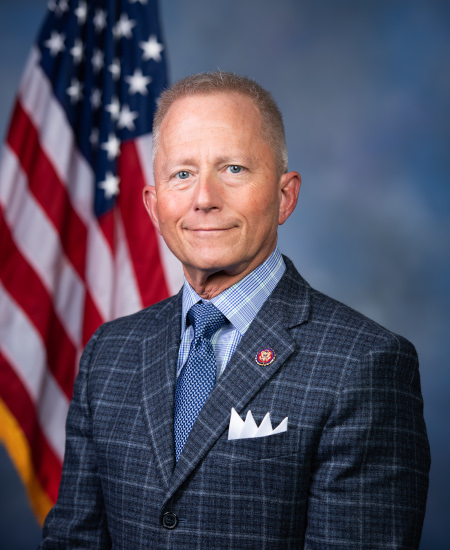
Photo of Jefferson Van Drew
R United States House · District 2 · New Jersey On the 2026 ballot

Rep. Jefferson Van Drew

Compare
Total votes
2,837
all sessions
Attendance
99%
23 missed
Near the chamber average
With party
91%
of cast votes
Lower than 76% of chamber peers
Bipartisan score
5%
crosses aisle rarely
Higher than 75% of chamber peers
Sponsored
1,696
bills & resolutions
Higher than 83% of chamber peers
Committees
7
assignments
1,696 bills and resolutions

Sponsored bills

Total
1,696
Primary
140
Co-sponsor
1,556
This page
1,696
matching current filters
Co-sponsor HR 2083
In committee · Indiana House · Co-sponsor
To prohibit the use of Federal funds for certain purposes within the District of Columbia.

This bill prohibits the use of federal funds (1) 15 days after its enactment, to support the mission of the National Guard in the District of Columbia in response to the attacks on the U.S. Capitol buildings and grounds on January 6, 2021; or (2) to install permanent fencing around the perimeter of any U.S. Capitol buildings or grounds. On January 7, 2021, in response to the attacks, razor wire fencing was erected to secure the perimeter of the U.S. Capitol; the fencing was initially to remain in place for 30 days and was kept in place through periodic extensions.

In committee Mar 22, 2021 1 co-sponsor
Co-sponsor HR 1603
Passed · Indiana House · Co-sponsor
Farm Workforce Modernization Act of 2021

Farm Workforce Modernization Act of 2021 This bill contains provisions related to alien farmworkers, including provisions establishing a certified agricultural worker (CAW) status and changing the H-2A temporary worker program. The Department of Homeland Security (DHS) may grant CAW status to an applying alien who (1) performed at least 1,035 hours of agricultural labor during the two-year period prior to March 8, 2021; (2) on that date was inadmissible, deportable, or under a grant of deferred enforced departure or temporary protected status; and (3) has been continuously present in the United States from that date until receiving CAW status. The bill imposes additional crime-related inadmissibility grounds on CAW applicants and makes some other grounds inapplicable. CAW status shall be valid for 5.5 years and may be extended. DHS may grant dependent status to the spouse or children of a principal alien. An alien with a pending application may not be detained or removed by DHS and shall be authorized for employment until DHS makes a final decision on the application. A CAW alien (and dependents) may apply for lawful permanent resident status after meeting various requirements, including performing a certain amount of agricultural labor for a number of years. DHS shall create an electronic platform for (1) filing H-2A petitions, (2) facilitating the processing of H-2A cases, and (3) providing agencies a single tool for obtaining H-2A-related case information. The bill makes various changes to the H-2A program, such as (1) modifying the method for calculating and making adjustments to the H-2A worker minimum wage, (2) specifying how an employer may satisfy requirements that it attempted to recruit U.S. workers, (3) requiring H-2A employers to guarantee certain minimum work hours, (4) making the program available for agricultural work that is not temporary or seasonal, and (5) reserving a visa allocation for the dairy industry. DHS shall establish a pilot program allowing certain H-2A workers to apply for portable status, which gives the worker 60 days after leaving a position to secure new employment with a registered H-2A employer. DHS shall establish an electronic system patterned on the E-Verify Program for employers to verify an individual's identity and employment authorization. Employers hiring individuals for agricultural employment must use the system. This bill permanently establishes the Housing Preservation and Revitalization Program, which provides financing assistance for rural rental housing and off-farm labor housing and rental assistance for qualified tenants of such housing. It also authorizes the Department of Agriculture to provide various assistance, including funding for insuring loans and grants for new farmworker housing.


Passed Mar 22, 2021 1 co-sponsor
Co-sponsor HR 1123
In committee · Indiana House · Co-sponsor
Veteran Suicide Prevention Act

Veteran Suicide Prevention Act This bill requires the Department of Veterans Affairs (VA) to complete a review of the deaths of all covered veterans who died by suicide during the five-year period preceding the enactment of this bill. Covered veterans are those who received VA hospital care or medical services during the five-year period preceding the death of the veteran. The VA shall report on the results of the review and make such report publicly available.

In committee Mar 22, 2021 1 co-sponsor
Co-sponsor HR 1014
In committee · Indiana House · Co-sponsor
Veterans National Traumatic Brain Injury Treatment Act

Veterans National Traumatic Brain Injury Treatment Act This bill requires the Department of Veterans Affairs to implement a five-year pilot program to furnish, under the Veterans Community Care Program, hyperbaric oxygen therapy to veterans with traumatic brain injuries or post-traumatic stress disorder.

In committee Mar 22, 2021 1 co-sponsor
Co-sponsor HR 1022
In committee · Indiana House · Co-sponsor
PAWS Act of 2021

Puppies Assisting Wounded Servicemembers Act of 2021 or the PAWS Act of 2021 This bill requires the Department of Veterans Affairs (VA) to implement a grant program for the purpose of pairing service dogs with eligible veterans. Organizations that receive grants must provide veterinary health insurance coverage, hardware, and travel expenses for each service dog and veteran participating in the program. Eligible veterans are those who (1) are enrolled in the VA health care system, (2) have been evaluated and treated for post-traumatic stress disorder (PTSD) but remain diagnosed with PTSD, (3) may benefit from a service dog, and (4) agree to successfully complete training provided by an eligible organization. Veterans are required to see a VA health care provider at least once every six months to determine whether the veteran continues to benefit from a service dog. Eligible organizations are nonprofit organizations that provide service dogs to veterans with PTSD, meet publicly available standards set forth by the Association of Service Dog Providers for Military Veterans, have expertise in the needs of veterans with PTSD, agree to cover all costs in excess of the grant amount to guarantee the benefits of the program, agree to reaccept or replace a service dog provided to a veteran, and submit an application to the VA. Any improvement in PTSD symptoms as a result of the provision of a service dog shall not affect the veteran's eligibility for any other VA benefits. The Government Accountability Office must report on the grant program.

In committee Mar 22, 2021 1 co-sponsor
Co-sponsor HR 914
In committee · Indiana House · Co-sponsor
Dental Care for Veterans Act

Dental Care for Veterans Act This bill expands eligibility for veterans for dental care provided by the Department of Veterans Affairs (VA). Specifically, the bill makes all veterans who are enrolled in the VA health care system eligible for VA-provided dental services. Currently, only veterans who have a service-connected dental issue or meet other narrow criteria are eligible for certain dental services. The bill phases in eligibility over four years based upon existing eligibility, degree of service-connected disability or other disability, prisoner of war status, award of a Purple Heart, financial need, or VA health care eligibility.

In committee Mar 22, 2021 1 co-sponsor
Co-sponsor HR 855
In committee · Indiana House · Co-sponsor
VETS Safe Travel Act

Veterans Expedited TSA Screening Safe Travel Act or the VETS Safe Travel Act This bill makes certain veterans eligible for the Transportation Security Administration (TSA) PreCheck Program at no cost if they meet the program's background check and security requirements. Veterans who are eligible for this fee waiver are those who are in the annual patient enrollment system of the Department of Veterans Affairs (VA) and require the use of a wheelchair, prosthetic limb, or other assistive device to aid with mobility due to (1) loss, or loss of use, of a limb; (2) full or partial paralyzation; or (3) permanent blindness. The VA and the TSA must develop and implement a process to provide disabled veterans effective outreach about TSA programs that are designed to improve the screening process for passengers with disabilities.

In committee Mar 22, 2021 1 co-sponsor
Co-sponsor HR 876
In committee · Indiana House · Co-sponsor
Improving Housing Outcomes for Veterans Act of 2021

Improving Housing Outcomes for Veterans Act of 2021 This bill requires the Veterans Health Administration (VHA) to provide medical center staff and homelessness service providers of the Department of Veterans Affairs (VA) with information related to best practices for the collaboration on activities under the Department of Housing and Urban Development's Coordinated Entry program. The VA must also ensure that the information and related resources are accessible to VA medical center staff and homelessness service providers. Additionally, the bill requires the VHA to communicate with VA employees who have responsibilities related to homelessness assistance programs regarding (1) the measurement of performance by the VA's Homeless Program Office, and (2) how to obtain and provide feedback about the performance measures.

In committee Mar 22, 2021 1 co-sponsor
Co-sponsor HR 845
In committee · Indiana House · Co-sponsor
VA Billing Accountability Act

VA Billing Accountability Act This bill authorizes the Department of Veterans Affairs (VA) to waive the requirement that a veteran make co-payments for medications, hospital care, nursing home care, and medical services in certain situations. Specifically, a veteran may have such co-payments waived if (1) an error committed by the VA or a non-VA facility delayed co-payment notification to the veteran, and (2) the veteran received such notification later than 180 days (18 months in the case of a non-VA facility) after the date on which the veteran received the care or services. In requiring a veteran to make a co-payment for care or services provided at a VA or a non-VA medical facility, the VA shall notify the veteran not later than 180 days (18 months in the case of a non-VA facility) after the date on which the veteran received the care or services. If the VA does not provide notification by such date, it may not collect the payment, including through a third-party entity, unless the veteran is provided with (1) information about applying for a waiver and establishing a payment plan with the VA, and (2) an opportunity to make a waiver or establish a payment plan. Finally, the bill requires the VA to review and improve its co-payment billing internal controls and notification procedures.

In committee Mar 22, 2021 1 co-sponsor
Showing 1,561 to 1,570 of 1,696 bills