

Maddy summaryHR 7477, the CERTS Tax Exemption Act, ensures that grants provided under the Coronavirus Economic Relief for Transportation Services Act are tax-free for eligible transportation service providers. The bill directly affects companies and organizations providing transportation services that receive these specific federal grants. Key provisions state that grant amounts cannot be counted as taxable income, deductions related to grant-funded costs cannot be denied, and tax attributes (like basis increases) must be treated as tax-free for partnerships and S corporations. This change simplifies tax treatment for recipients by preventing unintended tax liabilities on relief funds.
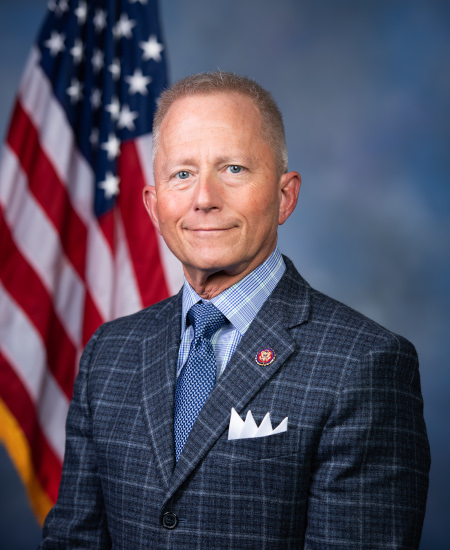
Rep. Jefferson Van Drew
Sponsored bills
Opportunity Zones Improvement, Transparency, and Extension Act This bill revises rules and reinstates reporting requirements relating to qualified opportunity zones (economically distressed communities where new investments, under specified conditions, may be eligible for preferential tax treatment). Specifically, the bill terminates the designation of zones that are disqualified due to median family income exceeding 130% of national median family income and permits states to identify and expand terminations of such zones. The bill also reinstates reporting requirements for qualified opportunity zones and imposes penalties for noncompliance with such requirements, extends the opportunity zones temporary deferral period for qualifying capital gain through 2028, and establishes a State and Community Dynamism Fund to support public and private investment in qualified opportunity zones.
The Real Emergencies Act This bill denies the President authority to declare a national emergency, an emergency or major disaster, or a public health emergency on the premise of climate change.
Comprehensive Southern Border Strategy Act This bill requires the Department of Homeland Security to report to Congress a comprehensive southern border strategy. The strategy must include (1) an overview of current security risks along the southern border; and (2) an assessment of the barriers, technologies, and tools that are necessary to achieve and maintain situational awareness and operational control of the border.
Postal Service Reform Act of 202 2 This bill addresses the finances and operations of the U.S. Postal Service (USPS). The bill requires the Office of Personnel Management (OPM) to establish the Postal Service Health Benefits Program within the Federal Employees Health Benefits Program under which OPM may contract with carriers to offer health benefits plans for USPS employees and retirees. The bill provides for coordinated enrollment of retirees under this program and Medicare. The bill repeals the requirement that the USPS annually prepay future retirement health benefits. Additionally, the USPS may establish a program to enter into agreements with an agency of any state government, local government, or tribal government, and with other government agencies, to provide certain nonpostal products and services that reasonably contribute to the costs of the USPS and meet other specified criteria. The USPS must develop and maintain a publicly available dashboard to track service performance and must report regularly on its operations and financial condition. The Postal Regulatory Commission must annually submit to the USPS a budget of its expenses. It must also conduct a study to identify the causes and effects of postal inefficiencies relating to flats (e.g., large envelopes). The USPS Office of Inspector General shall perform oversight of the Postal Regulatory Commission.
Ensuring Lasting Smiles Act This bill requires private health insurance plans to cover diagnosis and treatment of congenital anomalies and birth defects, such as reconstructive services and items. Coverage must include services and items that functionally improve, repair, or restore any body part that is medically necessary for normal bodily functions or appearance, as determined by the treating physician. Coverage limits and cost-sharing requirements for such services and items may not be more restrictive than those applicable to all medical and surgical benefits under the plan.
Supply Chain Disruptions Relief Act This bill modifies the treatment of liquidations of new motor vehicle inventory as qualified LIFO (last in first out accounting method) inventory. It allows new motor vehicle dealers to elect to wait until the end of 2025 to replace their inventory for purposes of determining income attributable to the sale of such inventory during 2020 and 2021.
Stop Fentanyl Border Crossings Act This bill authorizes the Department of Health and Human Services (HHS) to restrict migration and imports from foreign countries to prevent the introduction of illicit drugs into the United States. Current law authorizes HHS to restrict migration and imports from foreign countries to prevent the introduction of communicable diseases. Under this bill, HHS may also restrict migration and imports from a country if HHS determines that the existence of substantial illicit drug smuggling from that country poses a risk to public health.
Maddy summaryHRES 1016 is a House resolution honoring swimmer Emma Weyant as the rightful winner of the 2022 NCAA Division I Women’s 500-Yard Freestyle after her medal was stolen. It recognizes her Olympic silver medal, contributions to the University of Virginia’s 2022 NCAA championship, and role as a student-athlete role model. The resolution has no legal effect but formally acknowledges her achievement and the medal theft incident. It directly affects Weyant by providing symbolic recognition of her athletic accomplishment.
Unleashing American Energy Act This bill requires a minimum amount of oil and gas lease sales a year on certain submerged lands of the Outer Continental Shelf (OCS) and limits delays on federal oil and gas leases on such lands. Specifically, this bill requires the Department of the Interior to annually conduct a minimum of two region-wide oil and gas lease sales in each of the following regions of the OCS: (1) the Gulf of Mexico region in the Central Gulf of Mexico Planning Area and the Western Gulf of Mexico Planning Area, and (2) the Alaska region. In addition, the bill requires the President to obtain congressional approval before delaying federal oil and gas leases on the OCS.