

Maddy summaryHR 2475 establishes a 3-year pilot program providing direct cash payments and supportive services to homeless youth and young adults aged 18-30 living in low-income geographic areas. The program would randomly select up to 105,000 participants to receive monthly payments of at least $1,400 or the adjusted fair market rent for a 2-bedroom apartment, along with housing navigation, financial coaching, and workforce development services. Participants must consent to sharing tax information but the program is designed not to affect eligibility for other benefits or public charge status. The program includes a study to evaluate its impact on housing outcomes, economic mobility, and health for participants, with the goal of determining if direct cash payments could help reduce homelessness among young people.
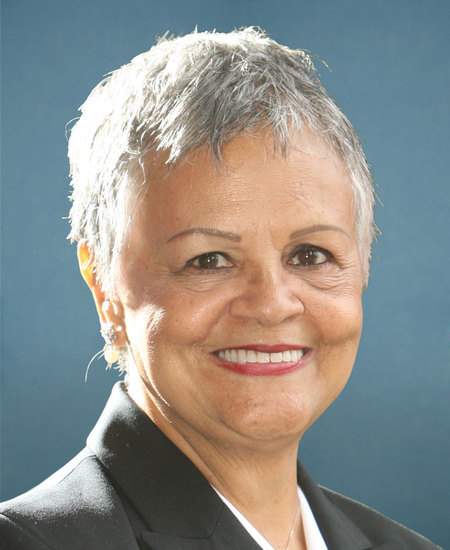
Rep. Bonnie Watson Coleman
Sponsored bills
Maddy summaryThis bill creates an entitlement program guaranteeing housing vouchers to young adults aged 18-30 experiencing homelessness, directly addressing systemic barriers that currently prevent them from accessing housing assistance. It requires public housing agencies to provide voluntary support services (like job training and housing navigation) while prohibiting discrimination based on credit history, immigration status, or other protected factors. Funded starting in fiscal year 2027, the program targets vulnerable youth disproportionately affected by homelessness, including Black, Indigenous, and LGBTQ+ communities. By expanding access to housing choice vouchers and reducing wait times from 132-140 days, it aims to improve housing stability and reduce homelessness for this population.
Maddy summaryThis bill, HR 2411, directs the U.S. government to immediately resume funding for the United Nations Relief and Works Agency for Palestine Refugees (UNRWA) by repealing two prior funding restrictions. It requires the State Department to restart payments to UNRWA under existing authorities and mandates the President to rescind a 2025 executive order ending UNRWA support. The bill affects Palestinian refugees in Gaza, Jordan, Lebanon, Syria, and the West Bank who rely on UNRWA for humanitarian aid, as well as U.S. funding mechanisms. It also requires quarterly reports through 2028 on UNRWA’s progress implementing accountability reforms from an independent review led by Catherine Colonna.
Maddy summaryHR 2402, the No Hungry Kids in Schools Act, creates a new option for states to implement a statewide program under the National School Lunch Act starting in 2025. States would cover costs from non-federal funds to allow all schools in the state to receive full federal reimbursement for meals served, eliminating income-based eligibility thresholds. Key provisions include setting the eligibility threshold to zero and calculating student eligibility statewide instead of by individual school district. This directly affects state education agencies (which must fund the program) and schools (which gain simplified access to full meal reimbursement), benefiting students in qualifying schools.
Maddy summaryThis bill would require federal firearms licensees to prohibit sales of specific high-capacity rifles and shotguns to people under 21. It targets semiautomatic centerfire rifles and shotguns capable of holding more than 5 rounds in their magazines, raising the age limit from 18 to 21 for these weapons. Exceptions apply for active military members and certain government employees authorized to carry firearms. The law directly affects gun retailers and individuals under 21 seeking to purchase these specific firearms. It modifies existing federal gun sale rules without changing age requirements for other firearms.
Maddy summaryHCONRES 21 is a symbolic House resolution recognizing the persistent gender wage gap in the U.S., where women earn significantly less than men for comparable work. It cites specific data showing women overall earn 75 cents and women of color earn even less (e.g., 58 cents for Latinas) per dollar earned by White, non-Hispanic men. The resolution does not create new laws or policies but formally acknowledges the economic impact of this disparity, including annual lost wages exceeding $994 million for full-time women workers. It also highlights designated Equal Pay Days for different demographic groups to underscore the varying timelines to close the gap.
Maddy summaryThis bill adds Medicare coverage for home-based treatment of Alpha-1 Antitrypsin Deficiency Disorder (a rare genetic condition causing lung and liver damage). It specifically covers "augmentation therapy" (replacement protein therapy) delivered at home by qualified suppliers to Medicare Part A and B enrollees with this diagnosis who aren't in Medicare Advantage plans. The bill establishes payment for intravenous kits and up to 2 hours of nursing services per session, set at 80% of the lesser of actual cost or a defined rate. It amends Medicare rules to include this treatment under coverage, effective January 2027.
Maddy summaryThe Paycheck Fairness Act strengthens equal pay protections by expanding the definition of "sex" to include pregnancy, childbirth, sexual orientation, gender identity, and sex characteristics. It modifies employer defenses for pay disparities to require proof that any pay difference is job-related, not based on sex, and accounts for the entire pay gap. The bill prohibits employers from asking about salary history, enhances penalties for violations, and requires employers with 100+ employees to collect and report detailed pay data by race, sex, and job category. It also establishes training programs for employers on eliminating pay bias and creates a National Equal Pay Enforcement Task Force to coordinate enforcement efforts. This legislation directly affects employers, particularly those with 100+ employees, and aims to address pay disparities impacting women, people of color, and other underrepresented groups.
Maddy summaryH.J. Res. 80 would declare the Equal Rights Amendment (ERA) part of the U.S. Constitution, asserting it has been ratified by 38 states (three-fourths of the states) despite the original 1972 deadline. If passed, this resolution would formally establish the ERA as a constitutional amendment, requiring all federal and state laws to align with its gender equality protections. The bill does not create new laws but confirms the ERA's status as part of the Constitution, affecting how laws are interpreted and enforced. It is a procedural step to resolve the legal dispute over the ERA's validity after decades of debate.
Maddy summaryHRES 239 is a non-binding resolution recognizing racial disparities in colorectal cancer (CRC) outcomes, specifically highlighting that Black Americans face 20% higher CRC rates and 40% higher death rates compared to non-Hispanic Whites. It directly affects Black communities disproportionately impacted by these disparities, which include the lowest 5-year survival rate for CRC. The resolution encourages the CDC to research screening disparities and develop strategies to eliminate them, promotes adherence to U.S. Preventive Services Task Force screening guidelines, and urges states to expand coverage for early CRC screenings, particularly for Black individuals and other high-risk groups. It does not create new laws but aims to raise awareness and guide existing public health efforts.