

Maddy summaryThis bill establishes a federal interagency committee within NOAA to coordinate heat-health response across 15+ departments (including HHS, EPA, and FEMA) and requires a 5-year strategic plan to improve data sharing, research, and public communication about extreme heat. It creates the National Integrated Heat Health Information System (NIHHIS) to centralize heat-related data and forecasts, making it openly available for public use. The law mandates $5 million annually for 2025-2029 to fund these efforts, directly affecting federal agencies, state/local governments, Tribal nations, and communities facing heat risks. Key provisions include standardizing heat definitions, requiring agency coordination, and building public health preparedness tools to reduce heat-related illness and death.
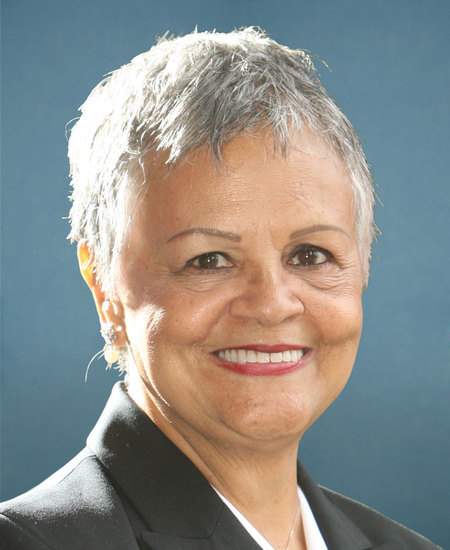
Rep. Bonnie Watson Coleman
Sponsored bills
Maddy summaryThe Excess Urban Heat Mitigation Act of 2025 creates a federal grant program to fund heat-reduction projects in communities most affected by urban heat islands, primarily low-income neighborhoods (defined as census tracts with ≥20% poverty rate) and areas with higher heat exposure for communities of color. It authorizes $30 million annually for grants to states, cities, tribes, or nonprofits for projects like planting native trees, installing cool roofs/pavements, building shaded transit stops, and creating community cooling centers. Grants require community engagement plans to ensure equitable participation and prioritize projects in underserved areas (75% of funds must target "covered census tracts"). The program mandates annual reporting to Congress and includes oversight to evaluate project success in reducing heat impacts.
Maddy summaryThis resolution (HRES 457) is a symbolic measure expressing congressional support for designating June 6, 2025, as "National Gun Violence Awareness Day" and June 2025 as "National Gun Violence Awareness Month." It does not create new laws or policies but encourages public awareness through specific actions: wearing orange on June 6, focusing on gun safety during summer months, and holding community discussions. The resolution references statistics on gun violence deaths and honors Hadiya Pendleton, a teen victim killed in 2013. It directly affects the public by calling for voluntary observance and community engagement, not government mandates.
Maddy summaryThis non-binding resolution (HRES 456) expresses congressional support for designating May 2025 as "Progressive Supranuclear Palsy Awareness Month." It directly affects individuals living with progressive supranuclear palsy (PSP), a rare neurodegenerative brain disorder impacting movement, cognition, and daily functioning, along with their families and caregivers. The resolution aims to raise public awareness, encourage research funding, and support organizations working to improve care and find treatments for PSP. It does not create new laws or funding but formally recognizes the need for greater attention to this condition.
Maddy summaryThe Menstrual Equity For All Act of 2025 requires schools, colleges, correctional facilities, and federal buildings to provide free menstrual products to those who need them. It makes menstrual products covered by Medicaid, prohibits states from taxing these products, and creates grant programs to support low-income individuals. Key provisions include mandating free products in educational settings, requiring employers with 100+ employees to provide them, and expanding Medicaid coverage for these items. The bill directly affects students, incarcerated individuals, homeless people, Medicaid beneficiaries, and low-income families by addressing period poverty through concrete access requirements.
Maddy summaryThis bill prohibits auto insurers from using factors like ZIP code, credit score, occupation, home ownership status, or education level to set insurance rates. It directly affects drivers - especially lower-income individuals - who have faced higher premiums based on these non-driving factors. Insurers must publicly disclose underwriting rules and submit compliance reports to the FTC, and consumers can sue for damages if insurers violate the law. The law aims to prevent pricing disparities tied to income or location rather than driving risk.
Maddy summaryThis bill requires colleges and universities to include suicide prevention contact information on student identification cards or their websites. Specifically, institutions must list the 988 Suicide and Crisis Lifeline, Crisis Text Line, and their campus mental health center on student IDs (or post the info online if IDs aren't issued). The requirement applies to all higher education institutions creating student ID cards after the bill's enactment, with a one-year implementation period. It directly affects students by ensuring immediate access to critical mental health resources through a routine campus tool.
Maddy summaryHR 3658, the 911 Community Crisis Responders Act of 2025, provides federal grants to states, tribes, and local governments to create unarmed mobile crisis response teams. These teams would handle nonviolent 911 calls related to mental health, substance use, homelessness, or disabilities - instead of sending police - by dispatching trained professionals like social workers or nurses. The bill requires grantees to update 911 systems for call triage, train dispatchers to identify appropriate referrals, and collect data on demographics, outcomes (like reduced ER visits), and program costs. It directly affects communities experiencing mental health or substance use crises by offering an alternative to law enforcement responses.
Maddy summaryThe National Police Misuse of Force Investigation Board Act of 2025 would create a federal Board to investigate deaths in police custody, officer-involved shootings, and severe force incidents resulting in bodily injury. The Board would have 8 members appointed by the President with specific qualifications in civil rights law, psychology, and related fields, and would produce detailed reports with demographic data, circumstances, and outcomes of each incident. Law enforcement agencies receiving certain federal grants would be required to respond to Board recommendations within 90 days and report annually on implementation progress. The bill also mandates family support services for victims' families and establishes procedures for the Board to conduct investigations, obtain evidence, and maintain public transparency through annual reports to Congress.
Maddy summaryThe End For-Profit Prisons Act of 2025 would end federal contracts with for-profit companies for core prison services - such as housing, safety, and discipline - in federal prisons and community confinement facilities. It requires the Bureau of Prisons and U.S. Marshals Service to transition to using federal employees for these services within 6 years (for prisons) and 8 years (for community confinement), with limited exceptions for state/local facilities meeting all standards. The bill also mandates annual facility inspections, regular reports on prison demographics (including race and gender), and new reentry support for released prisoners, such as information on job programs and benefits like Medicaid. These changes directly affect federal correctional agencies, for-profit prison operators, and incarcerated individuals.