

This resolution recognizes Black History Month as an important time to celebrate the unique contributions of all LGBTQ+ Black Americans in U.S. history.
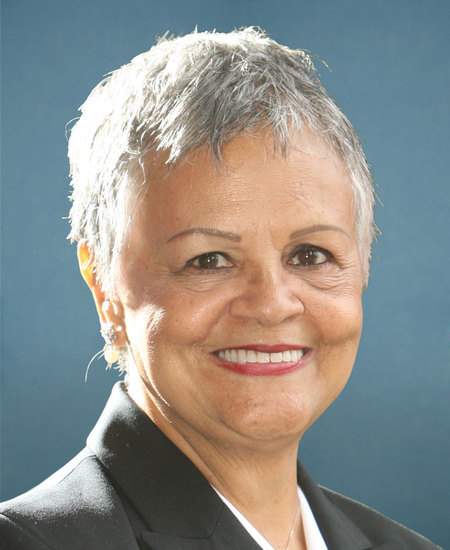
Rep. Bonnie Watson Coleman
Sponsored bills
Black History is American History Act This bill requires entities (e.g., institutions of higher education, libraries, and museums), in order to be eligible for certain grants administered by the Department of Education (ED), to include Black history in their teaching of American history. It also requires Black history to be included in tests administered by the National Assessment of Educational Progress (NAEP). Specifically, the bill mandates the inclusion of Black history as a required component of American history for such entities to be eligible for American History and Civics Academies' competitive grants. These grants support the establishment of (1) Presidential Academies for Teachers of American History and Civics, which offer workshops to teachers of American history and civics to strengthen their knowledge and prepare them to teach in these subjects; and (2) Congressional Academies for Students of American History and Civics, which support high school students in developing an understanding of these subjects. (Currently, Black history is not a required component of American history for either academy.) In addition, ED must give priority to grant applicants that align their activities with programs and resources of the Smithsonian Institution's National Museum of African American History and Culture. The bill also requires the inclusion of Black history in tests administered by the NAEP, which measures student academic achievement in various subjects.
Susan Harwood Training Grant Program Authorization Act This bill provides statutory authority for the Susan Harwood Training Grant Program, which awards grants to employer associations, labor unions, and other organizations to provide education and training to employees and employers on workplace safety and health. This training must include information on employee rights and employer responsibilities under the Occupational Safety and Health Act.
Coronavirus Medicaid Response Act This bill increases the Medicaid federal matching rate, also known as the Federal Medical Assistance Percentage (FMAP), for states and U.S. territories that experience economic downturns (i.e., high unemployment) beginning on or after January 1, 2020, in accordance with specified requirements and limitations. The bill's increase is in addition to previously enacted FMAP increases relating to COVID-19 (i.e., coronavirus disease 2019) but may not result in an FMAP greater than 95%.
Telehealth Modernization Act This bill modifies requirements relating to coverage of telehealth services under Medicare. Specifically, the bill extends certain flexibilities that were initially authorized during the public health emergency relating to COVID-19 (i.e., coronavirus disease 2019). Among other things, the bill allows (1) rural health clinics and federally qualified health centers to serve as the distant site (i.e., the location of the health care practitioner); (2) the home of a beneficiary to serve as the originating site (i.e., the location of the beneficiary) for all services (rather than for only certain services); and (3) all types of practitioners to furnish telehealth services, as determined by the Centers for Medicare & Medicaid Services.
This bill provides for the presentation of a Congressional Gold Medal to the Freedom Riders, in recognition of their contribution to civil rights by fighting for equality in interstate travel.
Juneteenth National Independence Day Act This bill establishes Juneteenth Independence Day as a federal holiday.
Workforce Promotion and Access Act or the WPA Act This bill requires the Department of Labor to establish a program to provide grants for job guarantee programs. Specifically, such grants are awarded on a competitive basis to political subdivisions of states, tribal entities, and outlying areas with a high unemployment rate to establish a program to ensure employment to residents. A job guarantee program qualifies under this bill if the jobs provided under the program pay a certain wage, are included in an established bargaining unit, provide health insurance, and comply with certain leave requirements. The bill also imposes a trading excise tax, with certain exemptions, on certain transactions occurring on a qualified board or exchange in the United States or with respect to a derivative. The rate of such tax is 0.1% on purchases of stocks, bonds, and derivatives. The tax applies to transactions by a controlled foreign corporation and must be paid by its U.S. shareholders.
Protecting LGBTQ Youth Act This bill expands programs that prevent and treat child abuse and neglect to address issues facing lesbian, gay, bisexual, and transgender youth. Specifically, these programs include (1) research and reporting requirements, (2) providing technical assistance, (3) grants to states and local agencies to train child-welfare personnel, and (4) community-based prevention-service grants, among others.
This resolution expresses support for the goals and ideas of Endometriosis Awareness Month. Endometriosis is a painful condition in which the tissue that normally lines the inside of the uterus grows outside the uterus.