This resolution urges the President to facilitate private medical supply donations and to deliver urgently needed medical supplies, including oxygen generator plants, to India and countries neighboring India that are facing the spread of COVID-19.
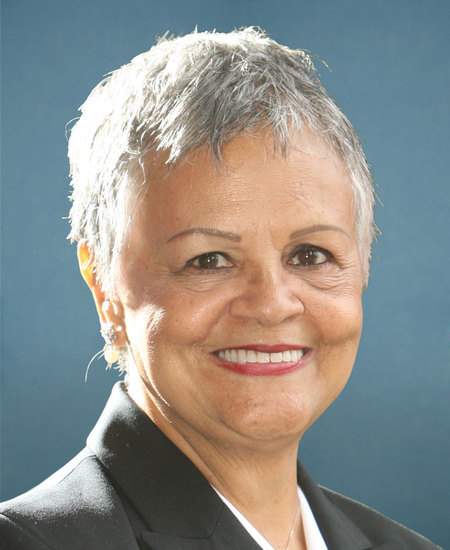
Rep. Bonnie Watson Coleman
Sponsored bills
Expand American Educational Opportunity Act of 2021 This bill replaces the Hope Scholarship and Lifetime Learning tax credits with a modified American Opportunity Tax Credit that (1) allows an income tax credit of up to $2,500 of the qualified tuition and related expenses of a student who is carrying at least one half of a normal course load, (2) allows a lifetime dollar limitation for the credit of $15,000 for all taxable years, and (3) increases the refundable portion of the credit to a maximum of $1,500. The bill defines qualified tuition and related expenses as tuition, fees, computer or peripheral equipment, child and dependent care expenses, and course materials for the taxpayer, the taxpayer's spouse, and dependents at certain postsecondary educational institutions. The bill also allows an exclusion from gross income, for income tax purposes, of any amount received as a Federal Pell Grant.
Better Care Better Jobs Act This bill establishes programs and provides funds for state Medicaid programs to improve home- and community-based services (HCBS), such as home health care, personal care, case management, and rehabilitative services. Specifically, the bill provides funds for the Centers for Medicare & Medicaid Services to award planning grants, develop quality measures, and provide technical assistance to states regarding specified HCBS improvements, particularly with respect to access, utilization, and the associated workforce. The bill also increases the Federal Medical Assistance Percentage (i.e., federal matching rate) for HCBS in states that develop plans and meet specified benchmarks for improvements. The bill also makes permanent (1) the Money Follows the Person Rebalancing Demonstration Program (a grant program to help states increase the use of HCBS for long-term care and decrease the use of institutional care), and (2) certain provisions regarding Medicaid eligibility that protect against spousal impoverishment for recipients of HCBS.
Therapeutic Fraud Prevention Act of 20 21 This bill prohibits commercial conversion therapy, which is a practice or treatment designed to change a person's sexual orientation or gender identity or otherwise change behaviors, thoughts, or expressions related to gender or sexual attraction. This prohibition does not apply to treatment that assists an individual undergoing a gender transition or facilitates identity exploration and development.
This bill provides for the award of a Congressional Gold Medal to Billie Jean King in recognition of her courageous and groundbreaking leadership advancing equal rights for women and the LGBTQ community in athletics, education, and our society.
Saving Hazardous And Declining Environments Act or the SHADE Act This bill requires the Department of Housing and Urban Development to award grants for government entities and nonprofit organizations to plant trees in low-income communities and in communities meeting designated minority or limited English-proficiency thresholds.
Vanessa Guillén Military Justice Improvement and Increasing Prevention Act This bill modifies the process and policy related to the disposition of charges and convening of courts-martial for certain sexual assault cases and other specified offenses under the Uniform Code of Military Justice (UCMJ). Among other elements, the bill provides that the determinations on the preferral, disposition, and referral of charges for specified offenses under the UCMJ must be made by a commissioned officer of the Armed Forces who is designated as a court-martial convening authority (in grade O-6 or higher) and who is available for detail as trial counsel, has significant trial experience, and is outside the chain of command of the member subject to the charges.
Bolstering Long-term Understanding and Exploration of the Great Lakes, Oceans, Bays, and Estuaries Act or the BLUE GLOBE Act This bill addresses data collection and monitoring of the Great Lakes, oceans, bays, estuaries, and coasts. The bill increases domestic and international coordination to enhance data management and monitoring of the Great Lakes, oceans, bays, estuaries, and coasts. It adds programs for the application and development of innovative technology to the list of technology programs used to combat illegal, unreported, and unregulated fishing. It also modifies requirements related to the scientific workforce in areas of oceanic and atmospheric research and development to include investigating whether there is a workforce shortage, workforce diversity, actions the federal government can take to increase diversity in the scientific workforce, and actions it can take to shorten the hiring backlog for such workforce. The National Oceanic Atmospheric Administration (NOAA) must (1) ensure that a goal of its cooperative institutes is to advance or apply emerging technologies, (2) create an ocean innovation prize to catalyze the rapid development and deployment of data collection and monitoring technology, and (3) seek to enter into an agreement with the National Academy of Sciences to assess the potential for an Advanced Research Projects Agency-Oceans. The bill also reauthorizes through FY2024 various NOAA hydrographic programs, including nautical mapping and charting. Additionally, relevant federal agencies must measure the value and impact of industries related to the Great Lakes, oceans, bays, estuaries, and coasts on the U.S. economy.

Blue Carbon for Our Planet Act This bill addresses the protection and restoration of coastal blue carbon ecosystems, which are vegetated coastal habitats and include mangroves, tidal marshes, and other tidal or salt water wetland that have the ability to sequester and store carbon. Specifically, the bill establishes the Interagency Working Group on Coastal Blue Carbon to (1) develop and maintain a map of these ecosystems, (2) assess the impediments to the protection and restoration of these ecosystems, and (3) establish national protection and restoration priorities regarding these ecosystems. The National Oceanic and Atmospheric Administration (NOAA) must chair the group and establish a national goal for conserving ocean and coastal blue carbon ecosystems within the territory of the United States and set targets to restore degraded coastal blue carbon ecosystems as appropriate. NOAA must also (1) establish integrated pilot programs to restore degraded coastal blue carbon ecosystems, and (2) enter into an agreement with the National Academy of Sciences to assess the long-term effects of geologic stores of carbon dioxide in a deep seafloor environment. Finally, the bill establishes requirements concerning the stewardship and standardization of blue carbon data in the Coastal Carbon Data Clearinghouse.
Puppy Protection Act of 2021 This bill requires the Department of Agriculture to expand standards that govern the humane handling, care, treatment, and transportation of animals to include new requirements for commercial dog dealers. Specifically, the standards must require dog dealers to provide to dogs adequate housing, exercise, and veterinary care; appropriate and nutritious food; continuous access to potable water; and meaningful socialization with humans and compatible dogs for at least 30 minutes each day. The standards must also include requirements for breeders to use safe breeding practices and make all reasonable efforts to find humane placement for retired breeding dogs.