

Two-State Solution Act This bill addresses U.S. policy and related activities to preserve conditions for a two-state solution to resolve territorial disputes between Israel and Palestine. The bill prohibits the United States from providing support for projects in geographic regions that came under Israeli control after June 5, 1967. It also prohibits the use of any U.S. security assistance, defense articles, or defense services provided to Israel for efforts to annex or exercise permanent control over any part of the West Bank or Gaza. Current law designates the Palestine Liberation Organization (PLO) as a terrorist organization and restricts its activities (e.g., prohibiting it from maintaining an office in the United States). The President may waive for up to six months some of these restrictions to serve U.S. national security or diplomatic interests. If the President certifies that the PLO has ceased supporting terrorist actions and met other conditions, the bill automatically terminates the terrorist organization designation. Goods produced in the West Bank or Gaza that are imported into the United States must indicate those areas as the country of origin on their labels. The bill expands the scope of certain foreign and development assistance to foster initiatives, including shared educational opportunities and youth activities, that connect Israelis and Palestinians. Additionally, the Department of State and the U.S. Agency for International Development may jointly award grants to private, nonprofit organizations to promote human rights and democracy, strengthen civil society, and otherwise address the needs of the Palestinian people.
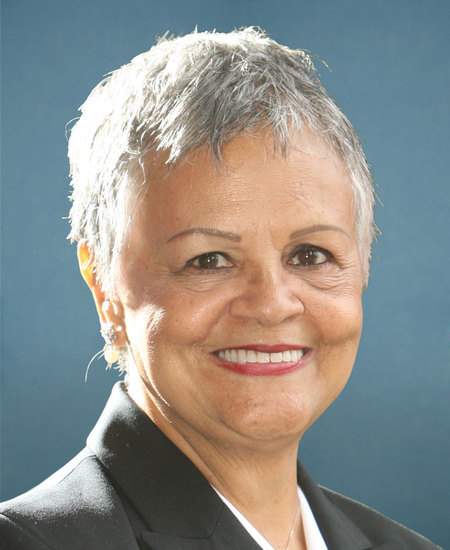
Rep. Bonnie Watson Coleman
Sponsored bills
Tyler Clementi Higher Education Anti-Harassment Act of 2021 This bill addresses harassment at institutions of higher education (IHEs). Specifically, the bill requires each IHE to include in its annual security report a statement of policy regarding harassment on the basis of a student's actual or perceived race, color, national origin, sex (including sexual orientation, gender identity, pregnancy, childbirth, a medical condition related to pregnancy or childbirth, and a sex stereotype), disability, or religion. In addition, the Department of Education may award grants to IHEs to initiate, expand, or improve programs to (1) prevent the harassment of students; (2) provide counseling or redress services to students who have been harassed or accused of subjecting other students to harassment; or (3) educate and train students, faculty, or staff to prevent harassment or address harassment if it occurs.
Keeping Renters Safe Act of 2021 This bill expressly authorizes the Department of Health and Human Services (HHS) to place a moratorium on residential evictions to prevent the spread of communicable diseases. The bill also requires HHS to implement a moratorium nationwide to reduce the spread of COVID-19. This moratorium must remain in effect for at least 60 days following the termination of the COVID-19 public health emergency. Current law authorizes HHS to take measures to prevent the spread of communicable diseases. As part of the COVID-19 response, HHS delegated this authority to the Centers for Disease Control and Prevention (CDC), which then issued (and extended) several orders banning residential evictions. Whether these orders exceed the CDC's statutory and constitutional authority has been the subject of multiple legal challenges; the Supreme Court blocked enforcement of the most recent order on August 26, 2021.
Extend Unemployment Assistance Act of 2021 This bill extends pandemic unemployment compensation provisions set to expire on September 6, 2021, until February 1, 2022. Extended provisions include benefits to covered individuals who are not eligible for regular unemployment compensation or traditional extended benefits, the $300 weekly benefit increase, waiting week benefits, and federal reimbursement of short-time compensation. The bill also increases the maximum duration of compensation from 79 weeks to 100 weeks.
Fossil Free Finance Act This bill requires large bank holding companies to develop and implement emission reduction plans. Such a plan must include strategies for a company to equitably reduce and eventually eliminate financed greenhouse gas emissions by January 1, 2050, and to discontinue specified fossil fuel projects and financing. The bill also prohibits the use of carbon offsets in such a plan, sets forth technological requirements for reductions, and requires the prioritization of specified social impacts. Plans must be submitted to the Board of Governors of the Federal Reserve System for approval every two years.
John R. Lewis Voting Rights Advancement Act of 2021 This bill establishes new criteria for determining which states and political subdivisions must obtain preclearance before changes to voting practices may take effect. Preclearance is the process of receiving preapproval from the Department of Justice (DOJ) or the U.S. District Court for the District of Columbia before making legal changes that would affect voting rights. A state and all of its political subdivisions shall be subject to preclearance of voting practice changes for a 10-year period if 15 or more voting rights violations occurred in the state during the previous 25 years; 10 or more violations occurred during the previous 25 years, at least 1 of which was committed by the state itself; or 3 or more violations occurred during the previous 25 years and the state administers the elections. A political subdivision as a separate unit shall also be subject to preclearance for a 10-year period if three or more voting rights violations occurred there during the previous 25 years. States and political subdivisions that meet certain thresholds regarding minority groups must preclear covered practices before implementation, such as changes to methods of election and redistricting. Further, states and political subdivisions must notify the public of changes to voting practices. Next, the bill authorizes DOJ to require states or political subdivisions to provide certain documents or answers to questions for enforcing voting rights. The bill also outlines factors courts must consider when hearing challenges to voting practices, such as the extent of any history of official voting discrimination in the state or political subdivision.
Collaborate in an Orderly and Cohesive Manner Act This bill requires the Department of Health and Human Services (HHS) to award grants for implementing and evaluating specified models of care that integrate the delivery of behavioral health and primary care services. Specifically, HHS must award grants to primary care providers for the initial costs (e.g., hiring staff) of implementing such models. In awarding the grants, HHS must prioritize recipients that provide care to medically underserved populations and in areas where the prevalence of behavioral health conditions exceeds the national average. HHS must also provide additional incentive payments to recipients that use appropriate billing codes and quality measures for behavioral health services. In addition, HHS must award grants to national and regional organizations for providing technical assistance to health care providers and systems to improve implementation of integrated behavioral health and primary care models. Furthermore, HHS may direct its agencies to expand efforts to evaluate current and emerging integrated behavioral health and primary care models.
This resolution expresses the sense of the House of Representatives that the United States shall recognize kind actions in our country, encourage kindness, spread love, and foster a culture of being kind to one another.
This resolution calls on all Americans to observe the 20th anniversary of the September 11 attacks and honor those who lost their lives.
Working Dog Commemorative Coin Act This bill directs the Department of the Treasury to mint and issue 50,000 $5 gold coins, 500,000 $1 silver coins, and 750,000 half-dollar clad coins in commemoration of the service that working dogs provide to society. The designs of the coins minted under this bill shall be emblematic of the contributions of working dogs to society, including in detection, military service, therapy and assistance. Treasury may issue coins only during the one-year period beginning on January 1, 2023. All sales of coins shall include a surcharge, which shall be paid to America's VetDogs for general expenses associated with the fulfillment of its mission.