

Families Belong Together Act This bill provides various immigration benefits for eligible alien parents (or legal guardians) and minor children who were separated by the Department of Homeland Security (DHS) between January 20, 2017, and January 20, 2021. Generally, to be an eligible parent or minor child under this bill, the alien must not be inadmissible for certain crime- or security-related grounds, though DHS may waive certain grounds for humanitarian or public interest reasons. Furthermore, an eligible child who was separated as a minor remains eligible for the immigration benefits after reaching majority. DHS must grant humanitarian parole into the United States to an eligible alien who requests such parole, regardless of whether the alien is physically present in the United States. An eligible alien in the United States may apply for lawful permanent resident status. U.S. Citizenship and Immigration Services shall grant a qualifying alien's lawful permanent resident status within 30 days of receiving the alien's application. An alien who receives lawful permanent resident status under this bill shall be eligible for benefits and services that are available to an alien who is admitted as a refugee. Certain annual numerical limitations shall not apply to aliens who receive lawful permanent resident status under this bill. If an alien seeks judicial review of a denial of an application for lawful permanent resident status under this bill, the Department of Justice shall appoint counsel to represent that alien upon request.
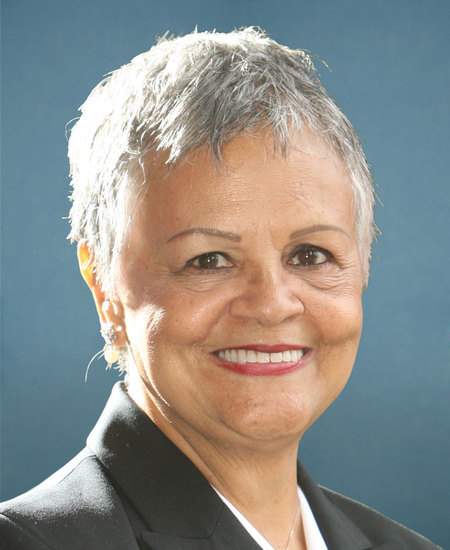
Rep. Bonnie Watson Coleman
Sponsored bills
Jaime's Law This bill establishes background check requirements for the sale and transfer of ammunition. Specifically, the bill prohibits a licensed importer, manufacturer, or dealer from transferring ammunition to an unlicensed individual prior to submitting a background check through the National Instant Criminal Background Check System. It also establishes penalties for violations. (Currently, background checks are required under these circumstances for the transfer of firearms, but not for ammunition.) Additionally, it prohibits an ammunition transfer between private parties (i.e., unlicensed individuals) unless a licensed importer, manufacturer, or dealer first takes possession of the ammunition to conduct a background check. However, this prohibition does not apply to certain ammunition transfers, such as a gift between spouses in good faith.
Gay and Trans Panic Defense Prohibition Act of 2021 This bill generally prohibits a federal criminal defendant from asserting, as a defense, that the nonviolent sexual advance of an individual or a perception or belief of the gender, gender identify or expression, or sexual orientation of an individual excuses or justifies conduct or mitigates the severity of an offense.
Maddy summaryHR 2584, the Judiciary Act of 2021, would change the structure of the U.S. Supreme Court by increasing the number of associate justices from eight to twelve. This bill directly affects the Supreme Court's composition and operations, requiring a quorum of eight justices instead of six to conduct business. The key provision amends Title 28 of the U.S. Code to reflect these numerical changes to the Court's membership and quorum requirements. This is a procedural change to the Court's statutory structure, not a policy affecting the public.
Fair Housing for Domestic Violence and Sexual Assault Survivors Act of 2021 This bill prohibits discrimination against survivors of domestic violence, sexual assault, or sex trafficking in the sale or rental of housing and other related real estate activities.
Help Empower Americans to Respond Act of 2021 or the HEAR Act This bill establishes a new criminal offense for the import, sale, manufacture, transfer, or possession of a firearm silencer or firearm muffler. The bill does not prohibit certain conduct with respect to a firearm silencer or firearm muffler, including the following: importation, sale, manufacture, transfer, or possession related to certain law enforcement efforts, or authorized tests or experiments; and importation, sale, transfer, or possession related to securing nuclear materials. In addition, the bill requires the Department of Justice to establish and implement a buy-back program to purchase firearm silencers and firearm mufflers. States and local governments may use Edward Byrne Memorial Justice Assistance Grant Program funds to compensate individuals who surrender firearm silencers and firearm mufflers under this buy-back program.
Khalid Jabara and Heather Heyer National Opposition to Hate, Assault, and Threats to Equality Act of 2021 or the Jabara-Heyer NO HATE Act of 2021 This bill creates grants for state and local governments to combat hate crimes. It also authorizes additional penalties for hate crime offenses. Specifically, it establishes grants for states to create state-run hate crimes reporting hotlines. It also authorizes grants for states and local governments to implement the National Incident-Based Reporting System and to conduct law enforcement activities or crime reduction programs to prevent, address, or respond to hate crimes. Finally, in the case of an individual convicted of a hate crime offense and placed on supervised release, the bill allows a court to order that the individual participate in educational classes or community service as a condition of supervised release.
Defending Each and Every Person from False Appearances by Keeping Exploitation Subject to Accountability Act of 2021 or the DEEP FAKES Accountability Act This bill establishes requirements for advanced technological false personation records (i.e., deep fakes) and establishes criminal penalties for related violations. Specifically, it requires producers of deep fakes to generally comply with certain digital watermark and disclosure requirements (e.g., verbal and written statements). It establishes new criminal offenses related to (1) the production of deep fakes which do not comply with related watermark or disclosure requirements, and (2) the alteration of deep fakes to remove or meaningfully obscure such required disclosures. A violator is subject to a fine, up to five years in prison, or both. It also establishes civil penalties and permits individuals to bring civil actions for damages. Additionally, it revises the criminal offense of fraud in connection with certain identification documents to include deep fakes. The bill also directs the Department of Justice to take certain actions, such as publishing a report related to deep fakes that includes a description of the efforts of Russia and China to use technology to impact elections. Software manufacturers who reasonably believe software will be used to produce deep fakes must ensure it has the technical capability to insert watermarks and disclosures. Finally, the bill directs the Department of Homeland Security to establish a task force to, among other things, advance efforts of the federal government to combat the national security implications of deep fakes.
Prevent Gun Trafficking Act This bill establishes new federal criminal offenses for gun trafficking and related conduct. First, the bill establishes a stand-alone federal criminal offense for gun trafficking. A violation is punishable by a fine, a prison term of up to 10 years, or both. The bill also authorizes the seizure and forfeiture of the firearms and ammunition involved in the offense, the property involved in the offense, and the proceeds (or property traceable to the proceeds) derived from the offense. Second, the bill makes it unlawful to sell or dispose of a firearm or ammunition to any person knowing or having reason to believe that the person intends to sell or dispose of the firearm in violation of a federal law, or to sell or dispose of the firearm to a person in another state in violation of that state's law. A violation is subject to existing penalties under current law—a fine, a prison term of up to 10 years, or both. Current law already authorizes the seizure and forfeiture of firearms and ammunition involved in the offense. This bill also authorizes the seizure and forfeiture of the property involved in the offense and the proceeds (or property traceable to the proceeds) derived from the offense.
Gun Records Restoration and Preservation Act This bill amends several appropriations laws to remove limitations on the authority of the Bureau of Alcohol, Tobacco, Firearms and Explosives to conduct activities related to the administration of federal firearms laws. Specifically, the bill removes provisions that limit the use of firearms tracing data, limit the disclosure of data under the Freedom of Information Act, prohibit imposing a requirement that gun dealers conduct a physical inventory, prohibit consolidating or centralizing records maintained by federal firearm licensees (e.g., gun dealers), and require national instant criminal background check records to be destroyed within 24 hours.