

Maddy summaryThe Feed Our Families Act of 2025 ensures SNAP (Supplemental Nutrition Assistance Program) benefits continue for 90 days during the first government funding lapse in a fiscal year. It appropriates emergency funds from the Treasury to cover SNAP operations for the initial 90 days of a lapse in discretionary appropriations for the program. These funds are held in reserve and can only be used to maintain SNAP program services during that period. The bill directly affects millions of low-income households relying on SNAP benefits by preventing immediate disruptions during early government shutdowns.
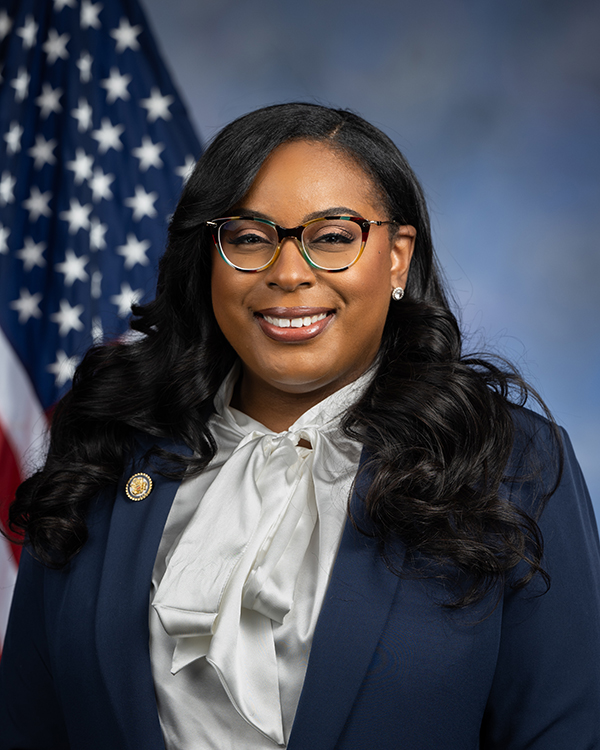
Rep. LaMonica McIver
Sponsored bills
Maddy summaryThis bill mandates that all new $20 U.S. currency printed after December 31, 2028, must prominently feature Harriet Tubman's portrait on the front. It requires the Treasury Secretary to release a preliminary design for this updated $20 bill by December 31, 2026. The bill directly affects the U.S. Treasury Department, codifying a 2016 announcement to feature Tubman on the $20 note (replacing Andrew Jackson) and ending a historical pattern where no woman had appeared on U.S. paper money.
Maddy summaryThis bill (HR 1988) provides unemployment benefits eligibility for certain federal workers and military members during government shutdowns. It deems eligible employees - such as military personnel, NOAA Commissioned Corps members, and excepted civilian workers performing emergency duties - as "totally separated from federal service" during funding gaps. This allows them to access unemployment benefits immediately, without waiting periods, for weeks of unemployment starting March 14, 2025. The bill directly affects federal employees who remain on duty but are unpaid due to shutdowns.
Maddy summaryThis bill provides federal grants to public or nonprofit health care providers serving minority, low-income, or medically underserved communities to expand maternal and infant health services. It specifically funds prenatal, postnatal, and postpartum care while requiring grantees to offer culturally appropriate services and limit administrative costs to 10% of grant funds. Priority is given to organizations led by or located within the communities they serve, aiming to reduce racial and economic disparities in care access and health outcomes. The funding is authorized for fiscal years 2026-2030, with grantees required to coordinate with other federal maternal health programs to avoid duplication.
Maddy summaryHR 1902, the HERO Act, creates a national data system to track suicide rates among public safety officers (including firefighters, EMTs, police, and telecommunicators) and requires annual reports to Congress with detailed breakdowns by age, gender, occupation, and employment status (volunteer, career, etc.). The bill funds peer-support mental health programs for fire departments and EMS agencies, establishes confidential wellness services for healthcare providers, and develops resources to train mental health professionals on first responder-specific stressors and PTSD. It prohibits using suicide data to deny life insurance or benefits to survivors and mandates that all collected data be kept confidential and secure. This legislation directly affects all public safety officers nationwide by improving data collection, access to mental health resources, and evidence-based interventions to address suicide and trauma.
Maddy summaryThis bill prohibits the non-consensual sharing of digitally manipulated intimate images (deepfakes) of identifiable people. It creates a civil right for victims to sue individuals who distribute such images without consent, allowing claims for actual damages, $150,000 in liquidated damages, or punitive damages, plus attorney fees. Criminal penalties up to 10 years in prison apply for malicious disclosure intended to harass, harm reputation, or facilitate violence. Exceptions include disclosures to law enforcement for investigations, legitimate public interest matters (excluding mere public figure status), or efforts to assist the victim. The law specifically defines "intimate digital depictions" to include explicit body parts, sexual fluids, or sexual conduct in manipulated images.
Maddy summaryThis bill authorizes a posthumous Congressional Gold Medal for actor James Earl Jones to recognize his career achievements in theater and film. It directs the Treasury Secretary to strike a gold medal bearing his name, which will be presented to his son, Flynn Earl Jones, following Jones' passing. The bill also permits the sale of bronze duplicates to cover costs. As a ceremonial honor with no policy changes, it does not affect legislation or government operations.
Maddy summaryHR 1918, the Farewell to Foam Act of 2025, prohibits the sale of most foam food containers, packaging peanuts, and foam coolers starting January 1, 2028. It directly affects restaurants, grocery stores, food vendors, manufacturers, and retailers who sell these items, excluding medical coolers used for drugs or medical products. The bill imposes escalating civil penalties for violations: $250 for the second offense, $500 for the third, and $1,000 for fourth or subsequent violations, with reduced penalties for small businesses under specific revenue thresholds. Enforcement is led by the EPA Administrator, with states allowed to enforce under federal guidelines.
Maddy summaryHR 1967 would rename the National School Lunch Program Act to honor Jean E. Fairfax, a civil rights activist who worked to expand equitable access to school meals for marginalized communities. The bill amends over 40 federal statutes to replace "Richard B. Russell" with "Jean E. Fairfax" in all official references, including program titles and legal citations. This is a purely procedural change that updates naming conventions without altering program eligibility, funding, or operations. The renaming follows findings that Richard B. Russell opposed civil rights legislation and segregation, while Jean E. Fairfax advocated for inclusive school meal access.
Maddy summaryHR 1855, the National Amusement Park Ride Safety Act, clarifies that permanently fixed amusement rides (like stationary roller coasters) are excluded from the definition of "amusement ride" under the Consumer Product Safety Act. This amendment shifts regulatory focus to portable rides (like carnival equipment) by directing $5 million annually for non-permanently fixed rides and $6.5 million for permanently fixed rides to the Consumer Product Safety Commission. The bill directly affects amusement parks with portable rides and the CPSC’s enforcement scope, without creating new safety standards. It specifically revises existing definitions and funding allocations under the Consumer Product Safety Act.