

Maddy summaryThe Space SSA Transition Act of 2023 directs the transition of certain space situational awareness (SSA) services currently provided by the Department of Defense to the Department of Commerce, specifically the National Oceanic and Atmospheric Administration (NOAA). The bill requires an Interagency Transition Plan within six months, with a target date of December 31, 2026 for public deployment of civil SSA services, and authorizes $90 million for Commerce in fiscal year 2024 and $95 million in 2025 to support this transition. It mandates that the new SSA services be provided free of direct user fees to commercial and government space operators, with requirements for developing voluntary consensus standards and cybersecurity protections. The bill aims to establish the Department of Commerce as the primary U.S. government source for space situational awareness services, improving accuracy and promoting international cooperation in space safety.
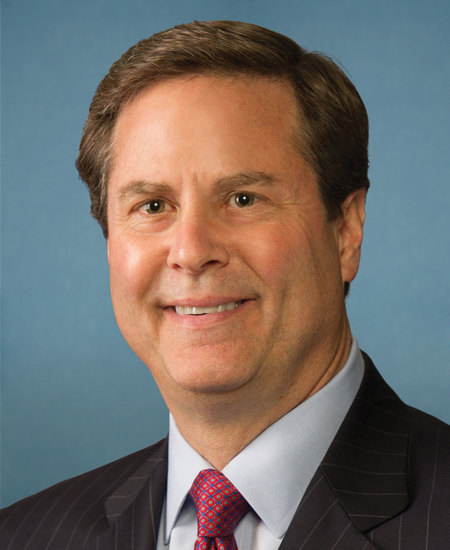
Rep. Donald Norcross
Sponsored bills
Maddy summaryHR 5433, the Child Care Stabilization Act, provides $16 billion annually from 2024 to 2028 to stabilize the child care sector through grants administered by the Health and Human Services Secretary. It directly affects licensed child care providers by offering stable funding to cover operating costs, while supporting higher wages for early educators without raising family fees. Key provisions include expanding access to high-quality, affordable care - especially for infants/toddlers, rural communities, and children with disabilities - and addressing shortages in underserved areas. The funding builds on existing American Rescue Plan resources, aiming to strengthen the child care workforce and increase available options for working families.
Maddy summaryHR 5428, the No Tax Breaks for Union Busting (NTBUB) Act, prevents employers from deducting certain expenses related to influencing workers' decisions about union representation. It targets spending on tactics like anti-union meetings, workplace surveillance, or consultants during organizing campaigns, making these costs non-deductible for tax purposes. Employers must report such expenses on their tax returns, including details about the activities and amounts spent. The bill aims to remove tax incentives for employer interference in union elections, aligning with federal labor law protections for workers' collective bargaining rights.
Maddy summaryHR 3152, the "Fight CRIME Act," aims to maintain international restrictions on Iran's missile-related activities by requiring diplomatic efforts to extend these restrictions before they expire in October 2023. The bill mandates annual reports detailing U.S. diplomatic strategies, potential impacts of expiration, and measures to deter missile technology transfers to Iran. It establishes sanctions against foreign individuals or entities that knowingly support Iran's missile or drone programs, including asset freezes and visa restrictions. These sanctions apply regardless of whether UN restrictions remain in effect after their expiration, directly affecting foreign entities involved in these activities.
Maddy summaryThe Wage Theft Prevention and Wage Recovery Act requires employers to provide detailed paystubs showing wage calculations, initial disclosures about wage rates and classification, and timely final payments upon termination. It increases civil penalties for wage theft violations to up to $110,150 per employee affected for repeated violations and raises liquidated damages to up to 3 times the amount of unpaid wages. The bill extends the statute of limitations for wage theft claims from 2-3 years to 4-5 years and creates a $50 million grant program to support community partnerships that prevent wage theft and help workers recover unpaid wages. These provisions directly affect low-wage workers who experience wage theft, employers who engage in wage theft, and the Department of Labor's enforcement efforts under the Fair Labor Standards Act.
Maddy summaryThis bill requires federal agencies to acquire and maintain opioid overdose reversal kits (like naloxone) and train employees annually on their use, effective within 270 days of enactment. It mandates these actions for all federal agencies - including the Veterans Health Administration - while providing non-mandatory guidance to private employers on similar practices. The law directly affects federal workplaces by making kits and training a requirement, and indirectly encourages private employers to adopt similar safety measures. Key provisions include a 270-day deadline for the Labor Department to issue regulations for federal agencies and non-binding guidance for other employers. The bill focuses on practical workplace safety measures without altering existing federal health or safety laws.
Maddy summaryThis bill would prevent government shutdowns by automatically continuing federal funding at the previous year's level if Congress fails to pass annual budget bills by October 1. It requires Congress to prioritize budget legislation over other matters during funding gaps, with only limited exceptions for true emergencies like national security threats. All federal programs and agencies would operate using prior-year funding rates until a new budget is enacted, applying broadly across the government unless specific exemptions exist under current law. The bill does not create new spending but changes the process to avoid shutdowns by default.
Maddy summaryThis bill designates the Peter J. McGuire Memorial and Gravesite in Pennsauken, New Jersey, as the "Peter J. McGuire Memorial National Commemorative Site." It formally recognizes the site's historical significance as the resting place of Peter J. McGuire, a foundational labor leader who co-founded the American Federation of Labor and proposed Labor Day. The designation does not make the site part of the National Park System but allows for cooperative educational programs. The memorial, already listed on both New Jersey and National Registers of Historic Places since 2018-2019, honors McGuire’s role in labor history.
Maddy summaryThis bill creates a new $0.20 per credit system (adjustable for inflation) for conventional biofuel waivers under the Clean Air Act, directly affecting refiners and fuel producers with renewable fuel obligations. Credits must be used immediately for that year's compliance and cannot be resold or applied toward other biofuel requirements. Revenue from credit sales is split equally: one-third funds advanced biofuel investments, one-third supports agricultural diversification programs, and one-third flows into the Habitat and Wildlife Restoration Fund. This fund targets conservation in areas impacted by corn/soy expansion since 2007, managed with the National Fish and Wildlife Foundation.
Maddy summaryThis bill requires the Bureau of Prisons to develop and implement a strategy for scanning all incoming mail at federal prisons to stop fentanyl and other synthetic drugs from entering facilities. It directs the Bureau to evaluate existing scanning technology within 180 days and submit a detailed plan to Congress within 90 days, including how to provide digital copies of mail to inmates within 24 hours and physical copies within 30 days (if safe). The strategy must achieve 100% mail scanning capacity at all federal prisons, prioritize high-security facilities, and include a budget proposal for fiscal years 2024-2026. This directly affects federal prisons, inmates, and Bureau employees by changing mail processing procedures to enhance safety and reduce staffing burdens from manual mail checks.