

Maddy summaryHRES 1145 is a non-binding resolution recognizing April as "Community College Month" to celebrate over 1,000 U.S. community colleges. It highlights these institutions' role in providing affordable higher education, workforce training, and economic support - serving 10 million students annually and contributing significantly to national prosperity. The resolution cites their impact, including generating $898 billion in added income and returning $6.80 in tax revenue per public dollar invested. This symbolic gesture aims to acknowledge community colleges' nationwide contributions without creating new policies or funding.
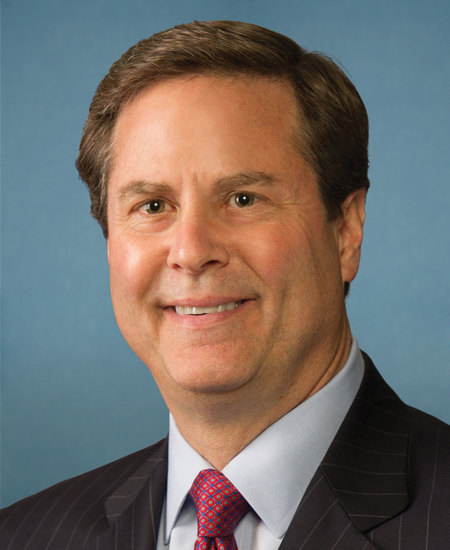
Rep. Donald Norcross
Sponsored bills
Maddy summaryHRES 1148 is a resolution passed by the U.S. House of Representatives that condemns the Iranian government for supporting terrorism, regional proxy conflicts, and internal suppression of dissent - including its crackdown on protests following Mahsa Amini's death in 2022. It specifically calls for maintaining sanctions against Iran, supporting the Iranian Resistance's Ten-Point Plan (which advocates for a democratic, secular, nonnuclear Iran), and protecting Iranian political refugees in Albania. The resolution also affirms the Iranian people's right to self-determination under international law and urges the U.S. to recognize their struggle for freedom. As a non-binding resolution, it does not create new laws but formally expresses congressional stance.
Maddy summaryHRES 1136 is a non-binding House resolution expressing support for designating April 2024 as "Parkinson’s Awareness Month." It highlights that Parkinson’s disease affects over 1 million people in the U.S. annually, causes significant health impacts, and requires increased research and support. The resolution urges continued funding for Parkinson’s research, recognizes individuals participating in clinical trials, and commends organizations aiding those living with the disease and their caregivers. This resolution has no legal effect but aims to raise public awareness and support for Parkinson’s advocacy efforts.
Maddy summaryThe Cultural Resource Challenge Act of 2024 requires the National Park Service (NPS) to strengthen the management and preservation of cultural resources within national parks and historic sites. It creates a grant program to fund projects enhancing cultural resource resilience (e.g., climate adaptation, digital documentation), prioritizing work that supports Native American, minority, and underrepresented communities, and includes a $20 million Career Academy for NPS staff training on climate impacts, cultural competency, and community engagement. Eligible recipients include tribal governments, states, nonprofits, and educational institutions, with grants covering up to 80% of project costs (waivable for tribal projects under $10,000). The bill mandates annual progress reports to Congress and a comprehensive "State of our Cultural Resources" report within four years, authorizing $250 million over six years (2025-2030) for implementation.
Maddy summary# Summary of Proposed WIOA Amendment This document proposes significant amendments to the Workforce Innovation and Opportunity Act (WIOA), with key changes including: 1. **YouthBuild Program Enhancement**: - Increased annual funding authorization to $108,150,000 - New performance reporting requirements - Added focus on opioid-related training and services 2. **New Reentry Employment Opportunities Program** (Section 172): - Creates a competitive grant program for justice-involved individuals - Requires evidence-based practices and performance metrics - Includes specific requirements for recidivism reduction - Defines "eligible adult" (age 25+) and "eligible youth" (age 14-24) 3. **Strengthening Community Colleges Program** (Section 173): - Creates new grant program with $65,000,000 annual funding - Requires industry partnerships for workforce development - Mandates evidence-based program design - Focuses on recognized postsecondary credentials and career pathways 4. **Performance Accountability System**: - Enhanced data collection and reporting requirements - New requirement for making data available in "linked, open, and interoperable data formats" - More detailed performance metrics for all programs 5. **Funding Increases**: - Increased authorizations for multiple programs: - Native American programs: $61,800,000 annually - Migrant and seasonal farmworker programs: $100,317,900 annually - Technical assistance: $5,000,000 annually - Evaluations and research: $12,720,000 annually 6. **Administrative Changes**: - New consultation requirement with labor organizations for on-the-job training - Revised definitions (e.g., "English language learners" changed to "English learners") - New requirements for public reporting of matching funds 7. **Data Infrastructure**: - New "Workforce Data Infrastructure" provisions (Section 174) - Requirements for interoperable data systems - Focus on credential registries and data sharing The proposed amendment emphasizes data-driven decision making, industry-aligned training, performance accountability, and expanded opportunities for underserved populations including justice-involved individuals, opioid treatment participants, and individuals with barriers to employment.
Maddy summaryThis bill amends the Higher Education Act to fix the Public Service Loan Forgiveness (PSLF) program, which forgives federal student loans after 10 years of public service. It directly affects public servants (e.g., teachers, nurses, police, government workers) with federal student loans who previously faced denial due to unclear rules or servicer errors. Key changes include counting payments made during certain forbearances, deferments, and grace periods toward the required 120 payments, and clarifying that AmeriCorps/Peace Corps service and parent PLUS loans qualify. The bill aims to make forgiveness more accessible by expanding eligible payment types and employment scenarios under the existing PSLF framework.
Maddy summaryHR 7801, the Sultana Steamboat Disaster Commemorative Coin Act of 2024, authorizes the U.S. Mint to produce commemorative coins honoring the 1865 Sultana steamboat disaster - the worst maritime disaster in U.S. history, which killed nearly 1,200 people. The bill specifies three coin types ($5 gold, $1 silver, and half-dollar clad) to be minted between January 1, 2027, and December 31, 2027, with surcharges from sales directed to the Sultana Historical Preservation Society for museum development and artifact preservation. The coins will be sold at face value plus surcharges ($5-$35 per coin), and the funds must support constructing a museum, exhibits, and preserving disaster-related history. This bill does not create new laws but enables commemorative coin sales to fund a specific historical preservation effort.
Maddy summaryHR 7770, the Rosie the Riveter Commemorative Coin Act, authorizes the U.S. Mint to produce and sell three commemorative coins honoring women who worked on the U.S. home front during World War II. It specifies $5 gold coins (max 50,000), $1 silver coins (max 400,000), and half-dollar coins (max 750,000), all to be issued between January 1, 2025, and December 31, 2025. Each coin sale includes a surcharge ($35 for gold, $10 for silver, $5 for half-dollar), with all surcharge funds directed to the Rosie the Riveter Trust for maintaining the Rosie the Riveter WWII Home Front National Historical Park and educational programs. The coins will feature designs reflecting the legacy of diverse women workers and must meet specific weight, diameter, and composition standards.
Maddy summaryHR 7629, the Protect Our Letter Carriers Act of 2024, allocates $1.4 billion annually (2025-2029) to the U.S. Postal Service for high-security collection boxes and replacing physical universal mailbox keys with electronic versions, directly affecting USPS operations and letter carriers. It requires the Attorney General to appoint specialized prosecutors in each district to coordinate investigations and prosecutions of postal-related crimes, such as assaults on carriers or mail theft. The bill also mandates the U.S. Sentencing Commission to adjust guidelines so that assaults or robberies against postal employees are treated with the same severity as assaults against law enforcement officers. These provisions aim to enhance safety through infrastructure upgrades, improved prosecution, and stricter sentencing for crimes targeting postal workers.
Maddy summaryThe Linemen Legacy Act amends Section 2(6) of the Homeland Security Act of 2002 to explicitly include "utility line technicians responding to a major disaster or emergency declared by the President" as emergency response providers. This directly affects utility line technicians who work during federally declared disasters, granting them formal recognition under federal law as part of the emergency response workforce. The bill updates an existing legal definition without creating new programs, funding, or requirements - only expanding the scope of who qualifies under current disaster response frameworks.