

Country of Origin Labeling Requirement Act or the COOL Online Act This bill requires sellers of imported products online to conspicuously disclose the country of origin of the products and the country where the seller's principal place of business is located. This requirement does not apply to specified products, such as agricultural commodities, food or drugs, or previously owned items. The Federal Trade Commission must enforce violations of this requirement as unfair or deceptive trade practices.
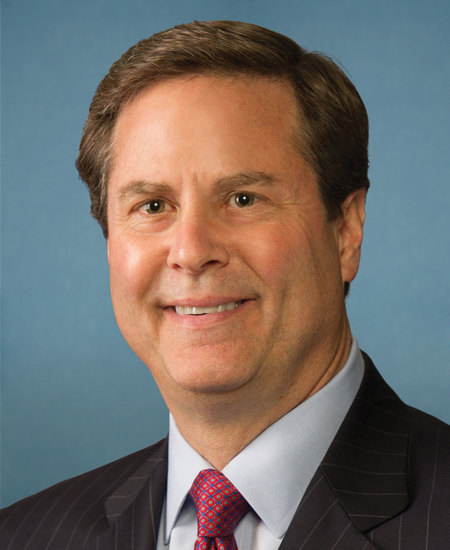
Rep. Donald Norcross
Sponsored bills
Maddy summaryThe Keep Public Funds in Public Schools Act of 2026 eliminates a federal tax credit that allowed parents to deduct contributions to scholarship granting organizations from their income. By removing these specific tax breaks, the bill prevents the use of public tax dollars to support private school vouchers and scholarship programs. This change directly affects families who currently rely on these tax incentives to fund education outside the public school system. The provisions take effect for taxable years beginning after December 31, 2026.
Maddy summaryHR 5408, the Faster Labor Contracts Act, requires employers to begin negotiating a first contract with a newly certified union within 10 days of written request. If no agreement is reached within 90 days, the parties must seek mediation, and if unresolved after 30 days of mediation, the dispute moves to binding arbitration by a three-member panel. The arbitration decision, based on factors like employer finances, industry standards, and cost of living, becomes binding for two years. This bill directly affects newly certified unions and their employers during initial contract negotiations, aiming to reduce delays that currently average 465 days.
Maddy summaryThis resolution is a procedural measure that allows the House of Representatives to immediately consider and vote on a separate bill (H.R. 5408) without following standard legislative procedures. It waives certain rules that would normally apply, such as points of order and debate restrictions, to expedite the process. The resolution does not create new policy but instead sets the parliamentary framework for advancing a bill that aims to speed up contract negotiations under the National Labor Relations Act.
Maddy summaryThe Student Loan Refinancing Act of 2026 establishes a new program allowing borrowers to refinance existing Federal Direct and FFEL Program loans into new Federal Direct loans with fixed interest rates. The bill requires the Secretary of Education to offer these refinanced loans at interest rates equal to the current rates for new loans of the same type, while protecting borrowers from origination fees and ensuring the total repayment period does not increase. To facilitate this process, the legislation mandates a public awareness campaign and includes specific rules that allow payments made on the original loans to count toward income-driven repayment plans and public service loan forgiveness. Additionally, the act limits borrowers to refinancing their loans no more than twice within a ten-year period to prevent repeated refinancing.
Maddy summaryThis bill simplifies filing requirements for employer-sponsored retirement plans. It extends the deadline for submitting Form 5500 (the annual report for retirement plans) from 210 days or 6 months after the plan year end to 15 days after the end of the 9th calendar month following the plan year. It also allows electronic signatures for these filings and requires agencies to update regulations to reflect these changes. The bill directly affects employers and plan administrators who manage retirement plans under federal law, reducing administrative burdens and modernizing the filing process.
Maddy summaryThis bill authorizes the U.S. Mint to produce commemorative $5 gold and $1 silver coins marking the 25th anniversary of the September 11, 2001, terrorist attacks. The coins must feature designs honoring victims and first responders (including the inscription "Never Forget") and will be sold only during 2027-2028. All surcharges ($35 per gold coin, $10 per silver coin) collected from sales will fund the National September 11 Memorial and Museum at the World Trade Center, with no net cost to the federal government. The coins are legal tender but primarily intended for collectors, not circulation.
Maddy summaryThis bill directs the Secretary of the Interior to study the Mullica River watershed in New Jersey for potential designation as a Wild and Scenic River. The study will focus on specific segments of the Mullica River and its tributaries, including the Wading River, Batsto River, and various creeks and brooks. If the study concludes that these waters meet the necessary criteria, the federal government could officially protect them under the Wild and Scenic Rivers Act. This legislation does not immediately change the status of the rivers but establishes a process to evaluate their suitability for conservation.
Dental Care for Veterans Act This bill expands eligibility for veterans for dental care provided by the Department of Veterans Affairs (VA). Specifically, the bill makes all veterans who are enrolled in the VA health care system eligible for VA-provided dental services. Currently, only veterans who have a service-connected dental issue or meet other narrow criteria are eligible for certain dental services. The bill phases in eligibility over four years based upon existing eligibility, degree of service-connected disability or other disability, prisoner of war status, award of a Purple Heart, financial need, or VA health care eligibility.
Maddy summaryThis resolution expresses the House of Representatives' preference for a trade policy that prioritizes American workers, consumers, independent farmers, small businesses, and the environment over corporate interests. It calls for trade agreements to include binding labor and environmental standards, fair wage guarantees, and strict rules of origin to prevent companies from moving jobs overseas. The measure also supports strengthening domestic manufacturing requirements, maintaining tariffs against unfair trade practices, and ensuring that public procurement favors American-made goods. Additionally, it urges the inclusion of provisions to protect data privacy, regulate artificial intelligence, and ensure affordable access to medicine while preventing monopolies.