

Maddy summaryThe PHIT Act of 2025 allows taxpayers to deduct certain fitness-related expenses as medical costs on their federal tax returns. It directly affects individuals and families who pay for qualifying physical activity programs, such as gym memberships, fitness classes, or approved equipment. Key provisions include setting annual limits ($1,000 per person or $2,000 for joint returns), defining eligible fitness facilities (excluding golf courses or private clubs), and specifying that equipment must be used exclusively for physical activity. The bill amends the Internal Revenue Code to treat these expenses as deductible medical costs, effective for taxable years after its enactment.
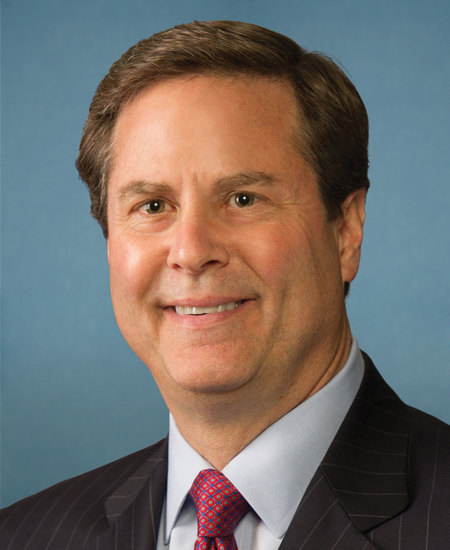
Rep. Donald Norcross
Sponsored bills
Maddy summaryThis bill would require federal firearms licensees to prohibit sales of specific high-capacity rifles and shotguns to people under 21. It targets semiautomatic centerfire rifles and shotguns capable of holding more than 5 rounds in their magazines, raising the age limit from 18 to 21 for these weapons. Exceptions apply for active military members and certain government employees authorized to carry firearms. The law directly affects gun retailers and individuals under 21 seeking to purchase these specific firearms. It modifies existing federal gun sale rules without changing age requirements for other firearms.
Maddy summaryThe Paycheck Fairness Act strengthens equal pay protections by expanding the definition of "sex" to include pregnancy, childbirth, sexual orientation, gender identity, and sex characteristics. It modifies employer defenses for pay disparities to require proof that any pay difference is job-related, not based on sex, and accounts for the entire pay gap. The bill prohibits employers from asking about salary history, enhances penalties for violations, and requires employers with 100+ employees to collect and report detailed pay data by race, sex, and job category. It also establishes training programs for employers on eliminating pay bias and creates a National Equal Pay Enforcement Task Force to coordinate enforcement efforts. This legislation directly affects employers, particularly those with 100+ employees, and aims to address pay disparities impacting women, people of color, and other underrepresented groups.
Maddy summaryH.J. Res. 80 would declare the Equal Rights Amendment (ERA) part of the U.S. Constitution, asserting it has been ratified by 38 states (three-fourths of the states) despite the original 1972 deadline. If passed, this resolution would formally establish the ERA as a constitutional amendment, requiring all federal and state laws to align with its gender equality protections. The bill does not create new laws but confirms the ERA's status as part of the Constitution, affecting how laws are interpreted and enforced. It is a procedural step to resolve the legal dispute over the ERA's validity after decades of debate.
Maddy summaryThe Air America Act of 2025 authorizes one-time payments of $40,000 to individuals who worked for Air America or its affiliated companies for at least five years during 1950-1976, or to their surviving spouses, children, or dependents. Additional payments of $8,000 per full year beyond five years are allowed. The program is capped at $60 million total funding, with claims required within two years of final regulations. Payments are a single lump sum with no ongoing benefits, and the bill explicitly states it does not create new entitlements beyond this one-time award.
Maddy summaryThis bill prohibits pharmacy benefit managers (PBMs) from receiving payments tied to prescription drug prices or rebates starting January 1, 2027. Instead, PBMs may only charge flat, itemized fees for actual services performed (e.g., claim processing), not based on drug costs or discounts. It directly affects PBMs and health insurance plans by requiring compensation to be decoupled from drug pricing, while allowing rebates to be passed through to lower net drug costs. The law aims to reduce conflicts of interest in PBM operations without changing drug pricing itself.
Maddy summaryHR 2151, the Seizure Awareness and Preparedness Act, creates a federal grant program to support schools in managing epilepsy and seizure disorders among students. It directly affects students with these conditions and their schools by requiring funded training for staff on emergency care plans, individualized health plans, and seizure recognition. Key provisions mandate that schools develop written emergency and health care plans with medical providers and parents, train all staff (including bus drivers) every two years on seizure response, and ensure proper communication between schools and families. The bill allocates $34.5 million over five years (2026-2030) to supplement, not replace, existing school funding for these programs.
Homes for Every Local Protector, Educator, and Responder Act of 2025 or the HELPER Act of 2025 This bill establishes a program administered by the Department of Housing and Urban Development to provide mortgage assistance to law enforcement officers, elementary and secondary school teachers, firefighters, or other first responders. Specifically, these individuals may be eligible for a first-time mortgage on a primary family residence with no down payment. Instead, the mortgage is subject to a one-time, up-front mortgage insurance premium.
Metastatic Breast Cancer Access to Care Act This bill expedites payment of Social Security Disability Insurance (SSDI) benefits and eligibility for Medicare coverage for those with metastatic breast cancer (i.e., breast cancer that has spread to other sites in the body). Specifically, the bill eliminates the 5-month waiting period for SSDI benefits and the subsequent 24-month waiting period for Medicare coverage for individuals with metastatic breast cancer. Under current law, individuals generally must wait 5 months after the onset of disability to begin receiving SSDI benefits and an additional 24 months to become eligible for Medicare.
Maddy summaryThis bill requires the Transportation Security Administration (TSA) to transition its workforce from a special personnel management system to the standard federal personnel system under Title 5 of the U.S. Code by December 31, 2025. It protects TSA employees by ensuring no reduction in pay, benefits, or retirement rights during the transition, while preserving collective bargaining rights for screening agents. The legislation also mandates consultation with labor unions during the process and requires several reports on workforce issues including recruitment, harassment policies, and workplace safety.