

Maddy summaryThe UPLIFT Act creates a new federal tax credit for households with high residential energy costs. It allows individuals to claim up to $1,200 (or $2,400 for joint returns) annually for electricity, natural gas, or propane used in their primary U.S. home, but only when average energy prices exceed 102% of the prior year's level. The credit phases out for taxpayers earning over $75,000 (single) or $150,000 (joint), and refunds won't count as income for means-tested programs like SNAP. This directly affects renters and homeowners with qualifying energy expenses in their primary residence.
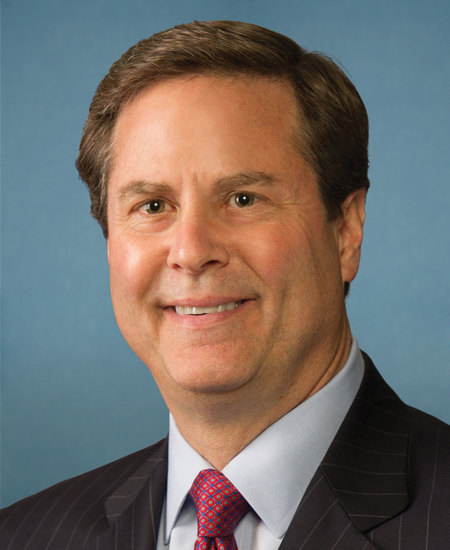
Rep. Donald Norcross
Sponsored bills
Maddy summaryHR 6731, the "Restore Trust in Government Act," requires Members of Congress, the President/Vice President, and their spouses or dependent children to divest certain financial investments during federal service. It defines "covered investments" broadly (including stocks, commodities, and derivatives) but excludes Treasury bonds, municipal bonds, family farm interests, and some Alaska Native Settlement stock. Covered individuals must sell holdings within 90-180 days of taking office or enacting the law, with limited exceptions for qualified blind trusts or spouses’ occupational trading. Violations incur a 10% fee on the investment value and require returning profits, paid to the Treasury. Ethics offices enforce these rules, publish penalty details, and issue divestiture certificates.
Maddy summaryHR 3962, the ESTUARIES Act, extends a deadline within the National Estuary Program. It amends Section 320(i)(1) of the Federal Water Pollution Control Act by changing the year "2026" to "2031" in a requirement related to program management. This change directly affects the National Estuary Program, which oversees coastal water quality protection and restoration efforts. The bill makes a specific procedural adjustment to the program's timeline without altering its core policies or funding.
Maddy summaryThe Protect America's Workforce Act cancels an executive order issued on March 27, 2025, that excluded certain groups from federal labor-management relations programs, making it legally unenforceable. It also ensures that all collective bargaining agreements between federal agencies and labor unions, which were active as of March 26, 2025, remain fully effective until their agreed terms expire. This directly affects federal agencies, labor unions, and the employees covered by these agreements. The bill prevents federal funds from being used to implement the canceled executive order while preserving existing labor agreements.
Miracle on Ice Congressional Gold Medal Act This act provides for the award of Congressional Gold Medals to the members of the 1980 U.S. Olympic men's ice hockey team in recognition of the team's achievement at the 1980 Winter Olympic Games.
Maddy summaryThe HIRRE Prosecutors Act of 2025 establishes a federal grant program to help state, local, tribal, and territorial prosecutor offices hire, retain, and train prosecutors and support staff. It authorizes $10 million annually (2026-2030) for competitive grants, covering up to 75% of eligible costs, with preference given to rural, tribal, and areas rehiring laid-off prosecutors. Grantees must cover the remaining 25% of costs (or qualify for a waiver), and funds cannot replace existing state/local funding but must supplement it. All funded projects require data tracking and annual performance evaluations by the Attorney General.
Maddy summaryThe Empowering App-Based Workers Act requires digital labor platforms (like ride-hail and delivery services) to disclose how they use algorithms and electronic monitoring tools to determine worker pay and assignments. It caps the percentage of consumer payments that platforms can keep (take rate) at 25% for ride-hail services and mandates detailed weekly pay statements showing compensation, take rate, and other work metrics. The bill prohibits platforms from using algorithms to set different pay rates for similar work based on protected characteristics like race or gender. These provisions directly affect app-based workers, platform companies, and consumers, aiming to create more transparent and fair working conditions in the gig economy. The bill does not override existing state or local laws that provide greater protections for workers.
Maddy summaryHR 6597, the LET’S Protect Workers Act, increases civil penalties for employers violating key labor laws to strengthen worker protections. It raises fines for child labor violations to up to $700,000 per incident causing death or serious injury, and doubles penalties for repeated wage/hour violations (up to $50,000 per violation). The bill also significantly boosts OSHA penalties (e.g., up to $800,000 for serious violations), adds new retaliation penalties for mine safety violations (up to $200,000 for repeat offenses), and clarifies that recordkeeping violations continue until corrected. These changes apply to employers across sectors, including manufacturing, agriculture, and mining, under the Fair Labor Standards Act, Occupational Safety and Health Act, and Mine Safety Act.
Maddy summaryThis bill (HR 249) renames two specific facilities at Paterson Great Falls National Historical Park in honor of the late Congressman Bill Pascrell, Jr. The Great Falls Scenic Overlook Trail Bridge will be called "Bill Pascrell, Jr. Scenic Overlook Trail Bridge," and Overlook Park will be called "Bill Pascrell, Jr. Overlook Park." All federal references in laws, maps, documents, or records will automatically update to reflect these new names. As a procedural naming bill, it has no policy or funding impact beyond the official renaming of park features.
Maddy summaryThe Dignity for Detained Immigrants Act establishes minimum standards for detention facilities operated by the Department of Homeland Security, requiring them to follow the American Bar Association's Civil Immigration Detention Standards. It mandates annual unannounced inspections by the DHS Inspector General, with penalties including fines for noncompliant private facilities and transfers of detainees from noncompliant facilities. The bill requires DHS to publicly report on facility compliance, phase out private detention facilities over three years, and prohibit solitary confinement. It also ensures detainees have access to legal orientation, counsel, and more frequent custody review hearings. The bill directly affects all individuals detained in DHS custody, including immigrants, asylum seekers, and refugees held in facilities operated by or contracted to DHS.