

Maddy summaryHR 472, the Fighting Post-Traumatic Stress Disorder Act of 2023, requires the Attorney General to develop a report within 150 days of enactment on programs to provide specialized mental health services for public safety officers (including police, firefighters, EMTs, and 911 dispatchers) and telecommunicators. The report must propose evidence-based trauma care, peer support, and family services to address job-related PTSD and acute stress disorder, while ensuring confidentiality for those seeking help. It will also outline efficient implementation plans using in-person and telehealth options across state, tribal, territorial, and local levels, plus draft legislative language and funding estimates. The bill directly targets public safety workers facing significantly higher PTSD rates (30% vs. 20% general population) and elevated suicide risks, including an estimated 125-300 annual police suicides.
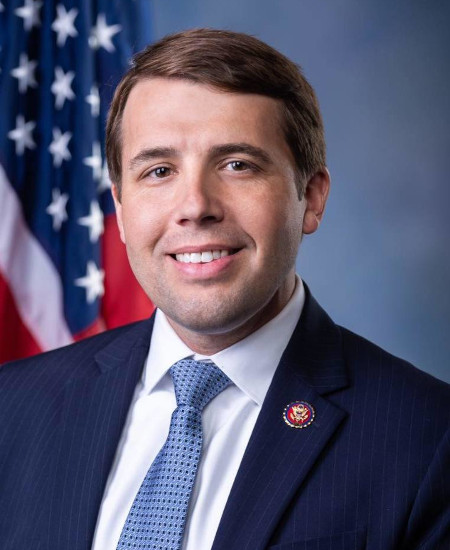
Rep. Chris Pappas
Sponsored bills
Maddy summaryHR 451, the Protecting Families from Fertility Fraud Act of 2023, creates a federal crime for knowingly misrepresenting the source or nature of DNA used in fertility treatments like IVF or sperm insemination. It directly affects fertility clinics, patients, and individuals who commit such fraud by making it punishable by fines or up to 10 years in prison. The law applies when the fraud involves interstate commerce (e.g., payments, communications, or materials crossing state lines) or occurs within U.S. territories. It also extends the statute of limitations for prosecution to 10 years after DNA identifies the perpetrator. This bill targets specific deceptive practices in assisted reproductive technology, not broader fertility care.
Maddy summaryThis bill prohibits the export or sale of petroleum products drawn from the U.S. Strategic Petroleum Reserve to specific countries and entities, including China, Russia, North Korea, Iran, and any nation under U.S. sanctions. It also bans exports to entities owned or controlled by these countries or the Chinese Communist Party. The Secretary of Energy must enforce this ban, though they may issue a national security waiver for specific exports. The bill requires the Secretary to issue implementing rules within 60 days of enactment. It directly affects the Secretary of Energy, oil exporters seeking to use the Strategic Petroleum Reserve, and the listed countries/entities.
Maddy summaryHR 396, the Closing the Bump Stock Loophole Act of 2023, defines "bump stock" as any device or modification that increases the firing rate of a semi-automatic weapon to mimic a machine gun. The bill amends federal tax and firearms laws to classify bump stocks as prohibited devices under the National Firearms Act, requiring existing owners to register them within one year of enactment. It directly affects individuals who currently own bump stocks by mandating registration to avoid future possession prohibitions. The law takes effect immediately for new sales but provides a one-year grace period for existing owners to comply with registration requirements.
Maddy summaryHR 345, the TRUST in Congress Act, requires Members of Congress, their spouses, and dependent children to place certain investments into a "blind trust" within 90 days of taking office or after the bill's enactment. It directly affects current and future lawmakers and their immediate family members by mandating that covered investments - such as stocks, commodities, or derivatives (excluding Treasury bonds and some mutual funds) - be placed in a trust they cannot manage. Members must certify the trust setup to House or Senate officials within 15 days, and trusts cannot be dissolved until 180 days after leaving office. The law excludes investments providing primary income (e.g., from a spouse's job) but requires transparency through public website disclosures of certifications.
Improving the Federal Response to Organized Retail Crime Act of 2023 This bill requires various federal agencies to develop a strategy to improve coordination with state and local law enforcement entities to address organized retail crime. Specifically, the bill requires the Department of Justice, the Department of Homeland Security, the U.S. Postal Service, and other relevant agencies to improve federal information sharing about organized retail crime networks; assist state and local law enforcement in compiling materials and evidence necessary to prosecute organized retail crime; and increase cooperation and information sharing between federal agencies, the retail industry, and retail crime task forces. The bill also requires the Government Accountability Office to report on coordination between the private sector and law enforcement to deter and investigate organized retail crime.
This resolution condemns all acts of political violence, as well as attacks on health care facilities, health care personnel, and patients. The resolution also states that all people have the freedom to access reproductive health care services and medical advice without fear of violence, intimidation, or harassment. Finally, the resolution calls on the Biden Administration to use all appropriate authorities to uphold public safety, protect health care facilities, and safeguard health care personnel and patients.
COI Elimination Act This bill limits U.S. contributions to the United Nations pertaining to the U.N. Independent International Commission of Inquiry on the Occupied Palestinian Territory, including East Jerusalem, and Israel. Current law imposes a cap on the annual U.S. contribution to the U.N. budget. The bill lowers that cap by 25% of the amount budgeted for the commission. The bill also states that it shall be U.S. policy to seek the abolition of the commission and combat systemic anti-Israel bias in international bodies.
Maddy summaryHR 129 requires the Secretary of Defense to install secure drop boxes on every military installation for service members and their families to deposit unused prescription drugs. These boxes must be accessible to active-duty personnel and their dependents, providing a standardized way to handle unused medications. The bill defines "prescription drug" using existing federal law (Section 1074g(i) of Title 10, U.S. Code) but focuses on creating mandatory disposal points across all bases. This policy directly affects military communities by improving access to safe medication disposal.
This bill authorizes the Thomas Paine Memorial Association to establish a commemorative work on federal land in the District of Columbia in honor of the philosopher and patriot, Thomas Paine. Thomas Paine is best known for writing Common Sense , a pamphlet that helped to inspire the Revolutionary War. The establishment of the commemorative work shall be in accordance with the Commemorative Works Act. Federal funds may not be used to pay any expense to establish the commemorative work.