No Retaining Every Gun In a System That Restricts Your Rights Act This bill modifies the retention requirements for firearm transaction records of federal firearms licensees (FFLs) that go out of business. Current law generally requires FFLs that go out of business to deliver their firearm transaction records to the Bureau of Alcohol, Tobacco, Firearms and Explosives (ATF). This bill removes the requirement for FFLs that go out of business to deliver their firearm transaction records to the ATF. Further, the bill requires the ATF to destroy all out-of-business records it has collected from FFLs.
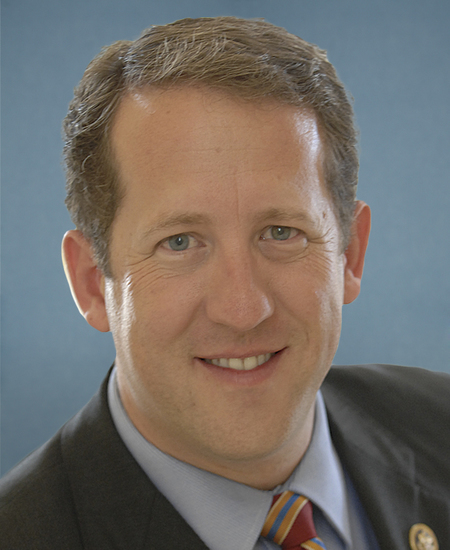
Rep. Adrian Smith
Sponsored bills
Maddy summaryHR 6864, the Ocean Shipping Antitrust Enforcement Act, repeals a specific antitrust exemption for ocean shipping companies under U.S. law. This bill directly affects ocean carriers that previously operated under Section 40307 of Title 46, U.S. Code, which exempted them from standard antitrust enforcement. The key provision removes this exemption, requiring shipping companies to comply with general antitrust laws rather than having a special exception. As a result, federal agencies could pursue antitrust enforcement actions against these companies for practices like price-fixing or market allocation that were previously shielded. The bill does not create new rules but changes the legal framework governing ocean shipping competition.
Never Yielding Europe's Territory (NYET) Act of 2022 This bill addresses Russia's actions against Ukraine and other countries in the region. The bill authorizes and expedites the provision of security assistance, including by (1) prioritizing delivering excess defense articles to Ukraine, (2) authorizing the Department of State to waive certain costs for defense articles leased to Ukraine, and (3) authorizing additional Foreign Military Financing for programs in Europe. The bill also provides funding for (1) Foreign Military Financing assistance to Ukraine, (2) the Global Engagement Center to counter foreign-sponsored propaganda and disinformation, (3) the Countering Russian Influence Fund to support Ukraine and other countries in response to Russia's aggression, and (4) International Military Education and Training assistance for Ukraine. Furthermore, the bill imposes sanctions, including on (1) senior Russian military officials responsible for planning or executing military operations that violated Ukraine's sovereignty or territorial integrity, and (2) foreign individuals or entities that acted on behalf of Russia's government to destabilize Ukraine or disrupt Ukraine's critical infrastructure. The bill also addresses additional matters, including (1) prohibiting the National Aeronautics and Space Administration from sponsoring visas for Russian nationals affiliated with ROSCOSMOS, the entity that implements Russia's space program; (2) authorizing Radio Free Europe/Radio Liberty to explore opening new bureaus to reach audiences on Russia's periphery; and (3) providing for expedited approval of natural gas exports to qualifying nations, including NATO members, whereas currently expedited approval is only available for exports to countries that are in a free trade agreement relating to natural gas with the United States.

Sanctioning Tyrannical and Oppressive People within the Chinese Communist Party Act or the STOP CCP Act This bill imposes visa- and property-blocking sanctions on any person who is or was a member of any National Communist Party Congress of China, as well as any adult family member of such a person. The President may waive the sanctions for renewable periods of 30 days by certifying to Congress that China's government and the Chinese Communist Party have ceased (1) any acts of genocide against the Uyghur Muslim population; (2) all threats, military exercises, and aggression toward Taiwan; (3) undermining the autonomy of Hong Kong; and (4) any efforts to steal the intellectual property of U.S. persons. The certification must also be publicly available on a federal government website.
Guaranteeing Enemy Nations Omit from Criminalizing, Impeding, or Detaining Exceptional Global Athletes Magnifying Exploitation during Sporting events Act or the GENOCIDE GAMES Act This bill requires the President to impose sanctions on certain foreign individuals who materially supported a gross violation of internationally recognized human rights against a 2022 Olympic and Paralympic Winter Games participant. Upon receiving credible evidence of such a human rights violation, the President must impose property- and visa-blocking sanctions on any foreign individual associated with the International Olympic Committee (IOC), including the president of the IOC, who the President determines materially supported the violation of human rights, including by providing to participants false, reckless, or negligent assurances of human rights assurances by the government of China. This bill's requirements shall terminate on March 13, 2023.
Putin Accountability Act This bill imposes sanctions pertaining to Russia and addresses related issues. The President must impose sanctions, with some exceptions, on individuals and entities that knowingly and directly provide specialized financial messaging services to Russia's central bank (or enables access to such services); entities responsible for constructing, financing, or operating Nord Stream 2 (a pipeline constructed to increase Russian natural gas exports) and the corporate officers and controlling shareholders of such entities; individuals and entities in Russia involved in kleptocracy, Russian government activities to subvert U.S. democratic institutions and interests, or Russian government disinformation campaigns against the United States; and entities that are Russian state development corporations, as well as any officials of such an entity. The President must impose property-blocking sanctions on such individuals and entities and also visa-blocking sanctions on the individuals. The President must also (1) issue regulations to prohibit U.S. individuals and entities from dealing in Russian sovereign debt; and (2) issue a determination as to whether certain specified Russian individuals meet the criteria to be subject to sanctions under various authorities, including this bill. The Department of State must (1) designate Russia a state sponsor of terrorism, and (2) report to Congress a determination of whether Russia-affiliated armed entities in the Donbas region of Ukraine meet the criteria to be designated as foreign terrorist organizations. The bill prohibits expending funds to engage with Russia's government on cyber issues or arms control negotiations until certain conditions have been met.
Removing Waste and Protecting Medicare Act This bill makes several budgetary changes, including (1) prohibiting sequestration orders in 2022, (2) rescinding certain COVID-19 state and local relief funds, and (3) extending certain adjustments under Medicare with respect to sequestration and payments under the physician fee schedule. It also modifies requirements relating to federal programs and benefits, such as permanently requiring taxpayers to include Social Security numbers on their tax returns in order to qualify for the child tax credit.
Protect American Taxpayer Dollars from Illegal Immigration Act This bill prohibits expending federal funds for legal settlements to individuals who violated certain laws relating to the proper time and place to enter the United States, if the settlement pertains to claims based solely on the lawful detention of such an individual as part of a family unit after the individual's entry into the United States at the southern border after January 20, 2017.
Illegal Immigrant Payoff Prohibition Act This bill prohibits the payment of a settlement to an alien for a civil action brought against the United States in connection with the alien's inadmissibility to, or unlawful presence in, the United States.
Exposing Agricultural Trade Suppression Act This bill restricts state and local governments from imposing certain standards or conditions on the production or manufacture of agricultural products sold or offered for sale in interstate commerce. Specifically, it prohibits the imposition of such standards or conditions if (1) the production or manufacture occurs in another state, and (2) the standard or condition adds to requirements applicable under federal law and the laws of the state or locality where the product is produced or manufactured. The bill also allows for a private right of action to challenge state or local regulations relating to agricultural goods sold in interstate commerce. A person may bring an action in (1) the U.S. district court for the judicial district in which the person is affected by a regulation or the person resides, operates, or does business; or (2) any other appropriate court with jurisdiction.