

Supply Chain Security Act This bill allows a taxpayer to make an election, without regard to specified Treasury regulations, for purposes of determining whether any Western Hemisphere tax is an income, war profits, or excess profits tax. A Western Hemisphere tax is any tax paid to any U.S. possession or any foreign country (other than Cuba or Venezuela) that is located in North, Central, or South America (including the West Indies).
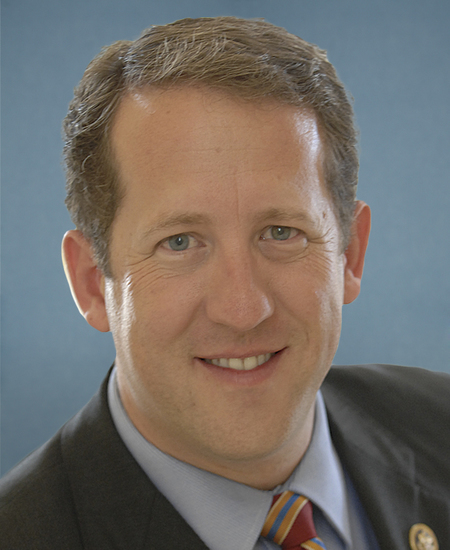
Rep. Adrian Smith
Sponsored bills
Maddy summaryThis resolution designates May 5, 2023, as the "National Day of Awareness for Missing and Murdered Indigenous Women and Girls" to honor victims and support families. It asks the public to commemorate affected individuals and demonstrates solidarity with impacted communities. The bill also recommends the Justice Department commission a new study to update statistics on violence against Indigenous women, referencing the 2016 DOJ study that found 84.3% experienced violence in their lifetime. This symbolic measure aims to raise awareness and encourage federal action, without changing laws or allocating new funding.
Maddy summaryThis bill raises the threshold for businesses to report payments to independent contractors and vendors from $600 to $5,000 annually. It directly affects small businesses and self-employed individuals who receive payments below the new $5,000 level, reducing their reporting burden. The bill also adds an inflation adjustment mechanism to keep the threshold updated annually, rounding increases to the nearest $100. These changes apply to payments made after December 31, 2023, under tax code sections governing Form 1099 reporting and backup withholding.
Maddy summaryHRES 447 is a non-binding resolution expressing support for designating May 2023 as "Renewable Fuels Month." It recognizes renewable fuels' role in reducing carbon impacts, lowering fuel prices for consumers, supporting rural communities, and lessening reliance on foreign energy sources. The resolution cites industry statistics, including over 78,000 direct jobs in ethanol production and greenhouse gas emission reductions of 44-52% compared to gasoline. As a symbolic gesture, it does not create new laws or impose obligations.
Maddy summaryHRES 449 is a non-binding House resolution expressing support for establishing an income tax agreement between the United States and Taiwan. It highlights that Taiwan is the U.S.'s largest trading partner without such a treaty, noting that over 188,000 U.S. jobs depend on trade with Taiwan. The resolution encourages the President to work toward eliminating double taxation and strengthening economic ties through formal tax agreements. It does not create new law but urges diplomatic efforts to advance trade and investment, consistent with existing U.S. policy toward Taiwan.
Maddy summaryHR 3678, the Pay Less at the Pump Act, terminates the Hazardous Substance Superfund financing rate effective January 1, 2023, and changes how advances from the Superfund are repaid. Specifically, it ends the requirement to apply a specific financing rate to the Superfund after 2022 and modifies repayment rules to require quarterly payments from unobligated funds until fully repaid. The bill directly affects the Superfund program and entities receiving advances from it, altering its financial structure. Note: The bill’s title is misleading - the legislation does not address fuel prices or gasoline costs at the pump. It focuses solely on Superfund financing terms, with effective dates specified in the text.
Maddy summaryThis bill requires the Treasury Secretary to report quarterly on foreign countries imposing "extraterritorial" or "discriminatory" taxes targeting U.S. businesses. It mandates progressively higher tax rates (starting at 5% and increasing to 20% over time) on income and payments from foreign individuals and corporations in those countries. The U.S. government can also restrict federal procurement from such entities and consider these taxes in trade negotiations. These measures directly affect foreign businesses operating in the U.S. or conducting transactions with U.S. entities. The policy aims to counter foreign tax policies that the U.S. views as unfair under international tax norms.
Small Business Growth Act This bill increases from $1 million to $2 million to the limitation on expensing of depreciable business assets. It also increases the asset threshold amount used to reduce the expensing limitation.
Maddy summaryThis bill requires that AM radio receivers be included as standard equipment in all new motor vehicles (such as cars and trucks) sold in the United States, with a rule to be issued by the Department of Transportation within one year. The rule must ensure AM radio is easily accessible on the dashboard and allows manufacturers to use digital AM radio technology instead of traditional AM. During the one-year period between the bill's enactment and the rule's effective date, manufacturers must clearly label vehicles without AM radio. The bill also directs a study to evaluate whether an alternative system could deliver emergency alerts as reliably as AM radio across the country, especially during crises.
Maddy summaryHR 3337, the Fuels Parity Act, removes a prohibition that previously excluded corn starch ethanol from being counted as "advanced biofuel" under the Clean Air Act. This change directly affects corn-based ethanol producers by allowing corn starch ethanol to qualify under renewable fuel standards. The bill also requires the EPA to update its methodology for calculating greenhouse gas emissions from corn-based ethanol and biomass-based diesel every five years, starting 90 days after enactment, with the first update mandating the use of the Argonne National Laboratory's GREET model. These provisions aim to standardize how emissions are assessed for these fuels under federal renewable fuel programs.