

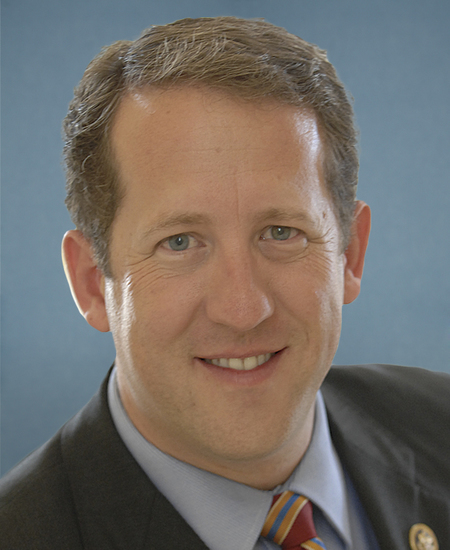
Photo of Adrian Smith
R United States House · District 3 · Nebraska On the 2026 ballot

Rep. Adrian Smith

Compare
Total votes
2,837
all sessions
Attendance
97%
71 missed
Near the chamber average
With party
96%
of cast votes
Higher than 78% of chamber peers
Bipartisan score
2%
crosses aisle rarely
Lower than 79% of chamber peers
Sponsored
880
bills & resolutions
Near the chamber average
Committees
4
assignments
880 bills and resolutions

Sponsored bills

Total
880
Primary
75
Co-sponsor
805
This page
880
matching current filters
Co-sponsor HR 497
Passed · Indiana House · Co-sponsor
Freedom for Health Care Workers Act

Maddy summaryHR 497, the Freedom for Health Care Workers Act, eliminates a federal requirement for healthcare workers in Medicare and Medicaid programs to be vaccinated against COVID-19. The bill directly affects healthcare providers who treat patients under these federally funded programs by preventing the enforcement of the November 2021 HHS rule mandating staff vaccinations. Its key provision prohibits the Department of Health and Human Services from implementing, enforcing, or creating a similar rule regarding vaccination for these workers. This bill changes the policy by removing a specific vaccine mandate for providers in Medicare and Medicaid programs.

Passed Dec 17, 2024 1 co-sponsor
Co-sponsor HR 468
In committee · Indiana House · Co-sponsor
Building America’s Health Care Workforce Act

Maddy summaryThis bill extends a temporary COVID-19 emergency waiver that allows nurse aides in training to count hours worked during the pandemic toward their certification requirements at nursing facilities. It specifically permits these hours to satisfy the 75-hour minimum training requirement and allows facilities to conduct competency evaluations on-site if states don’t offer them weekly. The waiver remains in effect for at least 24 months after enactment, with a requirement for the Secretary to study its continued appropriateness within one year. The policy directly affects nurse aides working in skilled nursing facilities and nursing facilities under federal Medicare/Medicaid rules. It does not create new training programs but maintains pandemic-era flexibility for staffing.

In committee Dec 17, 2024 1 co-sponsor
Co-sponsor HR 407
In committee · Indiana House · Co-sponsor
Protect the UNBORN Act

Maddy summaryHR 407, the "Protect the UNBORN Act," prohibits federal agencies from implementing or enforcing two specific executive orders issued by President Biden in 2022 (Executive Orders 14076 and 14079), which aimed to protect access to reproductive healthcare services. The bill bans the use of federal funds, including those from the 2022 Consolidated Appropriations Act, to carry out, administer, or enforce these executive orders. It directly affects federal agencies and programs that would otherwise comply with the Biden administration's policies on reproductive healthcare access. The bill does not create new healthcare rules but blocks the implementation of existing executive actions.

In committee Dec 17, 2024 1 co-sponsor
Co-sponsor HR 7
In committee · Indiana House · Co-sponsor
No Taxpayer Funding for Abortion and Abortion Insurance Full Disclosure Act of 2023

Maddy summaryThis bill bans federal funding for abortions in most cases, prohibiting the use of taxpayer money for abortion services or health insurance plans covering abortion. Exceptions allow funding for abortions resulting from rape, incest, or when a pregnancy endangers a woman's life. It requires health insurance plans sold through the Affordable Care Act (ACA) marketplaces to clearly disclose any separate costs for abortion coverage and prohibits ACA subsidies from being used for plans that cover abortion (except in the specified exceptions). The law directly affects federal programs like Medicaid, ACA marketplace plans, and insurers offering health coverage to individuals using federal subsidies.

In committee Dec 17, 2024 1 co-sponsor
Co-sponsor HR 152
In committee · Indiana House · Co-sponsor
Hearing Protection Act

Maddy summaryHR 152, titled the "Hearing Protection Act," actually addresses firearm silencers (suppressors), not hearing protection. The bill removes federal registration requirements for silencers by directing the Attorney General to destroy all existing silencer records within 365 days. It also preempts state laws that tax, register, or impose recordkeeping requirements on silencers, making such state rules unenforceable. Additionally, the bill updates tax codes to include silencers as taxable items and clarifies their definition in firearm laws.

In committee Dec 17, 2024 1 co-sponsor
Co-sponsor HJRES 181
In committee · Indiana House · Co-sponsor
Providing for congressional disapproval under chapter 8 of title 5, United States Code, of the rule submitted by the Department of Labor relating to "Definition of 'Employer'-Association Health Plans".

Maddy summaryHJRES 181 is a congressional resolution seeking to block a Department of Labor rule that defined "Employer-Association Health Plans." The bill would prevent this specific rule - published in the Federal Register on April 30, 2024 - from taking effect. It directly affects employers and health plan administrators who use these association-based health coverage models. If passed, the rule would have no legal force, reversing the Labor Department's regulatory definition.

In committee Dec 16, 2024 1 co-sponsor
Co-sponsor HJRES 142
In committee · Indiana House · Co-sponsor
Providing for congressional disapproval under chapter 8 of title 5, United States Code, of the rule submitted by the Department of Labor relating to "Retirement Security Rule: Definition of an Investment Advice Fiduciary".

Maddy summaryHJRES 142 is a congressional disapproval resolution targeting a Department of Labor rule issued on April 25, 2024. It seeks to block the "Retirement Security Rule: Definition of an Investment Advice Fiduciary" (89 Fed. Reg. 32122), which defined standards for financial advisors handling retirement accounts. If passed, this resolution would make the Labor Department's rule ineffective, directly affecting retirement plan advisors and financial institutions subject to the regulation. The bill uses a specific procedural mechanism under Title 5, U.S. Code, to nullify the rule without creating new law.

In committee Dec 16, 2024 1 co-sponsor
Co-sponsor HR 10391
In committee · Indiana House · Co-sponsor
No More D.C. Waste Act

Maddy summaryHR 10391, the "No More D.C. Waste Act," requires that any unobligated federal funds for District of Columbia resident tuition support programs must lapse at the end of each fiscal year (starting in 2026), eliminating carryover of unused funds. It directly affects D.C. residents enrolled in the District of Columbia College Access program by removing provisions allowing funds to remain available until expended. Key mechanisms include prohibiting unobligated funds from rolling over and mandating annual reports to Congress detailing the number of students served, average financial assistance per student, and any unobligated balances carried forward. These reports must be submitted within 60 days after each fiscal year ends, beginning in 2025.

In committee Dec 12, 2024 1 co-sponsor
Co-sponsor HR 7438
Signed into law · Indiana House · Co-sponsor
FIFA World Cup 2026 Commemorative Coin Act

Maddy summaryHR 7438 directs the U.S. Treasury to mint commemorative coins for the 2026 FIFA World Cup, including 100,000 $5 gold coins, 500,000 $1 silver coins, and 750,000 half-dollar coins. The coins will be sold to the public at face value plus surcharges ($35, $10, and $5 per coin, respectively), with all surcharge revenue paid to FWC2026 US, Inc. for U.S. soccer programs. These funds must support soccer initiatives, particularly in underserved communities and youth development, as specified in the bill. The coins are legal tender but will only be issued during 2026, with no net cost to the U.S. government.

Signed into law Dec 11, 2024 1 co-sponsor
Co-sponsor HR 190
In committee · Indiana House · Co-sponsor
Saving Gig Economy Taxpayers Act

Maddy summaryThis bill reinstates a pre-American Rescue Plan Act (ARP) tax reporting rule for gig economy platforms. It requires third-party payment platforms (like Uber or DoorDash) to report transactions to the IRS only if a gig worker earns over $20,000 in total or completes more than 200 transactions in a year. This directly affects gig workers whose income falls below these thresholds, exempting them from the reporting requirement. The provision effectively reverses a change made by the ARP, reducing administrative burden for both platforms and lower-earning gig workers. The bill amends IRS Code Section 6050W to restore these specific de minimis payment thresholds.

In committee Dec 10, 2024 1 co-sponsor
Showing 341 to 350 of 880 bills
Previous 1 … 34 35 36 … 88 Next