

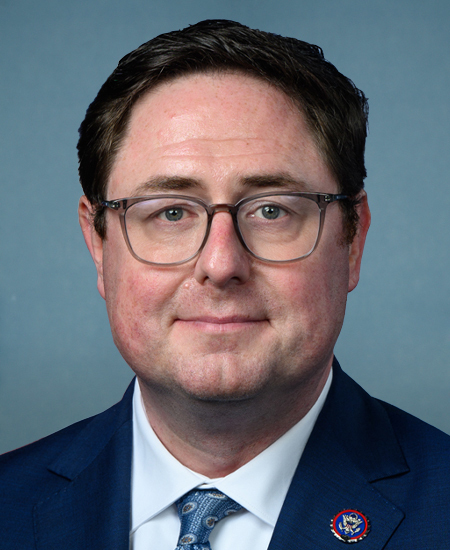
Photo of Mike Flood
R United States House · District 1 · Nebraska On the 2026 ballot

Rep. Mike Flood

Compare
Total votes
2,116
all sessions
Attendance
99%
20 missed
Higher than 78% of chamber peers
With party
93%
of cast votes
Near the chamber average
Bipartisan score
4%
crosses aisle rarely
Near the chamber average
Sponsored
501
bills & resolutions
Near the chamber average
Committees
3
assignments
501 bills and resolutions

Sponsored bills

Total
501
Primary
50
Co-sponsor
451
This page
501
matching current filters
Primary HR 10454
In committee · Indiana House · Lead sponsor
Ending Green Giveaways Act

Maddy summaryHR 10454, the "Ending Green Giveaways Act," repeals Section 138 of the Clean Air Act, which authorized environmental and climate justice block grants. It also rescinds any unobligated funds previously allocated under that section. The bill directly eliminates a specific federal funding program that provided grants to communities for environmental and climate justice initiatives. Key mechanisms are the repeal of the grant authority and the cancellation of remaining funds. This is a procedural change removing a funding stream, not a new policy.

In committee Dec 17, 2024 0 co-sponsors
Primary HR 9823
In committee · Indiana House · Lead sponsor
Supporting Access to Rural Community Hospitals Act of 2024

Maddy summaryThis bill amends Medicare rules to temporarily waive distance requirements for certain rural hospitals seeking Critical Access Hospital (CAH) status. Specifically, it allows rural community hospitals participating in a Medicare demonstration program as of the bill's enactment date to be designated as CAHs during a one-year window after the law takes effect. The change modifies existing Medicare regulations to simplify eligibility for these hospitals, which directly affects rural healthcare providers in the designated demonstration program. This policy adjustment aims to improve access to care in underserved areas by making CAH status more attainable for qualifying facilities.

In committee Dec 17, 2024 0 co-sponsors
Co-sponsor HR 9096
In committee · Indiana House · Co-sponsor
Pharmacists Fight Back Act

Maddy summaryThe Pharmacists Fight Back Act (HR 9096) sets new rules for Pharmacy Benefits Managers (PBMs) working with federal health care programs like Medicare Part D and Medicaid. It requires PBMs to reimburse in-network pharmacies at a rate covering the drug's actual cost plus a small fee (capped at $25), and to reduce patient cost-sharing by at least 80% of rebates received from drug manufacturers. The bill bans PBMs from steering patients to specific pharmacies, charging patients more than pharmacies are paid, or using rebates to lower pharmacy payments after claims are processed. It also mandates public reporting of drug pricing data to improve transparency, ensuring patients and pharmacies receive fairer treatment under federal health programs.

In committee Dec 17, 2024 1 co-sponsor
Co-sponsor HR 8702
In committee · Indiana House · Co-sponsor
Improving Seniors’ Timely Access to Care Act of 2024

Maddy summaryThis bill requires Medicare Advantage plans to implement electronic prior authorization systems by 2027 and publish detailed data on their approval and denial rates for medical services by 2026. It directly affects Medicare Advantage plans (private insurers offering Medicare coverage) and their enrollees (seniors 65+), mandating transparency about prior authorization decisions, processing times, and appeal outcomes. Key provisions include requiring plans to report annual statistics on request approvals/denials, average processing times, and use of technology, with this data published publicly by the Centers for Medicare & Medicaid Services. The bill also sets timelines for plan responses to prior authorization requests and mandates reports to Congress on implementation and impacts.

In committee Dec 17, 2024 1 co-sponsor
Co-sponsor HR 6283
In committee · Indiana House · Co-sponsor
DRUG Act

Maddy summaryHR 6283, the DRUG Act, regulates pharmacy benefit managers (PBMs) to prevent practices that may increase prescription drug costs for consumers. The bill prohibits PBMs from earning revenue based on drug prices or discounts, requiring them to charge flat dollar service fees instead of fees tied to drug costs. It bans PBMs from steering patients to pharmacies they own or control, mandates equal reimbursement for affiliated and non-affiliated pharmacies, and prohibits charging different fees for the same drug. These provisions apply to group health plans, health insurance issuers, and PBMs, with enforcement beginning for plan years starting January 1, 2026. Violations would result in $10,000 daily penalties and require disgorgement of improperly received payments.

In committee Dec 17, 2024 1 co-sponsor
Co-sponsor HR 5376
In committee · Indiana House · Co-sponsor
Share the Savings with Seniors Act

Maddy summaryHR 5376, the Share the Savings with Seniors Act, changes Medicare Part D drug cost-sharing rules for specific chronic medications starting in 2025. It limits what seniors pay for certain chronic care drugs (like anticoagulants, blood glucose regulators, and respiratory medications) by capping pre-deductible costs at the drug's net price and requiring coinsurance after the deductible to be based on that net price. This directly affects Medicare Part D beneficiaries taking these defined chronic medications. The bill aims to reduce out-of-pocket costs by tying payment limits to the negotiated drug price rather than list price or other benchmarks.

In committee Dec 17, 2024 1 co-sponsor
Co-sponsor HR 5159
In committee · Indiana House · Co-sponsor
Preserving Access to Home Health Act of 2023

Maddy summaryThe Preserving Access to Home Health Act of 2023 repeals a 2018 payment adjustment for Medicare home health agencies, restoring prior payment rates for 2024 and subsequent years. It requires the Medicare Payment Advisory Commission (MedPAC) to analyze how home health agencies' financial performance affects access to care, including reviewing spending and utilization data across Medicare, Medicaid, and other payers. Starting in 2025, the bill mandates home health agencies to report detailed data on visit volumes and payments by payer source (Medicare, Medicaid, private insurers) through updated cost reports. This data will help MedPAC assess payment policy impacts on access to home health services for Medicare beneficiaries.

In committee Dec 17, 2024 1 co-sponsor
Co-sponsor HR 3876
In committee · Indiana House · Co-sponsor
Access to Genetic Counselor Services Act of 2023

Maddy summaryThis bill requires Medicare to cover genetic counseling services provided by licensed genetic counselors at 85% of the physician payment rate. It defines "genetic counselor" as a state-licensed professional (or meeting federal criteria in non-licensing states) and mandates a new billing modifier for these services starting January 1, 2024. Medicare beneficiaries seeking genetic counseling would gain expanded access to these services under this coverage. The policy change applies to services furnished on or after the effective date, with implementation via interim rule.

In committee Dec 17, 2024 1 co-sponsor
Co-sponsor HR 3730
In committee · Indiana House · Co-sponsor
Rural Health Clinic Burden Reduction Act

Maddy summaryThis bill simplifies regulations for rural health clinics (RHCs) by reducing administrative burdens. It allows RHCs to contract with physician assistants and nurse practitioners (instead of requiring direct employment), updates the definition of "rural" to exclude areas with 50,000+ residents, and removes outdated lab service requirements by requiring only "prompt access" to clinical labs. These changes directly affect RHCs, enabling them to more flexibly staff and operate while complying with state practice laws. The amendments take effect January 1, 2024, applying to services provided on or after that date.

In committee Dec 17, 2024 1 co-sponsor
Co-sponsor HR 2880
In committee · Indiana House · Co-sponsor
Protecting Patients Against PBM Abuses Act

Maddy summaryThis bill regulates pharmacy benefit managers (PBMs) working with Medicare Part D prescription drug plans. It prohibits PBMs from earning income based on drug prices or rebates (requiring flat fees instead), mandates equal reimbursement for all network pharmacies, and requires PBMs to report how much of drug rebates they pass through to Medicare plans. The law also mandates annual compliance certifications and requires the government to publish aggregated transparency data (without revealing specific plan details) starting in 2024. These changes directly affect Medicare Part D plans and the seniors who rely on them for prescription drug coverage.

In committee Dec 17, 2024 1 co-sponsor
Showing 241 to 250 of 501 bills
Previous 1 … 24 25 26 … 51 Next