

Maddy summaryHJRES 28 proposes a constitutional amendment to permanently fix the number of justices on the U.S. Supreme Court at nine. This would require ratification by 38 state legislatures (three-fourths of states) within seven years to become part of the Constitution. The amendment directly affects the structure of the Supreme Court, which has had nine justices since 1869 but could otherwise be altered by future congressional action. It does not change current court operations or create new laws, but instead seeks to make the nine-justice composition a permanent constitutional requirement.
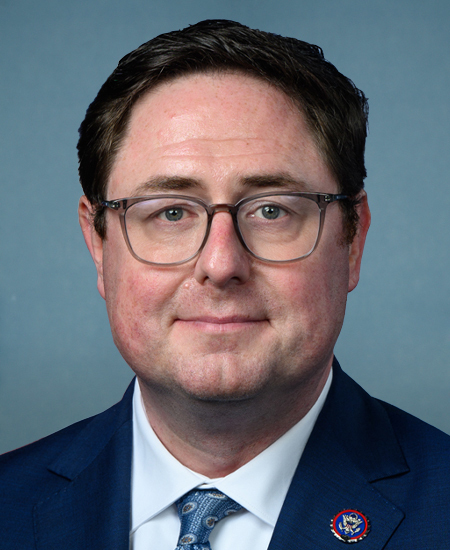
Rep. Mike Flood
Sponsored bills
Supporting Accurate Views of Emergency Services Act of 2025 or the 911 SAVES Act This bill requires the Office of Management and Budget to categorize public safety telecommunicators as a protective service occupation under the Standard Occupational Classification system no later than 30 days after the enactment of this bill. (The Standard Occupational Classification system is a federal statistical standard used by federal agencies to classify workers into occupational categories for the purpose of collecting, calculating, or disseminating data.)
Maddy summaryHR 7 prohibits federal funds from being used for abortions or health insurance plans covering abortion, with exceptions for pregnancies resulting from rape, incest, or when a woman's life is endangered. It blocks federal premium tax credits under the Affordable Care Act for health plans covering abortion (except in specified cases) and requires clear disclosure of abortion coverage and related surcharges in plan materials. The bill allows individuals or employers to purchase separate abortion coverage using non-federal funds, such as out-of-pocket payments, without affecting federal subsidies. It directly affects federal health programs, ACA marketplace plans, and health insurance issuers offering coverage that includes abortion services.
Maddy summaryHR 502, the Protecting Infrastructure Investments for Rural America Act, modifies the rural surface transportation grant program under Title 23, U.S. Code. It redefines "small community" as areas outside urbanized zones with populations of 5,000 or less (down from 200,000), and requires that 5% of annual program funds support projects in these communities. The bill increases the federal share for eligible projects in small communities to 90% and mandates that projects must benefit economic development or quality of life in the community. These changes directly affect rural areas and small towns by prioritizing infrastructure funding for the smallest communities.
Chiropractic Medicare Coverage Modernization Act of 2025 This bill expands Medicare coverage of chiropractic services to include all services provided by chiropractors, rather than only subluxation corrections through manual manipulation of the spine.
Maddy summaryHR 465, the "Old Glory Only Act," requires all U.S. diplomatic and consular posts abroad to fly only the United States flag. The bill directs the Secretary of State to ensure no other flags are displayed over these government facilities. This is a procedural change affecting the physical display of flags at U.S. embassies and consulates worldwide, with no other policy provisions. It mandates a specific practice without altering other diplomatic protocols or affecting citizens or organizations.
Maddy summaryHR 404, the "Hearing Protection Act," reclassifies firearm silencers (devices that reduce gunfire noise) as firearms for federal tax and regulatory purposes. It imposes a 10% federal tax on silencers, requires the destruction of all existing federal silencer registration records within one year, and preempts state laws that tax or regulate silencers. The bill clarifies that silencers are treated as firearms under federal law, including for licensing and marking requirements, and defines "firearm silencer" to include specific components. Note: The bill’s title is misleading - it addresses firearm silencer regulation, not hearing protection for people.
Maddy summaryThis resolution (HRES 39) assigns Ms. Maloy to the Committee on Appropriations with a specific ranking, placing her immediately after Mr. Strong in the committee's seniority order. It directly affects Ms. Maloy's standing on that committee and the committee's internal leadership structure. As a procedural resolution, it makes no substantive policy changes but adjusts committee membership rankings. This type of resolution is routine for managing committee assignments.
Maddy summaryHRES 38 is a procedural resolution confirming the appointment of specific House Members to standing committees for the 119th Congress. It lists named representatives (e.g., Ms. Maloy to the Appropriations Committee; Mr. McCaul to Homeland Security) for their respective committees. This resolution does not create new policy or affect constituents - it simply formalizes routine committee assignments as part of House organization. The bill has no policy impact and solely addresses internal House staffing.
Maddy summaryHR 400 prohibits U.S. taxpayer funding for the United Nations Human Rights Council. It requires the Secretary of State to withhold from annual U.S. UN budget contributions any amount allocated to the Human Rights Council, and bans voluntary U.S. contributions to the Council. Funds withheld under this law are canceled immediately and do not count as unpaid dues to the UN. The bill specifically targets the Human Rights Council, leaving other UN activities unaffected.