

Maddy summaryHR 1207 transfers the administration of the Food for Peace Act's food aid programs from USAID to the Department of Agriculture. This means the Agriculture Secretary, not the USAID Administrator, will now handle all related functions, including managing assets, grants, and rules for distributing U.S. food aid overseas. The bill requires immediate implementation upon enactment, with references in law automatically updating to the Agriculture Secretary, and allows for swift interim rules to maintain program continuity. It also specifies that the Famine Early Warning Systems Network will continue under Agriculture, and the Department must consult with the State Department on certain aspects of the program.
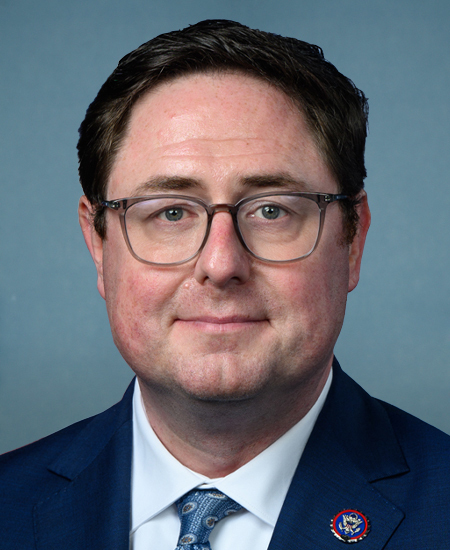
Rep. Mike Flood
Sponsored bills
Maddy summaryHR 1191, the Supporting Access to Rural Community Hospitals Act of 2025, waives certain distance requirements under Medicare law for specific rural hospitals. It allows hospitals participating in a Medicare demonstration program as of the bill's enactment date to be designated as critical access hospitals during a one-year window after the law takes effect. This change directly affects rural community hospitals enrolled in the Medicare demonstration program, making it easier for them to qualify for critical access hospital status. The key mechanism adds a new pathway to designation under existing Medicare rules, specifically for hospitals already in the demonstration program.
Maddy summaryHR 1131 exempts certain family farms and small businesses from being counted as assets when calculating financial need for federal student aid under the Higher Education Act. Specifically, it amends the law to exclude the net value of a family farm where the family resides and small businesses (with ≤100 employees) owned by the family from need analysis calculations. This change directly affects students from qualifying family farm or small business households when applying for federal financial aid. The exemption applies to need analysis conducted for award years beginning after the bill's enactment date. The bill modifies Section 480(f)(2) of the Higher Education Act of 1965 to implement this policy change.
Maddy summaryThis bill expands 529 college savings account flexibility by allowing funds to cover costs for industry-recognized postsecondary credentials, not just traditional degrees. It defines "qualified expenses" to include tuition/fees for recognized credential programs (like certifications or apprenticeships), required testing fees, and continuing education needed to maintain credentials. To qualify, programs must meet specific criteria, such as appearing on state lists under the Workforce Innovation and Opportunity Act or being listed in VA or Defense directories. The change applies to 529 distributions made after the law's enactment, giving families more options to use these accounts for job-focused training.
This bill allows a national of the Czech Republic to qualify for E-1 nonimmigrant status if the Czech Republic provides similar nonimmigrant status to U.S. nationals. E-1 classification allows nationals of certain countries (i.e., those with a treaty of commerce and navigation with the United States, those under a qualifying international agreement, or those deemed to qualify through statute) to be admitted solely to engage in international trade, along with their families and employees.
Protect Our Letter Carriers Act of 2025 This bill requires or authorizes certain actions related to the U.S. Postal Service (USPS). The bill requires the Department of Justice to appoint an assistant U.S. attorney in each judicial district to coordinate and supervise the investigation and prosecution of various crimes related to postal services (for example, assault on a postal service employee, breaking into a post office, or obstruction of mails). The bill also requires the U.S. Sentencing Commission to amend sentencing guidelines to provide that the assault or robbery of a postal employee shall be treated the same as the assault of a law enforcement officer. Additionally, the bill authorizes appropriations for the USPS to install high security collection boxes and replace older versions of the universal mailbox key with electronic versions.
Maddy summaryHR 1046, the Marc Fischer Memorial Act, requires the Bureau of Prisons to implement digital mail scanning technology at all federal prisons to detect fentanyl and other synthetic drugs in inmate mail. It mandates a strategy within 90 days of an evaluation, including 100% scanning of all mail, digital copies of mail to inmates within 24 hours, and physical mail delivery within 30 days for non-contaminated items. The bill directly affects federal prison staff, inmates, and the Bureau of Prisons by aiming to reduce drug-related overdoses and alleviate staff workload tied to mail processing. Implementation must be completed within three years, with annual reports tracking detected drugs and strategy efficiency. The legislation focuses on concrete technological and procedural changes to enhance safety, referencing a successful pilot program at two facilities.
Maddy summaryThe Ending Green Giveaways Act (HR 1066) repeals a Clean Air Act provision (Section 138) that authorized federal funding for environmental and climate justice initiatives. It also cancels any unspent funds previously allocated for these programs. This would terminate the funding stream, preventing future allocations for community-based environmental projects. As a result, the program would end without new resources for communities addressing environmental challenges.
Maddy summaryHR 1007, the Antisemitism Awareness Act of 2025, clarifies how the Department of Education enforces Title VI of the Civil Rights Act of 1964 to address discrimination against Jewish individuals. It requires the Department to consider the International Holocaust Remembrance Alliance (IHRA) definition of antisemitism when investigating complaints involving discrimination based on actual or perceived Jewish ancestry or ethnic characteristics. This affects Jewish students and communities in K-12 schools and colleges receiving federal funding, as it ensures antisemitism is assessed under existing civil rights protections. The bill does not create new laws but specifies that the IHRA definition - already used by the Department since 2018 - must be applied in Title VI enforcement cases.
Maddy summaryHR 925, the "Dismantle DEI Act of 2025," would eliminate diversity, equity, and inclusion (DEI) programs across federal government operations. The bill requires federal agencies to close DEI offices, rescind related executive orders, and prohibit the use of federal funds for DEI training, offices, or initiatives. It defines "prohibited diversity, equity, or inclusion practice" as any activity that discriminates based on race, ethnicity, religion, biological sex, or national origin, or requires employees to complete training asserting that certain groups are inherently superior or inferior. The legislation also prohibits requiring employees to sign statements about race, ethnicity, or gender, and establishes private lawsuits for violations with potential damages of $1,000 per violation per day. This bill would directly affect federal agencies, contractors, grantees, and advisory committees receiving federal funding.