

Maddy summaryHR 575, the Increased TSP Access Act of 2025, amends conservation program rules to expand access to third-party providers (TSPs) like agricultural retailers, engineers, and certified crop advisors. It creates new pathways for state agencies and professional organizations to certify TSPs (within 180 days of enactment), requires the USDA to review certifications within 10 business days, and sets payment rates equivalent to direct government services. The bill directly affects agricultural producers who use conservation programs and TSPs seeking certification, while mandating annual transparency reports on certification numbers, funding, and program effectiveness. Key changes include streamlined certification for existing specialists (e.g., certified crop advisors) and rules preventing double-counting of payments from other federal programs.
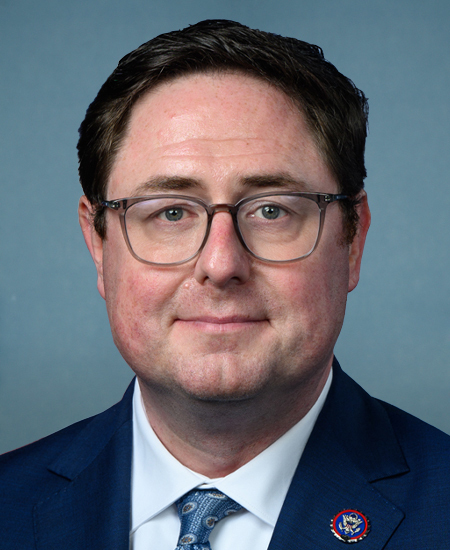
Rep. Mike Flood
Sponsored bills
Maddy summaryHJRES 64 is a joint resolution disapproving a rule issued by the Bureau of Consumer Financial Protection (CFPB) that defined "larger participants" in the market for general-use digital payment applications. The resolution directs Congress to reject the rule (published in the Federal Register on December 10, 2024), stating it shall have no force or effect. This action directly affects the CFPB’s regulatory authority over digital payment platforms, specifically targeting how the agency classifies major companies in this sector. The resolution does not create new policy but formally overturns the CFPB’s existing rule on this matter.
Maddy summaryThe No More D.C. Waste Act (HR 1686) requires that unspent federal funds for District of Columbia resident tuition support must expire at year-end and cannot be carried forward to future fiscal years. It amends the District of Columbia College Access Act to remove provisions allowing funds to remain available until expended, ensuring all allocated funds are used within the fiscal year. Starting in 2026, the District must submit annual reports to Congress detailing the number of students served, average aid amount, and any unspent funds. This bill directly affects the District of Columbia's tuition support programs and federal funding for resident education.
Maddy summaryHR 1734 establishes a task force of financial regulators (including Treasury, Fed, and Consumer Financial Protection Bureau officials) to study deep fake threats to banking security. The task force must issue a report within one year detailing current protections used by banks and credit unions, standard definitions for AI terms like "deep fakes," risks of identity theft via AI fraud, and best practices for prevention. The report will also include regulatory recommendations to protect consumers from data theft and fraud. This procedural bill requires a study but does not enact new laws or directly affect consumers or institutions until recommendations are considered.
Maddy summaryHRES 166 is a non-binding House resolution expressing U.S. support for the Iranian people's desire for a democratic, secular, and nonnuclear republic. It condemns the Iranian regime's terrorism, regional proxy wars, internal suppression of ethnic and religious minorities, and human rights abuses - including executions and repression of women-led protests. The resolution calls for holding the regime accountable through sanctions, supports the Ten-Point Plan for Iran’s democratic transition, and urges protection for Iranian political refugees in Albania. It does not create new laws but affirms U.S. policy alignment with Iranian protesters' demands.
Maddy summaryThis bill awards a Congressional Gold Medal to the 761st Tank Battalion (known as the "Black Panthers"), the first predominantly Black armored unit in World War II's European Theater. It recognizes their combat service from 1944-1946, including key roles in the Battle of the Bulge and breaking the Siegfried Line, despite facing racial prejudice during and after the war. The medal will be displayed at the National Museum of African American History and Culture, with bronze duplicates available for sale to cover costs. The bill commemorates the battalion's 130,000 enemy casualties inflicted, 50% casualty rate, and their 1978 Presidential Unit Citation. It does not create new laws or affect current policies.
Maddy summaryThis bill requires the U.S. Department of Agriculture (USDA) to join the Committee on Foreign Investment in the United States (CFIUS) for reviews of certain transactions involving foreign adversaries. It specifically targets acquisitions of U.S. agricultural land, biotechnology, or agriculture-related infrastructure (like transportation, storage, or processing) by entities from China, North Korea, Russia, or Iran. The USDA must notify CFIUS about reportable transactions, prompting the committee to determine if a full review is needed. The provisions expire for any country removed from the official list of foreign adversaries in federal regulations.
Maddy summaryHR 1575, the "No American Land for Communist China Act," prohibits the People's Republic of China government and businesses with 25% or more Chinese government ownership from purchasing real estate adjacent to specific federal lands. The bill directly affects Chinese government agents and Chinese-affiliated businesses seeking to buy property near lands managed by the Departments of Interior, Defense, Agriculture (Forest Service), and Energy, as well as Indian country. Key provisions require the President to take necessary actions to block such purchases, defining "covered Federal lands" broadly to include national parks, military bases, and tribal lands. The law aims to prevent foreign government influence over land near sensitive U.S. properties through a clear purchase restriction.
New Era of Preventing End-Stage Kidney Disease Act This bill establishes regional centers of excellence, postgraduate fellowships, and training for health professionals relating to the diagnosis and treatment of rare kidney disease. It also requires the Department of Health and Human Services (HHS) to conduct various studies on rare kidney disease. Specifically, it authorizes the National Institute of Diabetes and Digestive and Kidney Diseases to award funding to public and private nonprofit entities for establishing regional centers of excellence that will increase public awareness, conduct research, and develop resources for diagnosing and treating rare kidney diseases. A center may receive such funding for up to five years, unless extended by the institute. The bill also requires health professions schools receiving a grant from the Health Resources and Services Administration (HRSA) Centers of Excellence program to award fellowships for training on preventing, diagnosing, and treating rare kidney disease in disproportionately impacted populations. Also, the bill expands the priorities of HRSA’s Primary Care Training and Enhancement program to include training for health care workers to care for individuals with kidney disease. Additionally, HHS must conduct several studies and report to Congress on topics such as treating rare kidney disease in disproportionately affected populations, eliminating the need for dialysis or kidney transplants, and increasing public awareness of rare kidney disease.
Maddy summaryThe American Victims of Terrorism Compensation Act amends the Justice for United States Victims of State Sponsored Terrorism Act to increase funding for victims of terrorism. It directs the transfer of approximately $1.5 billion from the Binance Holdings Limited case, plus 50% of excess unobligated balances from Department of Justice and Treasury forfeiture funds, into the Victims Fund. The bill establishes deadlines for agencies to deposit funds (within 30 days of receipt or 15 days after enactment), requires annual reports on fund activity, and authorizes annual payments to eligible claimants starting in 2026. This legislation directly affects terrorism victims who receive compensation from the fund and federal agencies that handle forfeited assets from terrorism-related cases.