

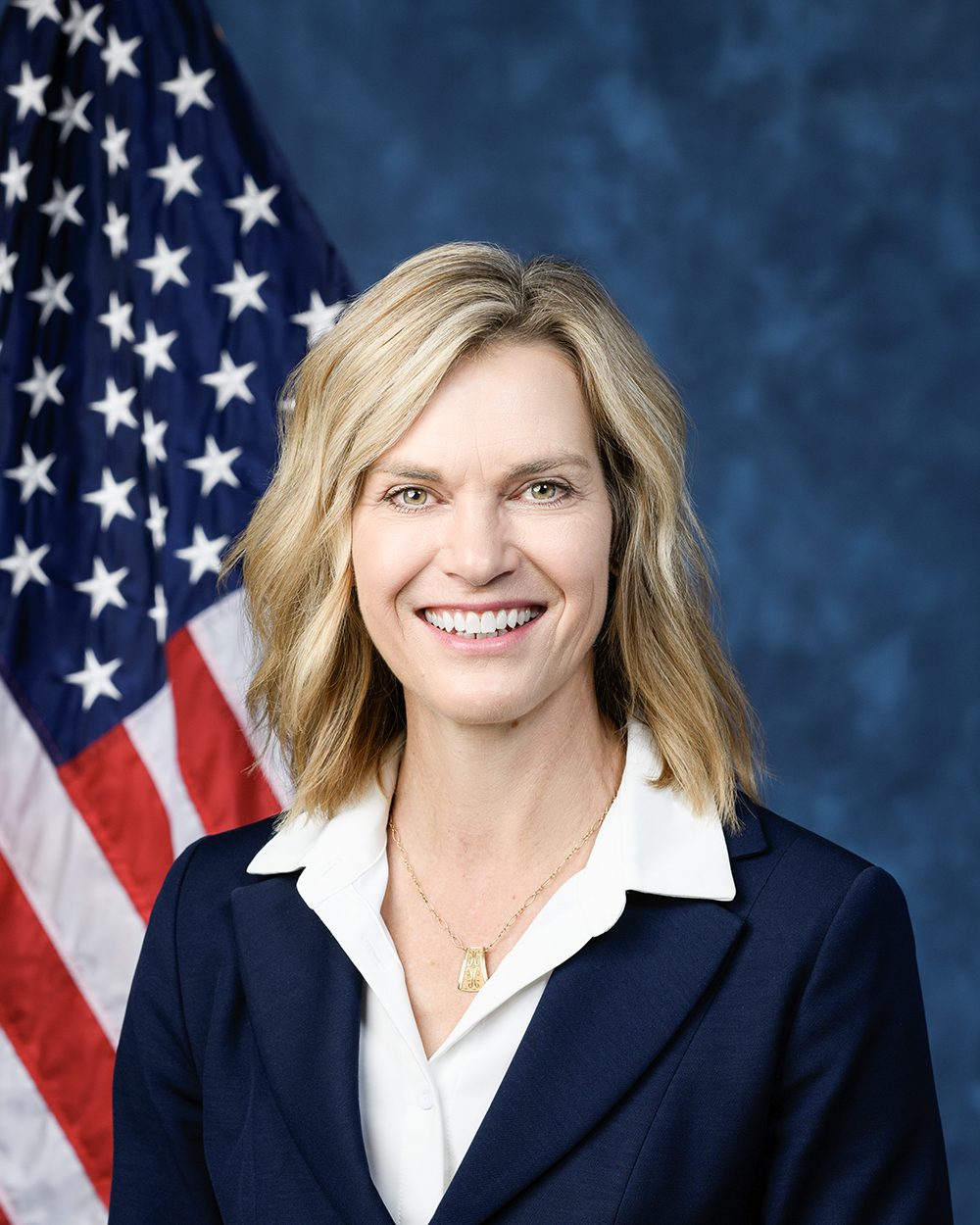
Photo of Julie Fedorchak
R United States House · District At-Large · North Dakota On the 2026 ballot

Rep. Julie Fedorchak

Compare
Total votes
669
all sessions
Attendance
98%
14 missed
Near the chamber average
With party
97%
of cast votes
Near the chamber average
Bipartisan score
1%
crosses aisle rarely
Near the chamber average
Sponsored
156
bills & resolutions
Lower than 86% of chamber peers
Committees
4
assignments
156 bills and resolutions

Sponsored bills

Total
156
Primary
16
Co-sponsor
140
This page
156
matching current filters
Co-sponsor HR 1301
In committee · Indiana House · Co-sponsor
Death Tax Repeal Act

Maddy summaryHR 1301, the Death Tax Repeal Act, would eliminate the federal estate tax and generation-skipping transfer tax for estates of individuals dying on or after its enactment date. It directly affects individuals inheriting significant assets, as it removes taxes on estates exceeding $10 million (adjusted for inflation) and repeals taxes on large transfers between generations. The bill modifies the gift tax by establishing a $10 million lifetime exemption with annual inflation adjustments, replacing previous tax brackets. It applies to estates, gifts, and transfers occurring on or after the bill's effective date.

In committee Feb 13, 2025 1 co-sponsor
Co-sponsor HR 1269
In committee · Indiana House · Co-sponsor
Honoring Our Fallen Heroes Act of 2025

Maddy summaryHR 1269, the Honoring Our Fallen Heroes Act of 2025, expands benefits for public safety officers (like police and firefighters) who develop certain cancers linked to their work. It adds 22 specific cancers - including lung, mesothelioma, and breast cancer - to the list of conditions presumed to be "exposure-related" and sustained in the line of duty. This presumption applies if the officer served at least 5 years, was diagnosed with the cancer within 15 years after last active duty, and the cancer directly caused death or permanent disability. The bill also establishes a process for adding new cancers every 3 years based on medical evidence from agencies like NIOSH, and allows claims to be filed within 3 years of the law's enactment.

In committee Feb 12, 2025 1 co-sponsor
Co-sponsor HR 1241
In committee · Indiana House · Co-sponsor
SAFE for America Act of 2025

Security And Fairness Enhancement for America Act of 2025 or SAFE for America Act of 2025 This bill eliminates the diversity visa program. This program provides up to 55,000 visas annually to individuals from countries with low rates of immigration to the United States.

In committee Feb 12, 2025 1 co-sponsor
Co-sponsor HR 26
Passed · Indiana House · Co-sponsor
Protecting American Energy Production Act

Maddy summaryThe Protecting American Energy Production Act (HR 26) states that Congress believes states should have primary authority to regulate hydraulic fracturing (fracking) for oil and natural gas on state and private lands. It prohibits the President from imposing a moratorium on fracking without a new law passed by Congress. This bill directly affects federal executive authority by preventing unilateral federal bans and reinforces state regulatory roles. The key provision ensures any federal restriction on fracking would require a specific act of Congress, rather than executive action.

Passed Feb 10, 2025 1 co-sponsor
Co-sponsor HR 27
Passed · Indiana House · Co-sponsor
HALT Fentanyl Act

Maddy summaryThe HALT Fentanyl Act (HR 27) creates a new category of Schedule I controlled substances for "fentanyl-related substances" defined by specific chemical modifications to fentanyl. This law directly affects researchers, medical professionals, and law enforcement by expanding the legal definition of fentanyl-related substances to include many structurally similar compounds. Key provisions include streamlined registration processes for research on these substances, allowing researchers to conduct studies with expedited procedures if related to FDA-approved drug development or government-funded research. The bill requires the Attorney General to issue implementing rules within six months and includes penalties for violations involving these substances.

Passed Feb 10, 2025 1 co-sponsor
Co-sponsor HR 1131
In committee · Indiana House · Co-sponsor
Family Farm and Small Business Exemption Act

Maddy summaryHR 1131 exempts certain family farms and small businesses from being counted as assets when calculating financial need for federal student aid under the Higher Education Act. Specifically, it amends the law to exclude the net value of a family farm where the family resides and small businesses (with ≤100 employees) owned by the family from need analysis calculations. This change directly affects students from qualifying family farm or small business households when applying for federal financial aid. The exemption applies to need analysis conducted for award years beginning after the bill's enactment date. The bill modifies Section 480(f)(2) of the Higher Education Act of 1965 to implement this policy change.

In committee Feb 7, 2025 1 co-sponsor
Co-sponsor HR 987
In committee · Indiana House · Co-sponsor
Fair Access to Banking Act

Fair Access to Banking Act This bill places restrictions on certain banks, credit unions, and payment card networks if they refuse to do business with a person who complies with the law. Restrictions include prohibiting the use of electronic funds transfer systems and lending programs, termination of an institution's depository insurance, and specified civil penalties. Banks and other specified financial institutions are allowed to deny financial services to a person only if the denial is justified by a documented failure of that person to meet quantitative, impartial, risk-based standards established in advance by the institution. This justification may not be based upon reputational risks to the institution. The bill establishes the right for a person to bring a civil action for a violation of this bill.

In committee Feb 5, 2025 1 co-sponsor
Co-sponsor HR 925
In committee · Indiana House · Co-sponsor
Dismantle DEI Act of 2025

Maddy summaryHR 925, the "Dismantle DEI Act of 2025," would eliminate diversity, equity, and inclusion (DEI) programs across federal government operations. The bill requires federal agencies to close DEI offices, rescind related executive orders, and prohibit the use of federal funds for DEI training, offices, or initiatives. It defines "prohibited diversity, equity, or inclusion practice" as any activity that discriminates based on race, ethnicity, religion, biological sex, or national origin, or requires employees to complete training asserting that certain groups are inherently superior or inferior. The legislation also prohibits requiring employees to sign statements about race, ethnicity, or gender, and establishes private lawsuits for violations with potential damages of $1,000 per violation per day. This bill would directly affect federal agencies, contractors, grantees, and advisory committees receiving federal funding.

In committee Feb 4, 2025 1 co-sponsor
Co-sponsor HCONRES 4
In committee · Indiana House · Co-sponsor
Expressing the sense of Congress that tax-exempt fraternal benefit societies have historically provided and continue to provide critical benefits to the people and communities of the United States.

Maddy summaryHCONRES 4 is a symbolic resolution expressing Congress's support for tax-exempt fraternal benefit societies (like mutual aid organizations). It recognizes these groups, which have over 7 million members nationwide, as historically and currently providing critical community benefits - including life/health insurance, charitable work, and volunteer services - valued at over $3.8 billion annually. The resolution affirms that their tax-exempt status under Section 501(c)(8) of the Internal Revenue Code remains beneficial and should continue to be promoted. This is a non-binding expression of congressional sentiment, not a policy change.

In committee Jan 28, 2025 1 co-sponsor
Co-sponsor HR 724
In committee · Indiana House · Co-sponsor
CBO Show Your Work Act

Maddy summaryThis bill requires the Congressional Budget Office (CBO) to publicly publish the models, data, and detailed methodology it uses to estimate the costs and effects of legislation. Specifically, it mandates that the CBO make available all fiscal models, data routines, and the underlying assumptions behind its cost estimates, allowing independent verification. This applies to all CBO analyses of proposed bills, including the specific data and computational details needed for others to replicate the results. The requirement applies to all users of CBO reports - lawmakers, researchers, and the public - except for data legally restricted from disclosure, which would still require a public list of variables and descriptive statistics.

In committee Jan 24, 2025 1 co-sponsor
Showing 131 to 140 of 156 bills
Previous 1 … 13 14 15 … 16 Next