This concurrent resolution declares that Congress should not impose any new performance fee, tax, royalty, or other charge relating to the public performance of sound recordings on a local radio station for broadcasting sound recordings over the air, or on any business for such public performance of sound recordings.
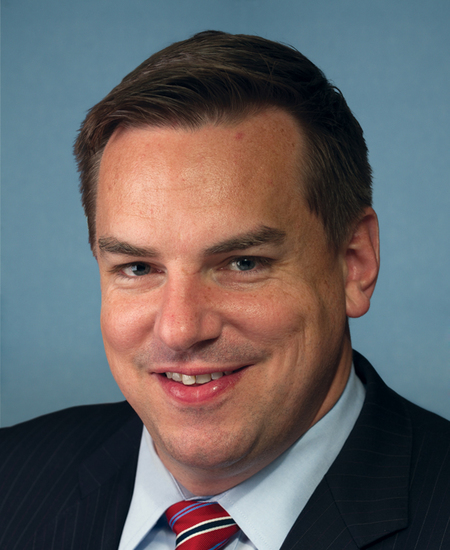
Rep. Richard Hudson
Sponsored bills
Maddy summaryHRES 386 is a symbolic resolution introduced in the U.S. House of Representatives that expresses support for recognizing "National Police Week" each year. The resolution acknowledges law enforcement officers' sacrifices, particularly during the pandemic, and encourages the public to honor their service. As a non-binding statement, this resolution does not create new law or change policy but serves as a formal expression of support for law enforcement officers across the United States.
Protect and Serve Act of 2021 This bill establishes a new criminal offense for knowingly assaulting a law enforcement officer and causing serious bodily injury (or attempting to do so) in circumstances that affect interstate commerce. It imposes criminal penalties—a prison term, a fine, or both—on a violator.
Maddy summaryHRES 754 is a non-binding resolution expressing the House of Representatives' opposition to proposed "punitive natural gas taxes" on U.S. businesses, families, and workers. It cites claims that such taxes would raise average energy bills by 17%, reduce GDP by $9 billion, and eliminate 90,000 jobs, while disproportionately harming low-income households. The resolution argues that opposing these taxes supports U.S. energy security, national security, and continued leadership in reducing emissions through domestic natural gas production. As a procedural resolution, it does not create law but formally states the House's position against this policy approach.
This bill prohibits the use of federal funds to require a member of the Armed Forces to receive a COVID-19 vaccination. The bill also prohibits adverse action (e.g., punishment) being taken against a member of the Armed Forces because the member refuses to receive a COVID-19 vaccination.
Access to Breast Cancer Diagnosis Act of 20 21 This bill prohibits private health insurance plans from imposing higher cost-sharing requirements on breast cancer diagnostic examinations than initial breast cancer screening examinations. Diagnostic examinations are generally required after an initial screening detects an abnormality and typically require additional mammogram images (e.g., x-rays).
State, Local, Tribal, and Territorial Fiscal Recovery, Infrastructure, and Disaster Relief Flexibility Act This bill allows states, tribes, territories, and localities to use certain COVID-19 relief funds for new categories of spending, including for natural disasters and infrastructure projects. It also makes changes to expenditure deadlines and other aspects of this funding. Specifically, recipients may use funds for emergency relief from natural disasters and associated negative economic impacts of natural disasters. In addition, recipients may use a portion of their COVID-19 relief funds for designated infrastructure projects, such as nationally significant freight and highway projects. Furthermore, the bill allows recipients to expend COVID-19 relief funds on these types of infrastructure projects until September 30, 2026. Under current law, recipients must expend the funds by December 31, 2024. Other changes in the bill include (1) modifying eligibility and allocation requirements for funding set aside for counties and Indian tribes that are near public lands, (2) allowing Indian tribes an additional year to expend their COVID-19 relief funds, and (3) establishing a process for government entities to decline COVID-19 relief funds and requiring any declined funds to be used to reduce the federal deficit.
This resolution recognizes the ultimate sacrifice of the unknown soldiers interred at Arlington National Cemetery and expresses gratitude and appreciation of all the members of the Armed Forces who have served during wars and peacetime. Additionally, the resolution commends all members of the 3d Infantry Regiment, specifically those who guard the Tomb of the Unknown Solider.
Open RAN Outreach Act This bill requires the National Telecommunications and Information Administration (NTIA) to conduct outreach and provide technical assistance to small communications network providers to raise awareness of the benefits, uses, and challenges of Open RAN networks and other open network architectures. Open RAN networks are wireless networks that follow the Open Radio Access Network approach to standardization, promoting the use of open interface standards in the portion of the telecommunications network that connects wireless devices (e.g., mobile phones) to the core of the network. The NTIA must also conduct outreach and provide assistance regarding participation in the Wireless Supply Chain Innovation Grant Program.
Strengthening America's Strategic National Stockpile Act of 2021 This bill makes changes to the administration and management of the Strategic National Stockpile. Among these changes, the bill authorizes through September 30, 2024, the Department of Health and Human Services (HHS) to transfer supplies from the stockpile to any federal departments or agencies under certain conditions. HHS must also ensure the contents of the stockpile remain in working order and may enter into maintenance service contracts to carry out this requirement. Furthermore, as part of its management of the stockpile, HHS must establish and maintain domestic reserves of certain supplies, including by entering into cooperative agreements or partnerships to access facilities and equipment to produce these supplies. The authority for such agreements and partnerships terminates on September 30, 2024. Additionally, the bill temporarily authorizes HHS to award grants to states for maintaining stockpiles of certain equipment and supplies for use during public health emergencies. HHS must also develop transparent processes for the use and distribution of supplies from the stockpile that address, for example, the prioritization of requests. Additionally, during the COVID-19 emergency, the Office of the Assistant Secretary for Preparedness and Response must report monthly on requests for supplies from states, tribes, and other jurisdictions. These reports must include the rationale for any partially fulfilled or denied requests. Lastly, the Government Accountability Office must study the feasibility of establishing user fees to offset costs for procuring single-source materials for, and distributing such materials from, the stockpile.