

This resolution condemns the terrorist attack on Congregation Beth Israel in Colleyville, Texas, on January 15, 2022. It also expresses support for the affected community, commends the actions of law enforcement and emergency responders, and reaffirms a commitment to combat hate, bigotry, anti-Semitism, and violence against Jewish Americans.
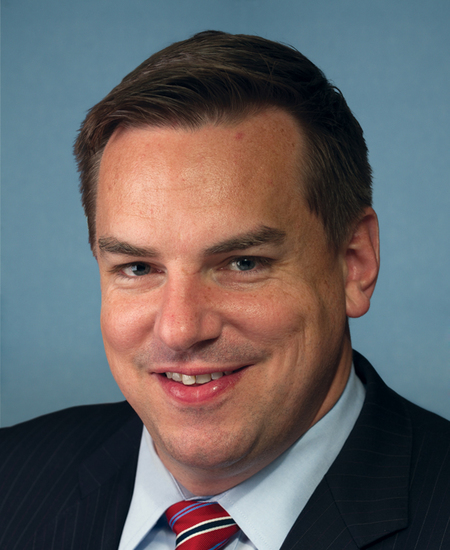
Rep. Richard Hudson
Sponsored bills
Firearm Industry Non-Discrimination Act or the FIND Act This bill prohibits the federal government from entering into contracts with an entity that discriminates against firearm trade associations or businesses that deal in firearms, ammunition, or related products. Specifically, the bill requires a federal agency to include in each contract for the procurement of goods or services awarded by the agency a clause requiring the prime contractor to certify that it (1) has no policy, practice, guidance, or directive that discriminates against a firearm entity or firearm trade association; and (2) will not adopt a policy, practice, guidance, or directive that discriminates against a firearm entity or firearm trade association during the term of the contract. The bill establishes (1) a similar requirement with respect to subcontracts, and (2) penalties for violations. The bill makes such prohibition inapplicable to a contract for the procurement of goods or services that is a sole-source contract.
American Ammo in Defense of Ukraine Act This bill authorizes the President to waive certain payments and requirements for deliveries of ammunition to Ukraine until the armed conflict in Ukraine ends. Specifically, for certain types of ammunition or ordnance to be delivered to a qualified entity providing such items to Ukraine, the President may transport the items without charging the transportation costs to Ukraine. The President may also, to expedite delivery of such items, waive any applicable Department of State or Department of Commerce export criteria.
Powering America through Domestic Energy Act or the PADE Act This bill requires the President to prohibit the importation of crude oil and petroleum products from Russia. In addition, the bill requires the President to obtain congressional approval before (1) declaring a moratorium on the use of hydraulic fracturing, or (2) withdrawing federal land from oil and gas leasing under mineral leasing laws.
American Energy Independence from Russia Act This bill addresses U.S. energy security, the production of oil and gas, and the importation and exportation of oil and gas. Specifically, the President must submit an energy security plan that (1) evaluates U.S. crude oil, petroleum products, and natural gas imports and exports; (2) assesses the energy security risks of such imports; and (3) includes strategies to encourage increased domestic production of crude oil, petroleum products, and natural gas to offset Russian imports. The bill also approves the TransCanada Keystone Pipeline in Phillips County, Montana for the import of oil from Canada to the United States. In addition, the bill grants the Federal Energy Regulatory Commission the authority to approve or deny applications for facilities to export natural gas from the United States to foreign countries or import natural gas from foreign countries. The President and federal agencies must obtain congressional approval before (1) prohibiting or substantially delaying certain new energy mineral leases or permits on federal lands, or (2) withdrawing certain federal lands from mineral and geothermal leasing activities. The Department of the Interior must resume issuing oil and gas leases on federal lands and offshore submerged lands in the Outer Continental Shelf as specified under the bill. Finally, the bill limits the drawdown of petroleum in the Strategic Petroleum Reserve until the Department of Energy develops a plan to increase the percentage of federal lands leased for oil and gas production.
This resolution strongly condemns the ongoing violence, war crimes, crimes against humanity, and systematic human rights abuses being carried out by Russia's military and its proxies at the direction of Russian President Vladimir Putin. It also encourages the U.S. government and partner nations to use their influence and vote in international organizations to hold those responsible for such crimes and abuses accountable.
This concurrent resolution supports the efforts of USA Rugby and its partners to bring upcoming Men's and Women's Rugby World Cup tournaments to the United States.
Stop the Nosy Obsession with Online Payments Act of 2022 or the SNOOP Act of 2022 This bill modifies requirements for third party settlement organizations to eliminate their reporting requirement with respect to the transactions of their participating payees unless they have earned more than $20,000 on more than 200 separate transactions in an applicable tax period. A third party settlement organization is the central organization that has the contractual obligation to make payments to participating payees (generally, a merchant or business) in a third party payment network. This reverses a provision in the American Rescue Plan Act of 2021 that lowered the reporting threshold to $600 with no minimum on the number of transactions.
Maddy summaryThis non-binding resolution, introduced in March 2022, calls for the House wing of the U.S. Capitol and House Office Buildings to reopen to the public, citing the unprecedented closure since March 2020 as the longest in history. It urges removing visitor restrictions like logs and prioritizing public access, noting that other state capitols and public venues operated safely during the same period. As a "sense" resolution, it does not mandate action but expresses the House’s position on restoring public access to a democratic symbol. The resolution specifically targets the House wing (not the full Capitol) and aims to encourage the Capitol Police and House leadership to act.
This joint resolution nullifies the rule titled Medicare and Medicaid Programs; Omnibus COVID-19 Health Care Staff Vaccination , which was issued by the Centers for Medicare & Medicaid Services on November 5, 2021. The rule requires health care providers, as a condition of Medicare and Medicaid participation, to ensure that staff are fully vaccinated against COVID-19.