

This bill extends a provision that removes numerical limits for visas for certain temporary nonagricultural workers working on Guam or the Northern Mariana Islands. Under this bill, the provision shall apply to qualifying H-2B visa holders who are admitted into Guam or the Northern Mariana Islands before December 31, 2029, whereas currently the provision applies to H-2B visa holders admitted before December 31, 2024. (The provision exempts qualifying H-2B visa holders from the annual numerical limit on such visas. Generally, this exemption applies to H-2B workers performing labor (1) related to construction or facility services associated with the military alignment occurring on Guam or the Northern Mariana Islands; or (2) as a health care worker at a facility that jointly serves Armed Forces members, dependents, and civilians on Guam or the Northern Mariana Islands.)
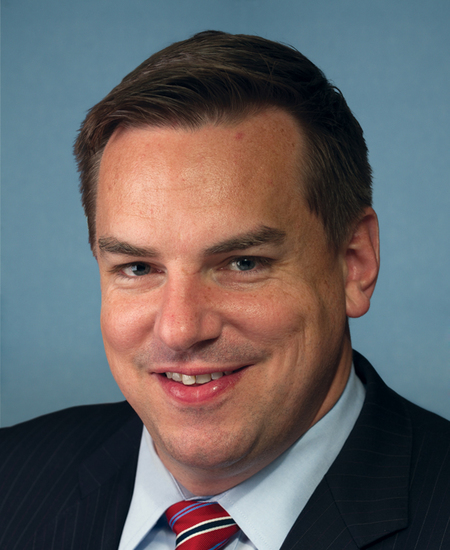
Rep. Richard Hudson
Sponsored bills
Maddy summaryHR 2630, the Safe Step Act, requires group health plans and health insurance issuers to establish a clear, transparent process for patients or their doctors to request exceptions to medication step therapy protocols. These protocols typically force patients to try cheaper drugs first before covering more expensive alternatives. The bill mandates that plans must approve exceptions when prior treatments failed, delay would cause serious harm, a treatment is unsafe, or a patient is stable on a previously approved drug, with strict 72-hour (or 24-hour in emergencies) decision timelines. It also requires plans to publish the exception process online and limit documentation requests to only necessary medical information. This law directly affects health insurers, employers offering health plans, and patients using step therapy for prescription drugs.
Maddy summaryHRES 287 is a symbolic resolution recognizing National Public Safety Telecommunicators Week. It does not create new laws or policies but formally supports and honors the work of public safety telecommunicators - professionals who handle emergency calls, provide life-saving guidance during crises, and manage critical information for first responders. The resolution encourages the public to acknowledge their vital role in emergencies, including missing persons cases, hostage situations, and natural disasters. It directly affects telecommunicators by affirming their contributions through congressional recognition, without altering funding, regulations, or operational procedures.
Maddy summaryHR 2380, the Cellphone Jamming Reform Act of 2023, allows state and federal correctional facilities (like prisons and jails) to operate cellphone jamming systems to block wireless signals from contraband devices or communications involving individuals held in the facility. The bill restricts the Federal Communications Commission (FCC) from blocking such jamming systems, but requires facilities to limit jamming only to housing areas, have state facilities cover all costs, and consult with local law enforcement before implementation. It defines "jamming systems" broadly to include all necessary equipment and installation details. This bill directly affects correctional facilities seeking to prevent cell phone use by inmates, particularly for security purposes related to contraband. The law does not create new restrictions on cellphone use but changes how facilities can deploy jamming technology.
Maddy summaryHR 1839, the Combating Illicit Xylazine Act, makes the illicit use and distribution of xylazine a federal crime by adding it to the Controlled Substances Act. The bill broadly defines xylazine to cover numerous chemical variants and prohibits human use or non-licit distribution, while preserving legitimate veterinary and pharmaceutical uses. It requires tracking xylazine in drug supply chains and mandates two reports to Congress within 1 and 4 years on its prevalence, sources, and whether it should be rescheduled. The bill directly affects individuals distributing or using xylazine illicitly, including as an additive to drugs like fentanyl, and aims to address its public health risks. Congress declared illicit xylazine an "emerging drug threat" under existing law.
Maddy summaryHR 1835, the Saving Access to Laboratory Services Act, modifies Medicare’s payment system for clinical laboratory tests to reduce administrative burdens. It allows the Medicare program to use random sampling of laboratories (instead of requiring full reporting) for "widely available" tests - defined as tests costing under $1,000 per test and performed by over 100 labs - starting in 2026. The bill also delays reporting deadlines, adjusts payment reduction limits, and sets annual caps on payment increases for these tests. This primarily affects independent, hospital, and physician office laboratories that perform common, low-cost tests meeting the defined criteria.
Maddy summaryHR 2510 makes the federal adoption credit for children with special needs refundable, meaning families who adopt such children can receive a cash refund even if they don't owe federal income tax. The bill directly affects adoptive parents who claim the credit for children with special needs, allowing them to get the full credit amount as a refund rather than just reducing their tax bill. Key provisions define "special needs adoption expenses" as qualified costs for these adoptions and adjust tax code language to treat this portion as a refundable credit. The changes apply to taxable years beginning after December 31, 2023.
Maddy summaryHR 1581, the America Works Act of 2023, modifies work requirement exemptions for the Supplemental Nutrition Assistance Program (SNAP). It expands direct exemptions to include individuals medically certified as unfit for work, parents or caregivers of children under 7, and pregnant women, while removing a specific enforcement clause (Section 6(o)(4)(A)(ii)). The bill adjusts existing exemption rules to clarify that certain exemptions apply retroactively to cases beginning before the bill's enactment date. These changes directly affect SNAP recipients who would otherwise face work requirements under federal law.
Maddy summaryThis bill establishes a federal grant program to fund state and tribal governments in implementing Next Generation 9-1-1 systems, which upgrade emergency call systems to handle text, video, and data alongside voice calls. It requires grantees to develop coordinated implementation plans emphasizing cybersecurity, interoperability, rural/urban equity, and sustainable funding, with funds covering training, infrastructure, and public outreach. The bill mandates an annual report to Congress, creates a cybersecurity center for threat coordination, and forms an advisory board of public safety professionals to guide implementation. It directly affects state/local emergency communications centers, public safety agencies, and the 9-1-1 systems used by the public during emergencies.
Maddy summaryThis bill, HR 2451 (Freedom of Association in Higher Education Act of 2023), prevents colleges receiving federal funds from punishing students or single-sex social organizations (like fraternities/sororities) solely because of their single-sex membership policies. It prohibits actions such as denying housing, scholarships, or leadership roles, or forcing students to waive these protections as a condition of enrollment. The law does not require colleges to recognize such groups, nor does it block disciplinary action for misconduct unrelated to membership (e.g., academic issues). It directly affects students in single-sex organizations and institutions participating in federal student aid programs under Title IV.