Reduce Exposure and the Threat of Unused Residual Narcotics Act of 2022 or the RETURN Act of 2022 This bill requires regulations that govern the disposal of narcotics by reverse distributors to be revised so as to allow these entities to open and inspect packages that are received through mail-back programs and to allow them to send the packages offsite for destruction.
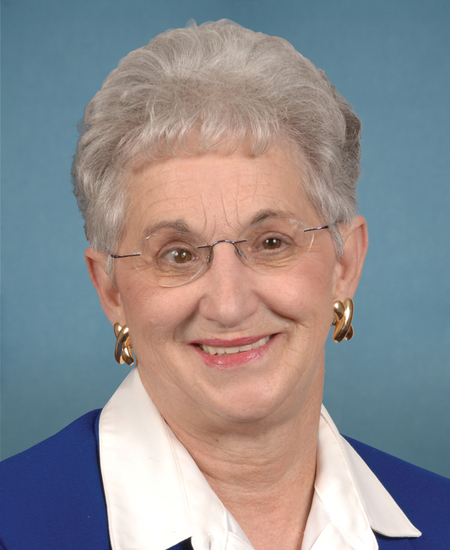
Rep. Virginia Foxx
Sponsored bills
Illegal Immigrant Payoff Prohibition Act This bill prohibits the payment of a settlement to an alien for a civil action brought against the United States in connection with the alien's inadmissibility to, or unlawful presence in, the United States.
Conrad State 30 and Physician Access Reauthorization Act This bill modifies the Conrad 30 Waiver program, which incentivizes qualified foreign physicians to serve in underserved communities. It also extends statutory authority for the program for three years from this bill's enactment. Aliens coming to the United States under a J-1 nonimmigrant visa to receive medical training typically must leave the country and reside for two years abroad before being eligible to apply for an immigrant visa or permanent residence. The Conrad program waives this requirement for individuals who meet certain qualifications, including serving for a number of years at a health care facility in an underserved area. The bill increases the number of waivers that a state may obtain each fiscal year from 30 to 35 if a certain number of waivers were used the previous year, and provides for further adjustments depending on demand. An alien physician may be employed at an academic medical center to meet the Conrad program's employment requirements if the alien's work is in the public interest, even if the medical center is not in an underserved area. Employment contracts for alien physicians under the Conrad program shall contain certain information, such as the maximum number of on-call hours per week the physician shall have to work. Certain alien physicians (along with the physician's spouse and children) shall be exempt from the direct annual numerical limits on immigration, including those physicians that have met certain requirements related to visas for physicians to serve in underserved areas.
Border Patrol First Act This bill transfers $240 million previously made available to the Department of State for refugee and humanitarian assistance to the Department of Homeland Security. The transferred funds shall be available (1) for U.S. Customs and Border Protection activities, and (2) to reimburse the states of Texas and Arizona for activities related to border security.
This bill prohibits an individual who is not a U.S. citizen from voting in any elections in the District of Columbia (DC). Federal law bars noncitizens from voting in federal elections; however, the DC Council passed a bill on October 18, 2022, that allows noncitizens who meet residency and other requirements to vote in local elections.
Chance to Compete Act of 2022 This bill modifies examination requirements and other components of the federal hiring process for positions in the competitive service. Specifically, the bill provides that a qualifying examination includes a résumé review that is conducted by a subject matter expert. Additionally, beginning two years after the bill's enactment, the bill prohibits examinations from consisting solely of a self-assessment from an automated examination, a résumé review that is not conducted by a subject matter expert, or any other method of assessing an applicant's experience or education; an agency may waive these requirements when necessary but must report any such waivers. Agencies may use subject matter experts to develop position-specific technical assessments that allow applicants to demonstrate job-related skills, abilities, and knowledge; assessments may include structured interviews, work-related exercises, procedures to measure career-related qualifications and interests, or other similar assessments. The bill also allows agencies to establish talent teams to support and improve hiring practices. The Office of Personnel Management (OPM) must create online platforms through which agencies may share and customize technical assessments and share the résumés of qualifying applicants. The OPM must also create online platforms with information about (1) the types of assessments used and hiring outcomes, (2) educational requirements for certain positions and related justifications, and (3) authorities and programs that support agency recruitment and retention.

Maddy summaryThis bill designates the Department of Veterans Affairs clinic in Mishawaka, Indiana, as the "Jackie Walorski VA Clinic" to honor former U.S. Representative Jackie Walorski, who served on the House Committee on Veterans' Affairs and advocated for veterans. The law requires all federal references - including laws, documents, and maps - to use the new name for the clinic, effective upon enactment. It does not change the clinic’s services, funding, or operations, as it is a purely commemorative naming resolution.
Protect Farmers from the SEC Act This bill prohibits the Securities and Exchange Commission from requiring the disclosure of greenhouse gas emissions related to agricultural products.
Taiwan Policy Act of 2022 This bill provides support to Taiwan and addresses related issues. For example, the bill (1) establishes a comprehensive training program with Taiwan's government to familiarize the U.S. military and Taiwan's military with each other and achieve interoperability, and (2) authorizes the Department of State to take actions to help Taiwan become a non-borrowing member of the Inter-American Development Bank.
Educational Choice for Children Act This bill allows individuals and corporations a new tax credit after 2022 for charitable contributions to tax-exempt organizations that provide scholarships to elementary and secondary school students. Such students must be members of a household with incomes not greater 300% of the area median gross income and be eligible to enroll in a public elementary or secondary school. The bill excludes from the gross income of taxpayer dependents any scholarship amount for the elementary or secondary education expenses of eligible students. It also prohibits governmental control over scholarship granting organizations.