

Maddy summaryHR 5110, the Protecting Hunting Heritage and Education Act, amends the Elementary and Secondary Education Act of 1965 to clarify that federal education funds cannot be used for certain weapons - but this restriction does not apply to archery, hunting, or other shooting sports training programs. The bill directly affects schools and educational programs seeking to use federal funds for these specific activities, such as archery clubs or hunting safety education. It adds an explicit exception to the existing prohibition, allowing funds to support "educational instruction or enrichment activities" in these sports under authorized programs. This change removes ambiguity about funding eligibility for such educational initiatives in K-12 schools.
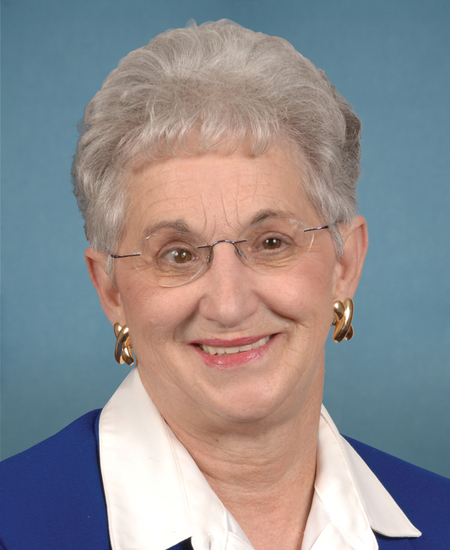
Rep. Virginia Foxx
Sponsored bills
Maddy summaryThe Spending Safeguard Act establishes spending caps for certain federal programs to prevent budget overruns. It sets limits equal to 120% of a program's six-year cost for defense, health, income security, and veterans programs, or 110% for other programs. Agencies must track spending via public scorecards, submit monthly reports to the Treasury, and notify Congress if spending approaches the cap. If a program breaches its cap, no new funds can be committed for 30 days, and agencies must report the breach to Congress. The bill applies to direct spending programs without fixed annual funding limits (excluding Medicare and Social Security).
Maddy summaryThe Life.Gov Act (HR 5406) requires the U.S. Department of Health and Human Services to create a federal website called life.gov within one year of enactment. The website will provide pregnant and postpartum women with locally tailored resources - such as health services, financial assistance, and mental health support - via zip code searches, multilingual access, and user feedback tools. States must submit resource recommendations meeting strict criteria (e.g., no abortion providers, 3+ years of service), and the website cannot list "prohibited entities" (defined as abortion providers or supporters). The Secretary must report to Congress within 180 days on website usage, user feedback, and gaps in resources, using existing HHS funding.
Maddy summaryHCONRES 18 sets strict 30-day deadlines for the Joint Committee on the Library to review and act on North Carolina's submission for a statue of Reverend Billy Graham in the National Statuary Hall. It requires the Committee to approve or deny the clay model design within 30 days of receiving detailed submissions (including photos, dimensions, and engineering data), then approve the final statue within another 30 days of receiving final documentation. If approved, the Committee must also select a Capitol location within 30 days. This procedural bill directly affects North Carolina (as the submitting state) and the Joint Committee, streamlining an existing approval process without altering substantive policy.
Maddy summaryHR 5241 amends tax code provisions to allow governmental pension plans to include firefighters, emergency medical technicians (EMTs), and paramedics who work full-time in firefighting or out-of-hospital emergency medical services for public safety agencies under local government contracts. The bill prevents these pension plans from being disqualified as "governmental plans" solely because they cover these specific public safety workers, as defined by the Homeland Security Act. This change directly affects state and local government pension systems that serve emergency response personnel. The policy update applies to plan years starting after the bill's enactment.
Maddy summaryHR 5155 creates a new temporary visitor visa category specifically for family visits to the U.S. It directly affects U.S. citizens and lawful permanent residents wanting to host relatives for short stays, and their eligible relatives (including parents, children, siblings, and extended family). The bill requires visitors to have a financial sponsor, short-term medical insurance covering U.S. expenses, and proof of intent to leave within 90 days per year - reducing the previous 180-day limit. It explicitly states this visa does not count as immigrant status, and applicants who previously overstayed a similar visa face additional restrictions unless extraordinary circumstances apply.
Maddy summaryThis bill amends federal funding rules for Title X family planning services. It prohibits the Secretary of Health and Human Services from requiring any State, clinic, or organization receiving Title X funds to provide abortion counseling or referrals as a condition of receiving that funding. The law directly affects all Title X grantees - clinics and providers that receive federal funds for preventive reproductive health services. The key provision ensures that funding eligibility cannot be tied to abortion-related services or referrals.
Preserving Safety Net Integrity Act of 2023 This bill enacts with the force and effect of law the final rule of the Department of Homeland Security titled Inadmissibility on Public Charge Grounds and published on August 14, 2019. The bill also nullifies the final rule issued by DHS titled Public Charge Ground of Inadmissibility and published on September 9, 2022. The 2019 final rule made it more likely that a non-U.S. national ( alien under federal law) would be denied admission or lawful permanent resident status because that individual is likely to become a public charge (i.e., receive certain public benefits). The 2022 final rule nullified the 2019 final rule.
Maddy summaryHR 5053, the Wage Equity Act of 2023, prohibits employers from using an applicant's past salary to set pay or requiring disclosure of wage history, aiming to prevent gender-based pay discrimination. It requires employers to conduct voluntary job and wage analysis audits to identify and address pay disparities based on sex, with legal protections for those who complete audits in good faith. The bill also bans employers from restricting employees' discussions about wages or retaliating against those who discuss pay or request explanations for pay differences. These provisions directly affect employers nationwide and employees, particularly women, by promoting transparency and addressing systemic pay gaps.
Maddy summaryHR 4942 extends and modifies the Conrad State 30 program, which allows states to sponsor foreign medical graduates to work in medically underserved areas in exchange for a commitment to practice for three years. The bill directly affects foreign medical graduates seeking to work in the U.S., states that sponsor them, and health facilities in underserved communities. Key provisions include creating mechanisms for physicians to change employers or states if they face issues with their current employment, adding requirements for employment agreements (including prohibitions on non-compete clauses), and establishing exceptions to the three-year work requirement under certain circumstances. The bill also creates a process for states to recapture waiver slots when physicians leave their employment and requires annual reporting on the program's usage. These changes aim to improve physician retention in underserved areas by providing more flexibility and protections for foreign medical graduates.