Maddy summaryHR 8147 repeals the Corporate Transparency Act, which required certain businesses (typically those with more than 20 employees) to report beneficial ownership details to the Treasury Department. This bill eliminates the requirement for companies to disclose who ultimately owns or controls them, directly affecting business owners and financial institutions that previously submitted this information. The bill also makes minor technical changes to Title 31 of the U.S. Code to remove references to the repealed provisions. The repeal would end the existing financial transparency reporting obligation for covered entities.
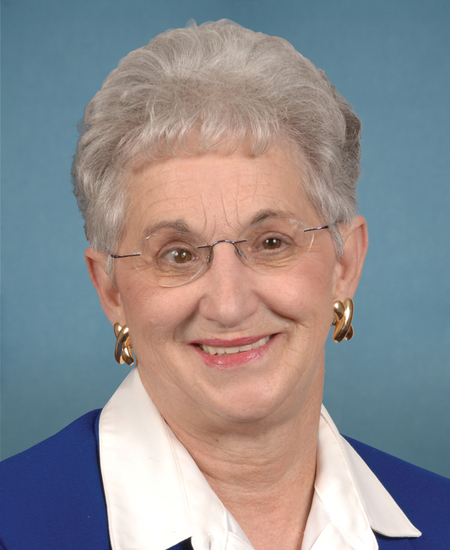
Rep. Virginia Foxx
Sponsored bills
Maddy summaryThis bill requires public colleges and universities that receive federal student aid to adopt and disclose free speech policies that protect students from political discrimination. It prohibits schools from requiring applicants or faculty to pledge support for specific political views or diversity initiatives, and mandates clear policies about speech, association, and religion. The bill also protects student organizations' rights to form single-sex groups, receive funding without viewpoint discrimination, and have appeal processes if denied recognition. Schools that fail to comply could lose eligibility for federal student aid programs.
Maddy summaryHR 8039, the American Students First Act, amends the Higher Education Act to set new eligibility requirements for federal TRIO programs (like Upward Bound and Talent Search). It directly affects students seeking these programs by requiring participants to be U.S. citizens, lawful permanent residents, specific aliens with intent to become permanent residents, citizens of Freely Associated States, CNMI residents, or lawful residents of Freely Associated States. The bill prohibits waiving these requirements under certain appropriations laws or performance partnership pilots. This change clarifies who qualifies for federal student support programs but does not alter program funding or create new benefits.
Maddy summaryHR 8041, the Driving Forward Act, extends a temporary exemption from pre-trip safety checks for school bus drivers operating within states until November 2027. This directly affects school bus drivers and state transportation agencies responsible for implementing the exemption. The bill requires the Transportation Secretary to seek public input on making the exemption permanent after 120 days and allows states to use existing highway funds to cover associated costs. It makes no changes to driver qualification standards but delays a requirement that would have otherwise taken effect.
Maddy summaryHR 3591, the Asylum Accountability Act, removes a 10-year bar to adjusting immigration status for asylum seekers who fail to appear at their removal hearing. It amends Section 240(b)(7) of the Immigration and Nationality Act by eliminating the phrase "for a period of 10 years after the date of the entry of the final order of removal." This change directly affects individuals seeking asylum who miss their scheduled removal proceedings. The key provision simplifies the process by allowing these individuals to immediately apply for status adjustment after a final removal order, without waiting a decade. The bill makes a specific procedural change to immigration law without altering broader asylum eligibility criteria.
Maddy summaryHRES 863 is a formal resolution introduced by Representative Marjorie Taylor Greene impeaching Secretary of Homeland Security Alejandro Mayorkas. It alleges Mayorkas violated his constitutional duty by failing to secure the border, citing specific claims including approximately 10 million border encounters, 400,000 unaccompanied children, and the presence of individuals from nations linked to terrorism. The resolution asserts these failures breached the Secure Fence Act, the Guarantee Clause of the Constitution, and immigration laws, and cites rising fentanyl seizures and border-related deaths as evidence. This resolution, referred to the House Homeland Security Committee, formally charges Mayorkas with "high crimes and misdemeanors" for impeachment proceedings.
Maddy summary# Summary of Proposed WIOA Amendment This document proposes significant amendments to the Workforce Innovation and Opportunity Act (WIOA), with key changes including: 1. **YouthBuild Program Enhancement**: - Increased annual funding authorization to $108,150,000 - New performance reporting requirements - Added focus on opioid-related training and services 2. **New Reentry Employment Opportunities Program** (Section 172): - Creates a competitive grant program for justice-involved individuals - Requires evidence-based practices and performance metrics - Includes specific requirements for recidivism reduction - Defines "eligible adult" (age 25+) and "eligible youth" (age 14-24) 3. **Strengthening Community Colleges Program** (Section 173): - Creates new grant program with $65,000,000 annual funding - Requires industry partnerships for workforce development - Mandates evidence-based program design - Focuses on recognized postsecondary credentials and career pathways 4. **Performance Accountability System**: - Enhanced data collection and reporting requirements - New requirement for making data available in "linked, open, and interoperable data formats" - More detailed performance metrics for all programs 5. **Funding Increases**: - Increased authorizations for multiple programs: - Native American programs: $61,800,000 annually - Migrant and seasonal farmworker programs: $100,317,900 annually - Technical assistance: $5,000,000 annually - Evaluations and research: $12,720,000 annually 6. **Administrative Changes**: - New consultation requirement with labor organizations for on-the-job training - Revised definitions (e.g., "English language learners" changed to "English learners") - New requirements for public reporting of matching funds 7. **Data Infrastructure**: - New "Workforce Data Infrastructure" provisions (Section 174) - Requirements for interoperable data systems - Focus on credential registries and data sharing The proposed amendment emphasizes data-driven decision making, industry-aligned training, performance accountability, and expanded opportunities for underserved populations including justice-involved individuals, opioid treatment participants, and individuals with barriers to employment.

Maddy summaryH.J.Res. 116 seeks to block a Department of Labor rule finalized on January 10, 2024, which aimed to clarify how businesses classify workers as employees or independent contractors under the Fair Labor Standards Act (FLSA). If passed, this resolution would prevent the rule from taking effect, directly affecting businesses that use independent contractors and their workers, who rely on FLSA protections for minimum wage and overtime pay. The bill uses a specific congressional process (under Chapter 8 of Title 5, U.S. Code) to disapprove the rule, rather than creating new policy. This action would maintain the existing classification standards until a new rule is established.
Maddy summaryThis bill freezes new energy efficiency standards for distribution transformers. It prohibits the Energy Secretary from proposing or implementing any rules different from the 2013 standards (published April 18, 2013) for five years after the bill's enactment. The law directly affects the Department of Energy and transformer manufacturers by maintaining existing efficiency requirements. It ensures no changes to the 2013 rule during this five-year period.
Maddy summaryHR 7366 requires U.S. Customs and Border Protection (CBP) to publish monthly border encounter data on its public portal by the 7th of each month. This affects CBP directly, as it mandates the timely release of data on encounters at the border during the previous month. The bill also includes a penalty: if CBP misses this deadline, funding for the Office of the Secretary of Homeland Security is reduced by 25% for the following month. The law focuses on ensuring transparency in border data reporting through specific deadlines and financial consequences.