

Maddy summaryHR 3507, the "Yes In My Backyard Act," requires local governments receiving certain federal Community Development Block Grants (CDBG) to report on their progress toward adopting specific housing-friendly land use policies. It directly affects cities and counties that administer CDBG funds by mandating they submit plans tracking 22+ policy changes, such as allowing duplexes in single-family zones, reducing parking requirements, or streamlining permits. The bill does not require local governments to adopt these policies but requires them to document their current status and plans for implementation. This reporting mechanism aims to identify barriers to affordable housing without binding local governments to specific actions. The requirement applies to CDBG recipients starting one year after the bill's enactment.
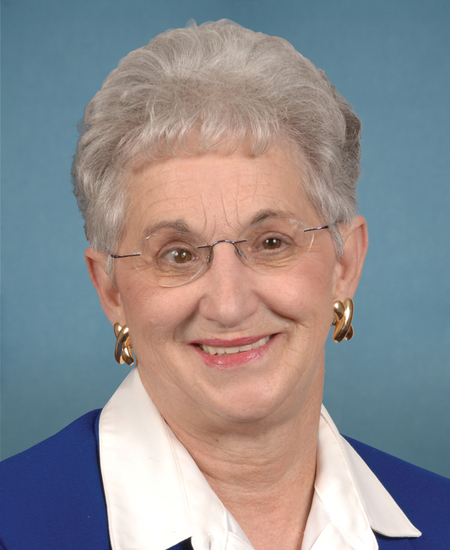
Rep. Virginia Foxx
Sponsored bills
Maddy summaryThis resolution aims to block a rule issued by the National Highway Traffic Safety Administration (NHTSA) that sets new fuel efficiency standards for passenger cars, light trucks (starting in 2027), and heavy-duty pickup trucks/vans (starting in 2030). If passed, it would prevent this specific rule from taking effect by disapproving it under a congressional review process. The rule directly affects vehicle manufacturers by requiring them to meet these updated fuel economy targets for future model years. This is a procedural resolution, not a new law, focused solely on halting the implementation of the existing NHTSA rule.
Maddy summaryHR 9299, the IRAN Act, requires the U.S. Secretary of State to lead federal efforts promoting internet freedom and access to information in Iran. It amends a 2012 law to mandate specific strategy updates, including evaluating how activists use virtual private networks (VPNs) and satellite tech, developing guidance to prevent sanctions from blocking internet tools for Iranians, and planning to bypass government internet blackouts. The bill directs the State Department to coordinate with Treasury, Commerce, USAID, and intelligence agencies to implement these updates. This affects U.S. government agencies' coordination and aims to improve internet access for Iranian civil society activists.
Freedom from Unfair Gun Taxes Act of 2024 This bill prohibits states or localities from imposing a levy or collecting an excise tax on the sale of a firearm, ammunition, or any part or component thereof, by a manufacture or retailer.
Maddy summaryHJRES 165 is a congressional resolution seeking to block a Department of Education rule issued in April 2024 that updated protections against sex discrimination in schools receiving federal funding. The resolution aims to disapprove this specific rule (published as 89 Fed. Reg. 33474), which would have required schools to address sex-based discrimination in educational programs. If passed, the rule would no longer be in effect, meaning schools would not need to comply with its requirements. This resolution directly affects all schools and educational programs receiving federal financial assistance, as it targets the implementation of the new nondiscrimination standard.
Maddy summaryThe GOOD Act requires all federal agencies to publish their non-binding policy guidance documents (like memos, letters, or blog posts) on a single, centralized online repository within 180 days of enactment. It directly affects every federal agency by mandating that all such documents - excluding those already exempt under the Freedom of Information Act - be organized into clear categories on agency websites. Key provisions include designating a central website by the Office of Management Budget Director, maintaining rescinded guidance with clear disclaimers, and ensuring public access to all published guidance. The bill focuses solely on improving transparency in how agencies share interpretive guidance, not on changing policy substance.
Maddy summaryThis bill prevents student athletes (and former athletes) from being classified as employees under federal or state law solely due to their participation in varsity intercollegiate sports programs or competitions. It directly affects college athletes whose eligibility or participation might otherwise be challenged under employment law. The key provision explicitly states that institutions, conferences, or associations cannot consider athletes as employees based on their sports involvement, regardless of existing rules or requirements. This is a definitional and legal clarification, not a new benefit or compensation measure.
Maddy summaryThe Conscience Protection Act of 2024 would strengthen protections for health care providers, facilities, and organizations that refuse to participate in or provide coverage for abortions, assisted suicide, or other procedures conflicting with their religious or moral beliefs. It creates a private right of action allowing individuals or entities to sue when their conscience rights are violated, and requires the Department of Health and Human Services to enforce existing conscience protections through the Office for Civil Rights. The bill prohibits discrimination against health care entities that decline to provide or facilitate these services, while ensuring these protections don't interfere with emergency care requirements under existing law. It also establishes clearer enforcement mechanisms, including the ability to terminate federal funding for non-compliance with conscience protections.
Maddy summaryThis bill rescinds unspent funds from specific federal programs. It targets leftover money from pandemic relief (like the CARES Act and American Rescue Plan) and certain infrastructure initiatives (including education stabilization funds and transportation programs like the Congestion Mitigation Program). The rescission is limited to amounts already allocated for Israel, Ukraine, and Indo-Pacific security supplements under recent appropriations. Unspent funds must be returned to the Treasury, with no new spending created.
Maddy summaryThis resolution (HRES 1285) is a symbolic statement by a group of House members condemning the Biden administration's approach to mifepristone (the abortion pill), specifically the 2023 FDA decision allowing mail-order and pharmacy dispensing of the drug without in-person provider visits. It argues this policy eliminates safety safeguards like in-person ultrasounds to detect ectopic pregnancies, gestational age checks, and provider screening for coercion, potentially increasing health risks for patients. The resolution does not change any laws or policies but expresses disapproval of the FDA’s regulatory changes regarding mifepristone distribution. As a non-binding resolution, it has no legal effect on abortion access or drug regulations.