

Maddy summaryThe Excess Urban Heat Mitigation Act of 2025 creates a federal grant program to fund heat-reduction projects in communities most affected by urban heat islands, primarily low-income neighborhoods (defined as census tracts with ≥20% poverty rate) and areas with higher heat exposure for communities of color. It authorizes $30 million annually for grants to states, cities, tribes, or nonprofits for projects like planting native trees, installing cool roofs/pavements, building shaded transit stops, and creating community cooling centers. Grants require community engagement plans to ensure equitable participation and prioritize projects in underserved areas (75% of funds must target "covered census tracts"). The program mandates annual reporting to Congress and includes oversight to evaluate project success in reducing heat impacts.
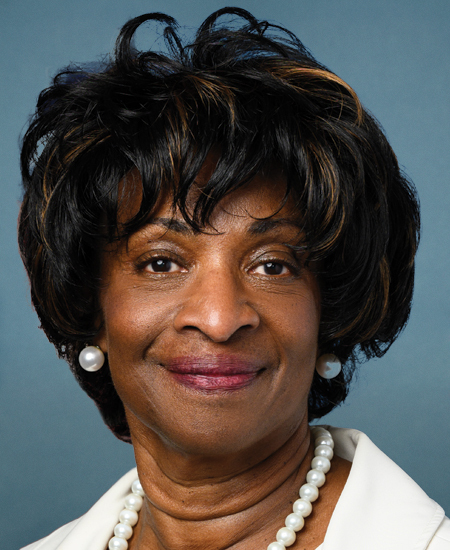
Rep. Valerie P. Foushee
Sponsored bills
Maddy summaryThis resolution (HRES 457) is a symbolic measure expressing congressional support for designating June 6, 2025, as "National Gun Violence Awareness Day" and June 2025 as "National Gun Violence Awareness Month." It does not create new laws or policies but encourages public awareness through specific actions: wearing orange on June 6, focusing on gun safety during summer months, and holding community discussions. The resolution references statistics on gun violence deaths and honors Hadiya Pendleton, a teen victim killed in 2013. It directly affects the public by calling for voluntary observance and community engagement, not government mandates.
Maddy summaryThis bill requires new passenger cars, SUVs, and light trucks (under 10,000 lbs) to have automatic emergency braking systems that detect cyclists in all lighting conditions and across diverse appearances. The rule must be finalized within 3 years of enactment, with manufacturers required to comply within two model years after the rule's release. It mandates systems that activate at appropriate speeds and recognize vulnerable road users like bicyclists, regardless of skin tone, clothing, or protective gear. The law directly affects vehicle manufacturers and aims to improve safety for cyclists through standardized vehicle technology.
Maddy summaryThis non-binding resolution (HRES 456) expresses congressional support for designating May 2025 as "Progressive Supranuclear Palsy Awareness Month." It directly affects individuals living with progressive supranuclear palsy (PSP), a rare neurodegenerative brain disorder impacting movement, cognition, and daily functioning, along with their families and caregivers. The resolution aims to raise public awareness, encourage research funding, and support organizations working to improve care and find treatments for PSP. It does not create new laws or funding but formally recognizes the need for greater attention to this condition.
Maddy summaryThe Menstrual Equity For All Act of 2025 requires schools, colleges, correctional facilities, and federal buildings to provide free menstrual products to those who need them. It makes menstrual products covered by Medicaid, prohibits states from taxing these products, and creates grant programs to support low-income individuals. Key provisions include mandating free products in educational settings, requiring employers with 100+ employees to provide them, and expanding Medicaid coverage for these items. The bill directly affects students, incarcerated individuals, homeless people, Medicaid beneficiaries, and low-income families by addressing period poverty through concrete access requirements.
Maddy summaryHR 3604, the *Reducing Waste in National Parks Act*, requires National Park Service (NPS) units to reduce and eliminate the sale of disposable plastic products (including water bottles, bags, and food containers) where feasible, considering operational factors like cost, waste reduction, and concessioner impacts. Park officials must develop visitor education plans, implement refill stations, and weigh 13 specific factors before eliminating sales, such as infrastructure costs, revenue effects, and public health safety. The program must be evaluated every two years to measure visitor satisfaction, waste collection rates, and safety outcomes. This bill directly affects NPS operations, concessioners, and park visitors who use park facilities.
Maddy summaryThis bill prohibits the U.S. military from discriminating against service members or applicants based on gender identity. It bans policies that would deny service, involuntarily separate members, deny medically necessary healthcare, or require service in a gender different from one's identity. The law defines "gender identity" broadly to include a person's internal sense of gender, appearance, and mannerisms, regardless of sex assigned at birth. It directly affects transgender and gender-diverse individuals currently serving or seeking to serve in the Armed Forces.
Maddy summaryThe DEFIANCE Act of 2025 creates a new civil legal remedy for victims of non-consensual intimate digital forgeries (synthetic images or videos manipulating real people into sexual contexts without consent). It allows affected individuals to sue perpetrators in federal court for damages up to $250,000, injunctions to remove content, and privacy protections like pseudonyms. The bill specifically covers cases where forgeries are created or shared with intent to disclose, including scenarios involving sexual assault or harassment. It expands existing federal protections under 15 U.S.C. 6851 to address digital forgeries while ensuring state laws remain in effect.
This bill prohibits the President from selling, transferring, or exporting certain defense articles or services to Israel, except in specified circumstances. Defense articles covered by the prohibition include BLU-109 bunker busting bombs, Joint Direct Attack Munition (JDAM) assemblies, and 155mm artillery ammunition. Defense services directly related to such articles are also covered. The President may sell, transfer, or export such defense articles or services to Israel if (1) a law is enacted specifying the purposes for which such articles or services may be used, and (2) Israel provides written assurances that the defense articles or services will be used for those specific statutory purposes and in a manner consistent with certain other laws, including international human rights laws.
Maddy summaryThe College for All Act of 2025 would eliminate tuition and required fees for eligible students at public community colleges and 4-year institutions through a federal-state partnership. The federal government would cover 100% of costs in the first year (2026-2027), gradually decreasing to 80% by 2030-2031, while states would start with 0% and increase to 20% by 2030-2031. Eligible students would include those with family income below $150,000 for single parents or $300,000 for married parents, regardless of immigration status. The bill also includes requirements to maintain instruction funding, improve transfer pathways between community colleges and 4-year institutions, and provide additional support for students after tuition elimination.