

Maddy summaryThe Algorithmic Accountability Act of 2025 requires companies that deploy complex AI systems making significant decisions (such as those affecting education, employment, healthcare, or financial services) to conduct impact assessments and submit annual reports to the Federal Trade Commission. It applies to companies with over $50 million in annual revenue or those handling information about more than 1 million consumers. Companies must assess potential negative impacts on consumers, including bias, privacy risks, and fairness concerns, and document their findings. The FTC will maintain a public repository of anonymized information from these reports to inform consumers and researchers about how AI systems are being used.
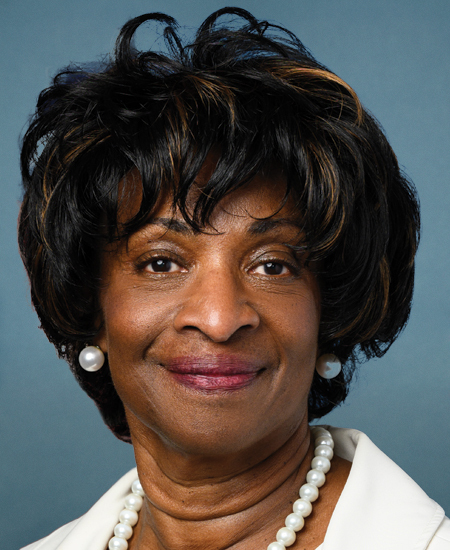
Rep. Valerie P. Foushee
Sponsored bills
Maddy summaryHRES 746 is a non-binding resolution passed by the U.S. House of Representatives condemning all political violence - including attacks on elected officials, candidates, and public figures - and rejecting rhetoric that dehumanizes opponents. It specifically urges law enforcement to investigate and prosecute such violence, calls on public officials and media to avoid inflammatory language, and references recent incidents like the 2025 assassination of activist Charlie Kirk and targeted shootings of Minnesota legislators. The resolution does not create new laws but formally expresses the House’s commitment to protecting public servants and promoting peaceful political discourse. It directly affects the House’s public stance and serves as a call to action for officials, media, and communities to foster civil engagement.
Maddy summaryThe Tyler Clementi Higher Education Anti-Harassment Act of 2025 requires U.S. colleges and universities participating in federal financial aid programs to create and distribute clear anti-harassment policies covering harassment based on race, color, national origin, sex (including sexual orientation and gender identity), disability, or religion. These policies must explicitly prohibit harassment in all settings - including online, on campus, off-campus housing, and during school-sponsored activities - and outline reporting procedures and support services for victims. The bill also establishes a $50 million annual grant program to fund schools developing prevention programs, victim support services, or staff/student training on recognizing and addressing harassment. Grants are competitive, require annual reporting on effectiveness, and must be used to improve existing efforts without replacing existing civil rights laws like Title IX.
Maddy summaryThe Redistricting Reform Act of 2025 requires states to use independent redistricting commissions for congressional redistricting, banning partisan gerrymandering and requiring plans to comply with constitutional and Voting Rights Act standards. The bill establishes ranked criteria for redistricting, prioritizing population equality, voting rights protections, and community preservation over partisan advantage. It mandates multi-partisan commission composition with public input and transparency requirements, with states facing court-developed plans if they miss deadlines. The law would apply to redistricting after the 2030 census, affecting all 50 states' congressional district maps.
Maddy summaryThe RRLEF Act of 2025 requires applicants for Edward Byrne Memorial Justice Assistance Grant Program funds to certify they do not purchase firearms from "covered licensed dealers." A "covered dealer" is defined as one traced with 25+ firearms used in crimes within two of the last three years. The bill mandates the ATF publicly publish an annual list of these dealers and notify law enforcement if their transferred firearms are used in crimes. This directly affects state/local law enforcement agencies seeking federal grant funding by restricting their firearm purchasing options.
Maddy summaryHJRES 122 proposes a constitutional amendment that would grant Congress and states explicit authority to regulate campaign contributions and spending intended to influence elections. It would allow for reasonable, viewpoint-neutral limits on how much money candidates and others can raise or spend, as well as enable public financing systems to reduce private wealth's influence in campaigns. The amendment would permit distinguishing between individuals and corporations in campaign finance rules, potentially banning corporate spending to influence elections. It explicitly states this amendment would not affect the freedom of the press.
Maddy summaryThis bill creates a 70% tax credit for eligible small businesses to cover costs of installing diaper changing stations and dispensers in restrooms. It applies to businesses with annual gross receipts under $5 million or fewer than 100 full-time equivalent employees. To qualify, businesses must ensure both men’s and women’s restrooms at each location have accessible diaper changing stations (free to use) and diaper dispensers. The credit is capped at $10,000 per business location annually and applies to expenses like station installation, labor, and restroom renovations meeting the "family bathroom requirement." The credit begins for tax years starting after December 31, 2025.
Maddy summaryThis bill requires the 988 Suicide Prevention Lifeline to establish a dedicated "Press 3" option (via IVR) for LGBTQ+ youth seeking crisis support, directly affecting LGBTQ+ youth who face a four times higher suicide risk than peers. It mandates that at least 9% of funds allocated for the lifeline's services be reserved specifically for these specialized LGBTQ+ youth services. The bill amends existing law to formalize this dedicated resource, building on current services that handled over 1.5 million contacts from LGBTQ+ youth in 2025. This creates a concrete policy change for accessing tailored crisis support without altering other lifeline operations.
Maddy summaryHRES 711 is a non-binding House resolution honoring victims of Hurricane Helene and expressing support for affected communities in western North Carolina, specifically North Carolina’s 11th Congressional District, one year after the hurricane struck on September 27, 2024. It formally recognizes the storm’s devastation - including loss of life, displaced families, and damaged infrastructure - while extending condolences to victims’ families and gratitude to first responders and recovery efforts. The resolution affirms the House’s commitment to supporting ongoing recovery and encourages federal agencies to collaborate with Congress on rebuilding. As a symbolic gesture with no new policy or funding, it focuses solely on commemoration and solidarity.
Maddy summaryHR 5399, the Equitable Arts Education Enhancement Act, provides competitive federal grants to Minority-Serving Institutions (MSIs) to expand access to arts education for Black, Indigenous, and people of color students. The bill directs grant funds toward specific activities, including financial aid for arts students, mentorship programs, career counseling, and preserving BIPOC art collections. MSIs must prioritize initiatives directly benefiting minority students, such as outreach programs, paid internships with arts organizations, and training for future arts educators. This legislation aims to address systemic underfunding and lack of diversity in arts education by supporting institutions uniquely positioned to serve diverse artists and students.