

Maddy summaryHR 7273, the NASA Reauthorization Act of 2026, authorizes $24.4 billion in funding for NASA's fiscal year 2026 operations, with specific allocations across exploration, science, aeronautics, and technology programs. The bill directs NASA to continue the Artemis program for lunar exploration, maintain International Space Station operations through 2031, and develop commercial low-Earth orbit capabilities through public-private partnerships. It requires NASA to report on key topics including human-rated lunar landing capabilities, ISS deorbit plans, and maintaining a balanced science portfolio, directly affecting NASA's mission planning, contractor relationships, and international partnerships.
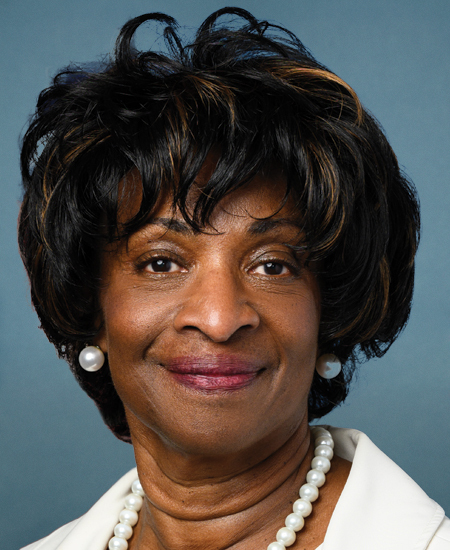
Rep. Valerie P. Foushee
Sponsored bills
Maddy summaryHR 7327, the Empowering Young Readers Act of 2026, creates a $10 million pilot program to fund book access initiatives for children under 19. It authorizes the Education Secretary to award competitive grants (max $200,000 per grant for two years) to eligible nonprofits and nongovernmental organizations for activities like purchasing books, hosting reading events, or donating to public libraries. Grant applications must be reviewed using viewpoint-neutral criteria, and recipients must report on book distribution numbers and community impact. The program runs through fiscal year 2027, with a final report due to Congress six months after completion.
Maddy summaryThis bill prevents the Secretary of Homeland Security from requiring their personal approval for any Federal Emergency Management Agency (FEMA) expenditure exceeding $100,000 related to disaster costs. It directly affects FEMA's internal approval processes for disaster response funding. The key provision removes a specific bureaucratic requirement, allowing lower-level officials to approve larger disaster-related spending without needing the Secretary's direct sign-off.
Maddy summaryHR 6635, the Bus Operator Safety and Security Act, requires new fixed-route buses over 30 feet long (with a 10+ year lifespan) purchased using federal transit funds to have physical barriers at the driver's workstation. These barriers must extend from floor to ceiling, fully enclose the workstation to block entry of people or objects, and not obstruct the driver's view. Transit agencies must install these barriers within two years of the law's enactment, unless the labor union representing bus drivers agrees to waive the requirement. The rule applies only to new buses bought with federal funds (excluding those from rural transportation programs) and directly affects transit agencies and bus drivers operating large fixed-route vehicles.
Maddy summaryHJRES 144 is a congressional disapproval resolution targeting a specific rule issued by the Department of Veterans Affairs (VA) on December 31, 2025, which addressed "Reproductive Health Services" (90 Fed. Reg. 61310). This resolution directs Congress to disapprove the VA rule under Chapter 8 of Title 5, U.S. Code, meaning the rule would have no legal effect if passed. The bill directly affects the VA's implementation of reproductive health services for veterans, as it seeks to nullify the agency's existing policy. This is a procedural measure, not a substantive policy change, aimed solely at blocking the VA's rule through congressional action.
Maddy summaryThe Prison Libraries Act of 2026 establishes a federal grant program to fund library services in state and territorial correctional facilities, directly benefiting incarcerated individuals. It requires grantees (states/territories) to submit plans demonstrating need, including demographic data on prison populations, and prohibits using funds for non-library purposes like food or facility maintenance. Grant funds must support library services such as digital access, educational programming (including job training and post-secondary curriculum), literacy initiatives, and partnerships with public libraries. The program authorizes $10 million annually from 2026-2031, prioritizes measurable outcomes like increased literacy and post-release employment opportunities, and mandates free access to all library resources for incarcerated people.
Maddy summaryHCONRES 68 would require the President to remove U.S. military forces from Venezuela unless Congress has explicitly authorized their use through a declaration of war or a specific law. This applies to any U.S. Armed Forces currently stationed in Venezuela without such authorization. The resolution is based on the War Powers Resolution, which mandates congressional oversight of military deployments. It directs the immediate withdrawal of unapproved forces without adding new time limits or conditions.
Maddy summaryThis bill creates a tax credit for businesses selling products made with U.S.-grown cotton. The credit equals 24% of the cotton's market value if processed only in the U.S. or in countries with U.S. trade deals, or 18% for other processing locations. To qualify, cotton must be digitally traced from U.S. farms to finished products and certified by the USDA as meeting origin requirements. It directly affects clothing and textile manufacturers selling qualifying products in the U.S. market.
Maddy summaryHR 7190 would end immigration detention and electronic monitoring by requiring the immediate release of all detained noncitizens on their own recognizance within six months and repealing all federal laws authorizing detention. It prohibits using federal funds for detention facilities, ankle monitors, or immigration enforcement activities after specific deadlines (six months for monitors, two years for detention contracts). Instead, it establishes a new grant program to fund community-based wrap-around services - including housing, healthcare, mental health support, legal aid, and job training - provided voluntarily by non-profit organizations without surveillance or data sharing with federal agencies. The bill directly affects noncitizens currently held in detention or under electronic monitoring.
Maddy summaryThis bill requires the Department of Justice and Health and Human Services to translate key gun violence prevention materials - including extreme risk protection orders and safe storage guides - into the 10 most common non-English languages in the U.S. (like Mandarin, Spanish, and Korean) for limited English proficient populations. It mandates that community-based organizations review translations for cultural appropriateness before publication and prioritizes grant applications that include outreach plans for these communities. The bill also directs DOJ and HHS to create public awareness campaigns using in-language, culturally tailored messaging to promote gun violence prevention strategies. These provisions apply directly to federally funded programs and services aimed at reducing firearm-related harm.