

Eliminate Agency Excess Space Act This bill modifies requirements with respect to the disposal of surplus and excess property by federal agencies. Among other things, the bill repeals provisions that require federal agencies to report excess property to the General Services Administration (GSA). Additionally, the GSA must issue regulations that allow federal agencies to dispose of surplus and excess property without first making the property available to other agencies or state or local governments. The bill also requires the GSA to survey all unused or underutilized office spaces held by federal agencies, make recommendations to reduce agency real estate assets, and report on costs associated with property disposal.
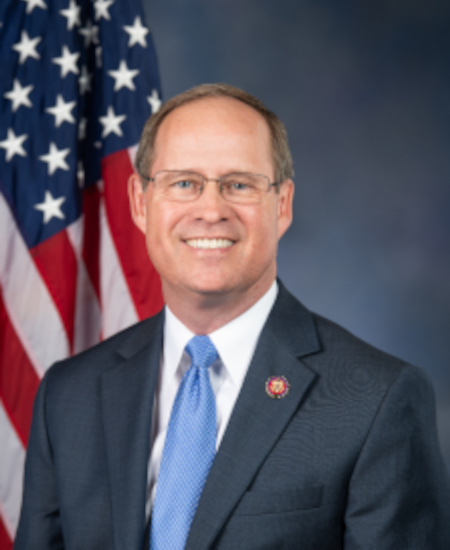
Rep. Gregory F. Murphy
Sponsored bills
Intelligence on Nefarious Foreign Leaders Using Education Networks for Corrupt Enrichment Act or the INFLUENCE Act This bill lowers the disclosure threshold regarding gifts or contracts from a foreign source that institutions of higher education (IHEs) must report to the Department of Education (ED). It also requires IHEs to disclose information related to foreign involvement in sensitive projects. Under current law, an IHE is required to disclose to ED a gift or contract that is from a foreign source and is valued at $250,000 or more, considered alone or in combination with all other gifts from or contracts with a foreign source. The bill instead requires the IHE to disclose such a gift or contract that is valued at $50,000 considered alone or $100,000 or more in combination with all other gifts or contracts. Further, ED must update annually on its website a database of the disclosed information, and an IHE that receives a gift or contract from a foreign source must post certain information on its website. Information made publicly available must not include sensitive information. Additionally, the bill requires IHEs to disclose information related to foreign involvement in sensitive projects. It also requires a specific contract provision for a cultural or language program that is funded by the Chinese government to operate at an IHE. Finally, ED must establish a process to notify federal agencies of violations of the bill. ED must also report on foreign and national security issues affecting IHEs.
Iran Hostages Congressional Gold Medal Act This bill requires the Speaker of the House of Representatives and the President pro tempore of the Senate to arrange for the award of a Congressional Gold Medal commemorating the bravery and endurance of the 53 hostages of the Iran Hostage Crisis. Following its award, the medal shall be given to the National Museum of American History of the Smithsonian Institution for display and research. The Department of the Treasury must strike duplicate medals in silver for presentation to a hostage (or the personal representative of a deceased hostage), and Treasury may also strike and sell duplicate medals in bronze.
Pre-existing Conditions Protection Act of 2021 This bill reestablishes requirements for private health insurance plans with respect to preexisting conditions, guaranteed enrollment, and discrimination based on health-related factors if they are repealed by another law. In such event, the bill prohibits private health insurance plans from (1) limiting or excluding benefits covering preexisting conditions; (2) denying enrollment to employers or individual applicants, subject to specified limits; (3) establishing rules for eligibility based on an individual's health status; or (4) requiring an individual to a pay higher premium than similarly situated individuals enrolled in the plan based the individual's health status. The bill also prohibits plans from collecting genetic information in connection with issuing health insurance and provides requirements for workplace wellness programs connected to health insurance.
This resolution expresses the opposition of the House of Representatives to any plans by the Department of Defense to deliver COVID-19 (i.e., coronavirus disease 2019) vaccines to prisoners held at United States Naval Station, Guantanamo Bay, Cuba, until all Americans have had the opportunity to be vaccinated. Additionally, the resolution asserts that the government should prioritize U.S. citizens for COVID-19 vaccinations.
This resolution supports the designation of National Sanctity of Life Day.
This resolution expresses support for women nationwide to have access to comprehensive, convenient, compassionate, life-affirming, and high-quality health care.
Personalized Care Act of 2021 This bill revises provisions relating to health savings accounts (HSAs), including to redefine eligible individual for HSA purposes to allow increased participation in HSAs, increase the limit on contributions to HSAs, permit the payment of health insurance premiums from HSAs, include within the definition of qualified medical expenses periodic fees paid for medical services and amounts paid by a member of a health care sharing ministry, treat periodic provider fees as deductible medical expenses, and lower the 20% penalty for nonqualified distributions from HSAs to 10%.
Ultrasound Informed Consent Act This bill requires abortion providers to conduct an ultrasound before performing an abortion. Specifically, before a woman gives informed consent to any part of an abortion, the abortion provider must perform an obstetric ultrasound on the pregnant woman; provide a simultaneous explanation of what the ultrasound is depicting; display the ultrasound images so the woman may view them; and provide a complete medical description of the images, including the dimensions of the embryo or fetus, cardiac activity if present and visible, and the presence of external members and internal organs if present and viewable. Providers are subject to civil actions and penalties for violations. The bill's ultrasound requirements do not apply in cases where a physical disorder, illness, or injury caused by the pregnancy endangers a woman's life. A woman is also not required to view the ultrasound images; nor may she or the provider be penalized if she declines to do so.
Safe Responsible Ethical Scientific Endeavors Assuring Research for Compassionate Healthcare Act or the Safe RESEARCH Act This bill prohibits the National Institutes of Health (NIH) from conducting or supporting research on human fetal tissue obtained from an abortion procedure. It also imposes other restrictions on human fetal tissue research. Under the bill, the NIH may conduct or support research on human fetal tissue only if it was obtained from a stillbirth. Current law allows research on tissue from stillbirths or from spontaneous or induced abortions. The bill also applies informed consent and other requirements applicable to research on the transplantation of human fetal tissue for therapeutic purposes to all research with human fetal tissue. This includes research on stem cells and other human fetal tissue alternatives. Additionally, human fetal tissue used for this research must be obtained in accordance with state anatomical gift laws. These laws govern organ and tissue donation for therapeutic, research, and other purposes. Some states already apply anatomical gift laws to human fetal tissue donation. Currently, executive branch officials may not prohibit the NIH from conducting or supporting research on the transplantation of human fetal tissue for therapeutic purposes. The bill repeals this limitation on executive branch officials. It also repeals a requirement that the NIH fund certain proposals for this research.