

Maddy summaryHRES 709 is a symbolic resolution designating September 2023 as "National Cholesterol Education Month" and September 30, 2023, as "LDL-C Awareness Day." It encourages all U.S. residents - particularly underserved communities disproportionately affected by cardiovascular disease (including people of color and rural populations) - to know their LDL cholesterol levels. The resolution highlights that high LDL-C is a key preventable risk factor for heart attacks and strokes, citing low testing rates (e.g., only 27% of heart attack patients get tested post-hospitalization). It does not create new laws or funding but aims to raise awareness about the importance of LDL-C screening and management.
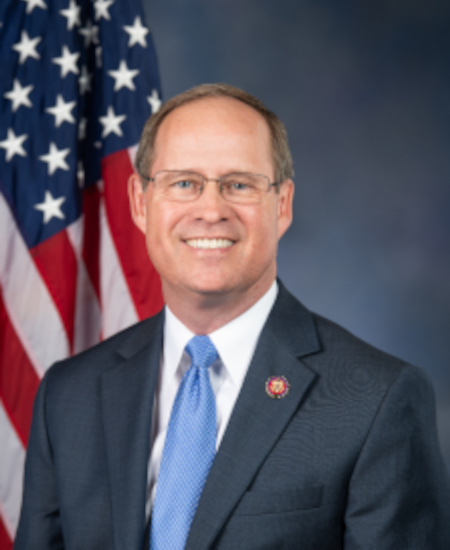
Rep. Gregory F. Murphy
Sponsored bills
Maddy summaryHRES 720 designates the week of September 24-30, 2023 (and annually thereafter) as "Gold Star Families Remembrance Week" to honor families who have lost loved ones in military service. It specifically recognizes the sacrifices of families of fallen service members and veterans, and encourages Americans to observe the week through community service and celebrating the lives of those who died protecting the nation. This resolution is procedural and symbolic, with no new funding, regulations, or policy changes - only a formal designation to honor these families. It directly affects Gold Star families (those with members who died in military service) and the broader public through its call for observance.
Maddy summaryHRES 684 is a symbolic congressional resolution passed by the U.S. House of Representatives on September 14, 2023, condemning New Mexico Governor Michelle Lujan Grisham's emergency order that temporarily suspended open and concealed carry firearm rights for 30 days. The resolution asserts the order violated the Second Amendment, citing Supreme Court precedents (Heller, McDonald, Bruen) and noting a federal judge had already blocked the order's firearm restrictions. It does not change any laws or impose legal consequences - it is solely a formal expression of disapproval from Congress. The resolution directly addresses the Governor's actions but has no effect on New Mexico's laws or citizens' rights.
Maddy summaryHR 5455, the Collision Avoidance Systems Act of 2023, allows automakers to install pulsating light systems as rear-end collision avoidance technology on new vehicles. The bill requires the Secretary of Transportation to issue new regulations within 180 days updating Federal Safety Standard 108 to include performance-based rules for these systems. Specifically, it defines a "pulsating light system" as a high-mounted brake light that flashes rapidly (up to 4 times for no more than 1.2 seconds) before switching to steady light, with a 5-second lockout period after braking stops. This directly affects vehicle manufacturers who must comply with the updated safety standards for brake lights.
This bill extends the eligibility or applicability of various Department of Veterans Affairs (VA) programs and benefits. First, the bill extends from three to five years the authority for additional licensed health care professionals (i.e., physician assistants, nurse practitioners, audiologists, and psychologists) to perform medical disability examinations as part of the existing VA pilot program related to the use of contract physicians for disability examinations. Currently, when an individual transfers fewer than 12 credits from a program of education that is closed or disapproved, the individual is deemed to have not received those credits, and no charge from the individual's entitlement to education assistance may be made for that period of enrollment. Under the bill, this period of relief for those affected by a closure or disapproval is extended by two years to apply to programs that close or discontinue before September 30, 2025. The bill extends through FY2028 the authorization for VA emergency preparedness for public health emergencies. The bill also extends the applicability of certain loan fee rates through November 15, 2031, under the VA's home loan program.
Maddy summaryHCONRES 18 sets strict 30-day deadlines for the Joint Committee on the Library to review and act on North Carolina's submission for a statue of Reverend Billy Graham in the National Statuary Hall. It requires the Committee to approve or deny the clay model design within 30 days of receiving detailed submissions (including photos, dimensions, and engineering data), then approve the final statue within another 30 days of receiving final documentation. If approved, the Committee must also select a Capitol location within 30 days. This procedural bill directly affects North Carolina (as the submitting state) and the Joint Committee, streamlining an existing approval process without altering substantive policy.
Stop Pot Act of 2023 This bill directs the Department of Transportation to withhold 10% of apportioned federal highway funds from states that allow for the lawful purchase or public possession of marijuana for recreational purposes. The bill specifically applies to the withholding of federal funds under the National Highway Performance Program, the Highway Safety Improvement Program, and the Congestion Mitigation and Air Quality Improvement Program.
This bill increases from 20% to 25% the value of the total assets represented by securities of one or more taxable Real Estate Investment Trust (REIT) subsidiaries (thus restoring the REIT subsidiary asset test).
Maddy summaryHR 4547, the Laws Ensuring Safe Shrimp Act (LESS Act), creates a dedicated fund using 70% of U.S. import duties on shrimp and shrimp products (e.g., frozen shrimp, shrimp-based dishes) to improve safety and labor compliance. The fund allocates 50% to the FDA for inspecting high-risk shrimp for antibiotic contamination and verifying imports aren’t sourced from forced labor or illegal fisheries, and 50% to the USDA to boost domestic shrimp consumption. It directly affects shrimp importers (who pay the duties), federal agencies (FDA, USDA, CBP), and domestic shrimp producers (who benefit from consumption programs). The bill ensures funding supplements existing programs and remains available until spent, focusing on concrete safety and labor checks rather than speculative outcomes.
Maddy summaryHR 5241 amends tax code provisions to allow governmental pension plans to include firefighters, emergency medical technicians (EMTs), and paramedics who work full-time in firefighting or out-of-hospital emergency medical services for public safety agencies under local government contracts. The bill prevents these pension plans from being disqualified as "governmental plans" solely because they cover these specific public safety workers, as defined by the Homeland Security Act. This change directly affects state and local government pension systems that serve emergency response personnel. The policy update applies to plan years starting after the bill's enactment.