

Maddy summaryHR 1551, the Protect and Serve Act of 2025, creates a new federal criminal offense for intentionally harming law enforcement officers under specific circumstances. It imposes harsher penalties, including up to 10 years in prison for serious injury or life imprisonment if death occurs, kidnapping is involved, or a firearm is used. The law applies when the crime crosses state lines, involves interstate weapons, occurs on federal property, or targets federal officers. Prosecutions require the Attorney General’s written certification, considering factors like prior state convictions and public safety impact. The bill directly affects law enforcement officers and federal prosecutors by expanding federal jurisdiction for certain violent crimes against them.
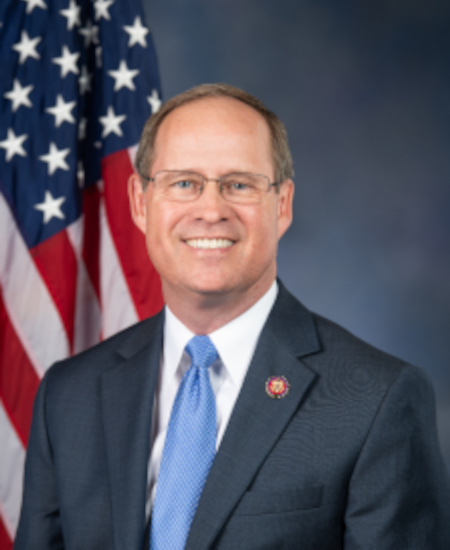
Rep. Gregory F. Murphy
Sponsored bills
Maddy summaryThe Conrad State 30 and Physician Access Reauthorization Act extends and reauthorizes a program that allows foreign medical graduates to work in underserved U.S. communities after completing their training. It extends the program through 2021 (with retroactive effect), adds protections for physicians who have completed service requirements, and makes changes to visa requirements to better support physicians working in underserved areas. The bill requires states to maintain a 90% utilization rate of waivers to keep receiving the full allocation, and adds reporting requirements for the program. This bill directly affects foreign physicians seeking to work in underserved areas and the health care facilities that employ them.
Maddy summaryThe PAR Act removes restrictions that previously prevented private golf courses and country clubs from using certain tax-advantaged funds for recreational purposes. It amends a specific tax code section by deleting the phrases "private or commercial golf course, country club" wherever they appear. This change directly allows those facilities to access funds they were previously barred from using under existing tax rules. The law applies to new tax obligations after enactment, with limited transitional rules for existing programs.
Dentist and Optometric Care Access Act of 2025 or the DOC Access Act of 20 25 This bill prohibits private health insurance plans from setting rates for items and services, except for dental cleanings, provided by a doctor of optometry, of dental surgery, or of dental medicine (or an employer of such a doctor) for which the plan does not pay a substantial amount. Additionally, an agreement between a plan and such a doctor for limited scope dental or vision benefits may last longer than two years only with the prior acceptance of the doctor for each term extension. Plans also may not restrict such a doctor's choice of laboratories or suppliers. Such doctors may elect to waive the application of the payment amount and choice of laboratories provisions of this bill. The bill does not supersede state laws regarding health insurers and dental or vision benefit plans.
Maddy summaryHR 1494, the Sporting Goods Excise Tax Modernization Act, requires online marketplaces (like Amazon or eBay) to collect the federal excise tax on sporting goods sold through their platforms, rather than leaving this responsibility to individual sellers. It specifically targets platforms that host third-party seller listings and facilitate transactions for goods imported from outside the U.S. The bill treats these marketplaces as the "importer" for tax purposes, making them liable for the tax on qualifying sporting goods sales. This change applies to sales after a 60-day grace period following the bill's enactment, with no impact on taxes already owed by other parties.
Maddy summaryThis bill prohibits marijuana businesses from deducting ordinary business expenses on their federal tax returns. It amends federal tax law to deny deductions or credits for any costs related to selling marijuana (which remains illegal under federal law), directly affecting state-legal marijuana businesses operating under state law but subject to federal prohibition. The key provision requires these businesses to pay taxes on their full gross income without subtracting standard business costs like rent or supplies. The rule applies to tax years beginning after the bill's enactment date.
Maddy summaryHR 1502 authorizes the creation of a Congressional Gold Medal to honor the volunteers and communities (primarily from Nebraska, Colorado, and Kansas) who supported the North Platte Canteen during World War II. The bill directs the Treasury Secretary to design and strike the medal, which will be presented to the individuals who contributed to the canteen’s operations and then permanently displayed at the Lincoln County Historical Museum in North Platte, Nebraska. It also permits the sale of bronze duplicates to cover production costs, with proceeds going to the U.S. Mint. This is a commemorative measure recognizing historical service, not a policy change affecting current laws or programs.
Maddy summaryHR 1492 amends the Social Security Act to extend the negotiation period for standard drug manufacturers under the federal drug pricing program. Specifically, it changes the timeframe from 7 years to 11 years for small-molecule drugs (like traditional pills) to negotiate prices with the government, aligning it with the existing 12-year period for complex biologic drugs (like insulin or monoclonal antibodies). This adjustment directly affects pharmaceutical companies that produce small-molecule drugs, giving them a longer window to negotiate pricing terms. The bill makes this change effective as if it had been part of the 2022 law that established the program.
Maddy summaryHR 1476, the PLASMA Act, adjusts discount rates for plasma-derived drugs under Medicare Part D starting in 2026. It sets gradually decreasing discount percentages (from 99% down to 90% by 2030) for these specific drugs when beneficiaries reach their annual out-of-pocket spending threshold. The bill directly affects Medicare Part D beneficiaries using plasma-derived biological products (drugs made from human blood or plasma) and the manufacturers of those drugs. Certain drugs for low-income subsidy beneficiaries and small manufacturers are excluded from these discount provisions. The law phases in these changes over several years to align with existing Medicare Part D cost-sharing rules.
Maddy summaryHR 1436, the ENABLE Act, makes permanent key tax provisions for ABLE accounts - tax-advantaged savings accounts for people with disabilities. It removes the 2026 expiration date for increased contribution limits to ABLE accounts and allows rollovers from 529 college savings plans into ABLE accounts without tax penalties. These changes directly affect individuals with disabilities who use ABLE accounts for qualified expenses like housing, education, and medical costs. The bill ensures these financial tools remain available long-term, streamlining access to savings without requiring new legislative action each year.