

Maddy summaryHR 3228, the Constitutional Hearing Protection Act, reclassifies firearm silencers as firearms under federal tax law and eliminates their separate registration under the National Firearms Act. It requires the Attorney General to destroy all existing federal silencer registration records within one year and preempts state laws that impose taxes, registration, or recordkeeping requirements on silencers. The bill defines "firearm silencer" and specifies that manufacturers must mark silencers on a "keystone part" with a serial number. This directly affects silencer owners, manufacturers, and state governments by standardizing federal regulation and removing state-level restrictions.
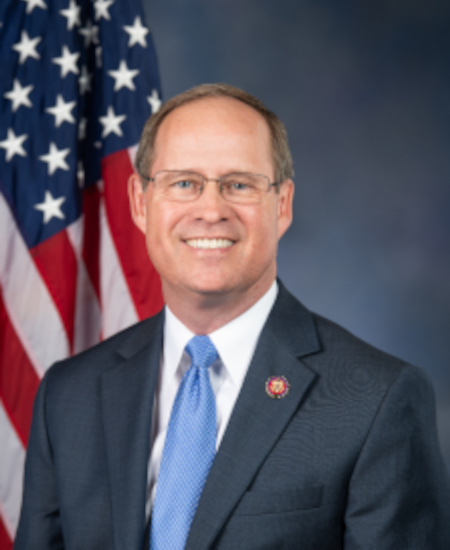
Rep. Gregory F. Murphy
Sponsored bills
Maddy summaryHRES 392 is a non-binding congressional resolution expressing support for designating May as "National Bladder Cancer Awareness Month." It does not create new laws or programs but formally urges the public, research groups, and affected individuals to promote awareness and early detection of bladder cancer during May. The resolution cites statistics showing over 84,000 new bladder cancer diagnoses and 17,420 deaths expected in the U.S. in 2025, emphasizing that early detection improves survival rates. It specifically highlights the disease's impact on veterans, firefighters, and women (who often face later diagnoses), and references ongoing efforts like the Bladder Cancer Advocacy Network's work. The resolution calls for community observances and increased focus on research, but has no direct effect on policy or funding.
Maddy summaryThis bill (HR 3221) is a procedural amendment to U.S. immigration law. It would add Iceland to the list of foreign states eligible for certain nonimmigrant business visas (E-1/E-2 categories), but only if Iceland provides equivalent visa status to U.S. citizens. The change would directly affect U.S. citizens seeking to do business in Iceland under these visa categories. The bill does not create new programs but adjusts existing visa classifications based on reciprocity.
Maddy summaryThis bill requires the U.S. President to identify and sanction individuals involved in "involuntary harvesting of organs" in China by blocking their U.S. property and banning their entry. It mandates an annual list of designated persons (submitted to Congress) and imposes sanctions like visa restrictions and asset freezes under the International Emergency Economic Powers Act. Exceptions cover humanitarian aid, national security activities, and UN-related travel. The sanctions expire after 5 years, and the bill also requires a report on China's organ transplant practices and whether Falun Gong persecution meets atrocity definitions. The bill directly targets Chinese officials/entities linked to organ harvesting claims, not Falun Gong practitioners.
Maddy summaryHR 976, the "1071 Repeal to Protect Small Business Lending Act," would repeal data collection and reporting requirements for small business loans under Section 704B of the Equal Credit Opportunity Act. This specifically removes the mandate for financial institutions - especially community banks and credit unions - to track and submit loan data by business characteristics like race or gender. The bill aims to reduce compliance costs for lenders, which its findings argue limit small business access to credit. The repeal would eliminate these reporting obligations and remove references to the requirement from related federal laws.
Preventing Environmental Hazards Act of 2025 This bill expands National Flood Insurance Program (NFIP) coverage to include the demolition or relocation of certain coastal structures that are facing imminent collapse or subsidence. Specifically, NFIP must pay for demolition or relocation for NFIP-insured structures that are condemned or deemed unsafe by state or local authorities due to the threat of imminent collapse or subsidence from shoreline erosion or that meet other location criteria. The bill sets forth provisions for the valuation of the structure, the maximum claim to be paid, and the terms of coverage termination. This bill applies to structures covered by NFIP (1) for a period of 12 months on or before the date of the bill’s enactment, or (2) for a continuous period of 4 years prior to certification for coverage established by this bill.
Maddy summaryThis bill changes Medicare billing rules for remote monitoring services, allowing providers to bill for a minimum of 2 days of patient data collected over a 30-day period instead of the current 16 days. It directly affects Medicare patients with chronic conditions (like diabetes, heart failure, or post-surgery recovery) and healthcare providers who use remote monitoring tools. The key provision eliminates the 16-day requirement for all patients - not just during the pandemic - based on clinical evidence showing shorter monitoring periods are sufficient for many conditions. The bill also requires a report to Congress within one year analyzing the impact and recommending future reimbursement models. This aims to reduce administrative barriers while maintaining coverage for clinically appropriate remote monitoring.
Maddy summaryHR 3028, the Duty Drawback Clarification Act, clarifies tariff classifications for whisky imports by updating the Harmonized Tariff Schedule. It replaces a general whisky tariff code with specific subheadings based on whisky type (Irish/Scotch, Bourbon, Rye, or "other") and container size (under or over 4 liters), adding 8 new statistical suffixes. This change directly affects whisky importers and U.S. Customs officials by standardizing how these products are classified for duty-free entry (as indicated by "Free" in the tariff). The new classifications take effect 15 days after the bill's enactment.
Maddy summaryHR 3010, the "No Handouts for Drug Advertisements Act," prohibits pharmaceutical companies from deducting the costs of direct-to-consumer advertising for prescription drugs from their federal taxable income. Specifically, it amends the Internal Revenue Code to disallow tax deductions for advertising expenses related to covered drugs (prescription drugs and certain compounded drugs) when targeted directly at the general public through TV, radio, digital platforms, or billboards. This policy change directly affects pharmaceutical companies that run such advertising campaigns, requiring them to pay taxes on the full cost of these promotions. The bill does not apply to ads in medical journals or other professional publications. It takes effect for expenses incurred after enactment.
Maddy summaryThis bill repeals a restriction that previously prevented individuals from rolling over funds directly from their Individual Retirement Accounts (IRAs) to donor-advised funds (DAFs) for charitable giving. It directly affects IRA account holders who wish to make tax-advantaged charitable contributions through DAFs. The key provision amends the Internal Revenue Code to remove the specific language barring such rollovers, allowing these transfers to occur without triggering taxable distributions. The change becomes effective after the bill's enactment, streamlining a pathway for donors to support charities via DAFs using IRA assets.