

Maddy summaryHR 4175, the "No Gratuities for Governing Act of 2025," amends federal law to strengthen anti-bribery rules for government officials and entities receiving federal funds. It prohibits offering or accepting anything of value worth $1,000 or more to influence official acts related to transactions exceeding $5,000. The bill raises the maximum prison sentence for violations from 10 to 15 years and clarifies that these rules apply to agents of state, local, tribal governments, or organizations handling federal funds. It directly affects government employees, contractors, and organizations managing federal programs by criminalizing specific financial exchanges tied to official decisions.
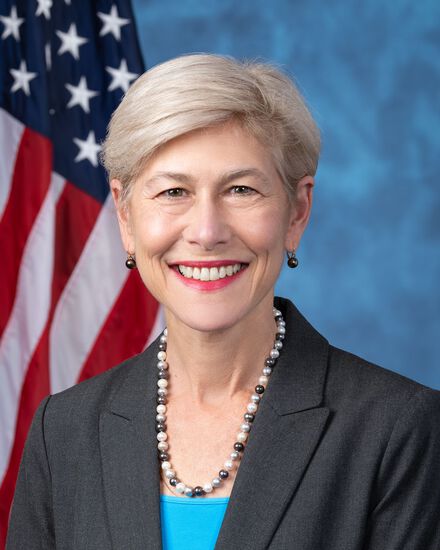
Rep. Deborah K. Ross
Sponsored bills
Maddy summaryThis bill expands legal protections for domestic violence and stalking survivors by broadening key definitions. It adds current and former dating partners to the definition of "intimate partner" and includes children of dating partners in domestic violence protections. The bill also creates a new federal definition for "misdemeanor crime of stalking," requiring a course of harassment causing fear for specific people (including intimate partners, family, or shared-residence individuals) or their pets/service animals. Convictions under this new definition would trigger firearm restrictions, with specific safeguards for due process in court proceedings. These changes directly affect survivors in dating relationships and their children, strengthening federal protections for vulnerable individuals.
Maddy summaryHR 4152, the Safe Storage Saves Lives Act, requires gun sellers to offer a compatible gun lock with every firearm sale. It directly affects licensed gun retailers, who must make such locks available at the point of purchase. The bill amends federal law to mandate that sellers provide a secure storage device compatible with the firearm, with violations subject to $1,000 civil penalties. Funds from these penalties must be used for distributing free/reduced-cost locks or public awareness campaigns about safe storage.
Maddy summaryHR 4132, the Prescription Information Modernization Act of 2025, allows drug manufacturers to provide FDA-approved prescribing information for prescription drugs exclusively through electronic means, while requiring them to offer paper copies at no additional cost upon request by prescribers or dispensers. The bill directly affects drug manufacturers, doctors, pharmacists, and other healthcare professionals who rely on prescribing information. Key provisions include mandating that manufacturers give prescribers/dispensers the choice to continue receiving paper copies or request them as needed, and requiring the HHS Secretary to issue implementing regulations within one year to support this transition. The law takes effect two years after enactment or when final regulations are issued, whichever comes first.
Maddy summaryThis bill makes technical corrections to the Camp Lejeune Justice Act of 2022 to streamline claims for individuals harmed by water contamination at Camp Lejeune. It clarifies the evidence required (30+ days at the base plus a link between contaminants and health harm), specifies that cases must be handled in North Carolina courts (with limited transfer options), and sets attorney fee caps (20% before suit, 25% after). These changes directly affect veterans and civilians who lived at Camp Lejeune and filed claims under the 2022 law. The bill does not create new eligibility but aims to improve the legal process for existing cases.
Maddy summaryHR 4150, the Advancing Maternal Health Equity Under Medicaid Act, increases federal Medicaid funding for states that expand maternal health services. It requires states to spend more on specific maternal care (like prenatal/postpartum visits, telehealth, home visits, and mental health support) than they did in 2019, with the federal government covering 90% of the additional cost starting in 2025. The bill directly affects pregnant and postpartum individuals covered by Medicaid by expanding access to defined maternal health services. States must use the extra funds to improve service quality and capacity without reducing existing state funding for these services.
Maddy summaryThe Women's Health Protection Act of 2025 would protect access to abortion services across the United States by prohibiting states from imposing restrictions that are more burdensome than those on comparable medical procedures. The bill directly affects people seeking abortion care and health care providers by banning restrictions such as mandatory in-person visits, requirements for specific tests, limitations on telemedicine, and rules based on a patient's reason for seeking abortion. It prohibits state laws that single out abortion for unnecessary restrictions while allowing post-viability abortions when necessary to protect a patient's life or health. The bill preempts conflicting state laws and provides enforcement mechanisms through private lawsuits and actions by the Attorney General.
Maddy summaryHR 4101, the Cancer Drug Parity Act of 2025, requires group health plans and insurance plans to provide equal cost-sharing (like deductibles and copays) for oral anticancer drugs as for intravenous or injected cancer drugs. This directly affects insured cancer patients prescribed oral medications, ensuring they face no higher out-of-pocket costs than for IV treatments when medically necessary. The law prohibits plans from changing benefits to increase costs for oral drugs or applying stricter limits on them compared to IV drugs. It takes effect for plan years starting January 1, 2026, and mandates a GAO study to assess the law’s impact on patient costs within two years of enactment.
Maddy summaryThis bill prohibits state officials from blocking abortion access for patients traveling from other states, including restricting providers who offer legal abortions in their state to out-of-state patients. It protects people traveling across state lines for legal abortions, those assisting such travel, and the interstate transport of FDA-approved abortion medication. Violations can be challenged by the Justice Department or affected individuals through civil lawsuits seeking injunctions and damages. The law applies broadly across all states, territories, and tribal nations, defining "abortion service" to include both medical procedures and related care.
Maddy summaryHR 4104 would expand access to Medicaid, CHIP, and Affordable Care Act (ACA) health coverage for immigrants lawfully present in the U.S., including those with deferred action or pending immigration applications. It removes state-level barriers to Medicaid/CHIP eligibility for lawfully present individuals, treats Federally authorized presence as "lawfully present" for ACA subsidies, and allows states to choose to cover undocumented individuals through Medicaid or CHIP. The bill also extends these changes to Medicare Part A and Part B, ensuring lawfully present immigrants qualify for coverage and subsidies under existing programs. These provisions apply to all federally funded health programs and take effect in 2026 for most ACA-related changes.