

Maddy summaryThis bill requires states receiving certain federal law enforcement funds to submit quarterly, anonymous reports to the Attorney General about pregnant individuals and births in custody. It mandates data on pregnancy testing, prenatal care, birth outcomes, restraint use (including during labor), postpartum care, and restrictive housing for incarcerated pregnant people. States failing to comply face up to a 10% reduction in allocated federal funds. The reports will be publicly published, and the Attorney General must conduct a study to analyze the data and improve care standards. The bill affects all states with correctional facilities (including jails, prisons, and boot camps) that receive funding under the specified federal program.
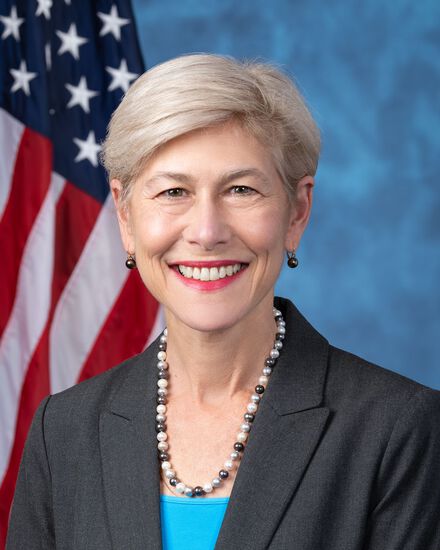
Rep. Deborah K. Ross
Sponsored bills
Maddy summaryThe American Energy Independence and Affordability Act extends multiple clean energy tax credits that were set to expire between 2025 and 2026. It specifically extends residential clean energy credits through 2034, clean electricity investment credits for wind and solar through 2032, and clean vehicle credits for electric vehicles through 2032. The bill also reinstates special rates for sustainable aviation fuel and modifies requirements for energy-efficient home improvements. These provisions directly affect homeowners installing solar panels, businesses investing in clean energy infrastructure, and manufacturers producing clean energy equipment.
Maddy summaryHRES 833 is a non-binding resolution passed by the U.S. House of Representatives to honor Dr. Jane Goodall, a renowned primatologist, conservationist, and advocate for wildlife protection. The resolution recognizes her groundbreaking chimpanzee research at Gombe Stream, her founding of the Jane Goodall Institute and Roots and Shoots program (which engages youth in environmental action globally), and her decades-long advocacy for ethical animal treatment and conservation. It commemorates her legacy following her passing on October 1, 2025, and extends condolences to her family and affiliated organizations. This resolution has no legal effect but serves as a symbolic tribute to her global environmental impact.
Maddy summaryHR 5835, the REPO Implementation Act of 2025, establishes a mechanism to use frozen Russian sovereign assets held abroad for Ukraine's benefit. It creates a "Ukraine Support Fund" to hold these assets without confiscation and requires the U.S. Treasury to invest them in U.S. government obligations. The bill mandates quarterly transfers of at least $250 million from the fund to Ukraine for assistance, with final amounts spent when less remains. It also requires the President to report to Congress on Russian assets held by foreign countries (including G7/EU members) and urges diplomatic efforts to secure similar asset repurposing from those nations.
Maddy summaryHRES 824 is a ceremonial House resolution recognizing the religious and historical significance of Diwali, the festival of lights. It acknowledges Diwali’s meaning across Hindu, Sikh, and Jain traditions - symbolizing light over darkness, good over evil, and marking spiritual milestones like Guru Hargobind’s release and Lord Mahavira’s Nirvana. The resolution expresses respect for Indian-Americans and the global Indian diaspora, highlighting Diwali’s role in U.S. religious diversity. As a non-binding recognition, it does not create new laws, policies, or funding, but formally honors the cultural observance.
Maddy summaryThis bill restores the pre-January 20, 2025, administrative structure of the Head Start program within the Department of Health and Human Services. It establishes a central Office of Head Start with 12 regional offices, requiring the Secretary to maintain all prior staffing levels, organizational structure, and functions. The bill prohibits the Secretary from restructuring the office or reducing staff without providing 60 days' notice to Congress and the public, ensuring continuity in program oversight. It directly affects the Office of Head Start, its regional offices, and HHS staff managing Head Start operations.
Maddy summaryThis bill establishes a five-year pilot program to provide hyperbaric oxygen therapy (HBOT) to veterans diagnosed with traumatic brain injury (TBI) or post-traumatic stress disorder (PTSD). The program, limited to three Veterans Health Administration networks, uses donations to fund HBOT through approved medical providers. It specifically requires HBOT devices to be FDA-approved or under investigational exemption. The pilot ends five years after the bill's enactment, with no annual funding restrictions. The bill directly affects eligible veterans seeking this specific treatment option.
Maddy summaryThis bill makes federal funding for the WIC program mandatory by requiring Congress to appropriate necessary funds annually for fiscal year 2026 and each subsequent year. It removes discretionary language from WIC funding requirements and clarifies that eligible participants must be served without participation limits. The bill directly affects low-income pregnant women, new mothers, and young children who rely on WIC for nutrition assistance, ensuring continued access to critical food, health, and education services.
Maddy summaryThis bill authorizes $25 million annually (2026-2030) to fund federal grants for training community mental wellness workers. Eligible entities - including community health clinics, mental health centers, and hospitals - will use these grants to provide culturally competent training for workers who screen for mental health/substance use issues and deliver basic counseling for conditions like depression and anxiety. Priority is given to organizations serving areas with high poverty, unemployment, substance use rates, or medically underserved communities. The grants cover training costs, digital platforms for supervision, and certification, with technical assistance provided to help integrate these workers into existing healthcare systems.
Maddy summaryHR 5705 requires the federal government to reimburse state agencies for funds they use to maintain participation in the WIC program during a government shutdown. It directly affects states that cover WIC costs using their own money when federal funding lapses. The bill establishes a process where states can seek reimbursement from the federal government after the shutdown ends. This ensures states aren’t burdened with costs for a federal funding gap that impacts nutrition assistance for women, infants, and children.