

Maddy summaryHR 7025, the Evidence-Based Grantmaking Act, requires 15 federal agencies (including Education, Health and Human Services, and Housing and Urban Development) to use proven methods in awarding grants. It mandates that agencies clearly define grant goals in funding notices, prioritize applicants using evidence-based practices, and require grant recipients to implement such practices when delivering services. Agencies must also conduct regular evaluations of grant effectiveness, publicly share results, and use findings to improve future funding decisions. This law directly affects federal grant recipients and aims to ensure taxpayer funds achieve measurable outcomes through data-driven approaches.
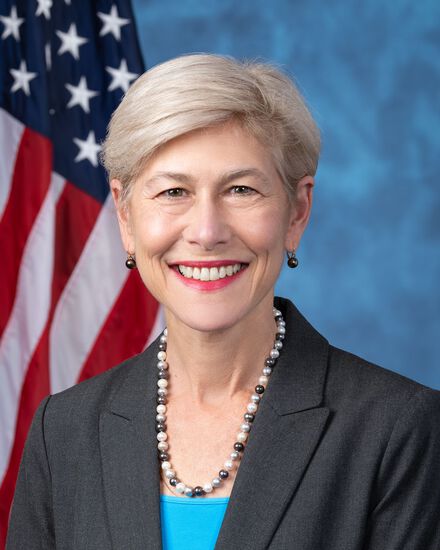
Rep. Deborah K. Ross
Sponsored bills
Maddy summaryThe Renewed Hope Act (HR 6998) requires the Department of Homeland Security to hire 200 new staff, including 40 forensics analysts and 30 child exploitation investigators for the Victim Identification Laboratory, plus 130 additional personnel for the Child Exploitation Investigations Unit, to improve identification and rescue efforts for victims of child sexual exploitation. It establishes a mandatory training program for law enforcement and related organizations to use updated victim identification techniques and mandates coordination between DHS and the National Center for Missing and Exploited Children to streamline investigations. The bill also includes strict privacy rules to secure victim information and allows temporary hiring of experts for forensic analysis at specified rates.
Maddy summaryHR 6088, the *Restoring Food Security for American Families and Farmers Act of 2025*, repeals specific sections (10101-10108) from a prior reconciliation law. This action revives previous provisions related to food security programs that were modified by those repealed sections. The bill directly affects federal food assistance and agricultural support programs by restoring their prior legal framework. It does not create new policies but reverses recent changes to existing food security measures.
Maddy summaryThis bill updates federal nutrition law to include Puerto Rico in the Supplemental Nutrition Assistance Program (SNAP), allowing it to transition from its current funding method to the same SNAP benefits available to U.S. states. Puerto Rico must submit a 180-day plan to the USDA detailing its transition to SNAP, with approval required within another 180 days. The transition period lasts up to 5 years from the bill's effective date, during which Puerto Rico would continue receiving block grants while preparing for full SNAP participation. This change directly affects Puerto Rico's 1.4 million residents who currently receive nutrition assistance under a separate funding structure.
Maddy summaryHR 4782, the Local Farmers Feeding our Communities Act, establishes a USDA program to connect local farmers with food distribution networks. It requires eligible entities (like state agriculture agencies) to use funds to purchase unprocessed or minimally processed local foods from covered producers - including at least 25% from small-size, mid-size, beginning, or veteran farmers - while providing technical assistance for food safety and supply chains. The bill allocates $200 million annually (2026-2030) from the Commodity Credit Corporation, mandating 10% for Tribal governments and 1% per state before distributing remaining funds. This directly supports regional food security by boosting economic opportunities for local farmers and improving access to fresh, nutritious food through established distribution channels.
Maddy summaryHR 909, the Crime Victims Fund Stabilization Act of 2025, modifies how funds from the False Claims Act are deposited into the Crime Victims Fund. It specifies that from 2025 through 2029, certain False Claims Act proceeds (specifically those for qui tam plaintiff payments and government damage reimbursements) cannot be deposited into the fund. This change directly affects the composition of the Crime Victims Fund by excluding these specific revenue streams during the specified period. The bill does not create new benefits or alter victim services; it only adjusts fund allocation rules for existing False Claims Act revenues.
Maddy summaryHR 7016, the "No Funds for NATO Invasion Act," blocks federal funding for any U.S. military invasion of a North Atlantic Treaty Organization (NATO) member country or territory covered by NATO's Article 5 mutual defense clause. The bill prohibits using any federal funds for such invasions and bans U.S. officials from executing these actions. It directly affects U.S. military operations and funding decisions involving NATO members. The law applies to all federal spending, preventing the use of existing budgets for this specific purpose.
Maddy summaryThis concurrent resolution (HCONRES 69) commemorates the 15th anniversary of the January 8, 2011, Tucson shooting that killed six people and injured 13, including former Congresswoman Gabby Giffords. It honors the victims, survivors, and Giffords - now a prominent advocate for gun violence prevention - and recognizes her leadership in promoting civility and reducing gun violence. The resolution also commends Tucson residents and first responders for their resilience and reaffirms Congress’s commitment to respectful dialogue and opposing political violence. As a ceremonial resolution, it does not create new laws or policies.
Maddy summaryThe PROTECT Act of 2026 requires the Environmental Protection Agency (EPA) to list all perfluoroalkyl and polyfluoroalkyl substances (PFAS) as hazardous air pollutants under the Clean Air Act within 180 days of the bill becoming law. This would directly affect industries that manufacture or use PFAS, such as producers of non-stick cookware, firefighting foam, and other consumer products containing these chemicals. The EPA must then, within 365 days, update the list of specific industrial sources (including factories and facilities) that emit PFAS to establish regulatory oversight. These steps create the foundational framework for future EPA regulations targeting PFAS emissions, though the bill itself does not set specific emission limits.
Maddy summaryHR 6958, the PROTECT Military Families Act, creates a new immigration parole pathway for family members of military personnel. It allows the Secretary of Homeland Security to parole into the U.S. spouses, parents, children, or widows/widowers of current active-duty service members, Selected Reserve members, or veterans (with non-dishonorable discharge) in one-year increments. The bill requires joint written justification from DHS, Defense, and VA for denials and mandates public posting of denial reasons without personal details. This policy change directly affects military families seeking temporary U.S. entry under specific military service conditions.