

Speeding Therapy Access Today Act of 2021 This bill requires and authorizes various actions to accelerate the development of therapies for rare diseases. The Food and Drug Administration (FDA) shall establish the Intercenter Institute on Rare Diseases and Conditions. The institute shall (1) coordinate engagement with relevant stakeholders, (2) build the FDA's expertise in the review of medical products to treat rare diseases, (3) coordinate regulatory science initiatives related to rare diseases, (4) establish and implement a program to make recommendations to address challenges associated with developing medical products to treat rare diseases in an individual or in very small populations, (5) convene a stakeholder meeting to consider potential amendments to labels for medical products to treat rare diseases, and (6) establish and carry out a program to facilitate voluntary communication between the sponsors of such medical products and third-party payers (e.g., insurance companies). The bill also authorizes the FDA to make grants to assist in developing practices related to the development and production of individualized therapies or therapies to treat very small populations. The bill also establishes an advisory committee to advise the FDA on issues related to the development of therapies to treat rare diseases.
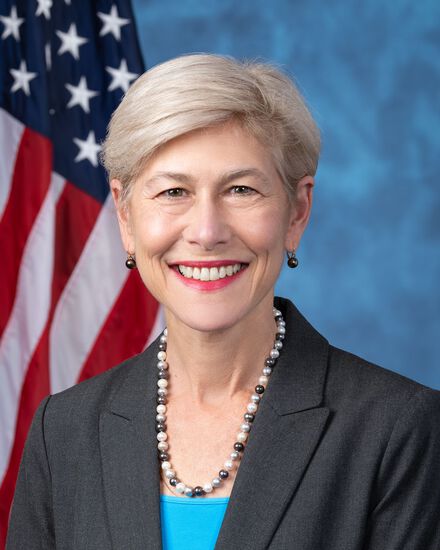
Rep. Deborah K. Ross
Sponsored bills
Farm to School Act of 20 21 This bill modifies and expands the Department of Agriculture's (USDA's) Farm to School Program. The program currently provides grants and technical assistance to schools, state and local agencies, Indian tribal organizations, agricultural producers, and nonprofit entities to improve access to local foods in schools. Among other things, the bill reauthorizes the program through FY2027; permits USDA to provide land-grant colleges and universities with grants, research, evaluation, and technical assistance under the program; expands the purposes for grants awarded under the program to include implementing educational activities relating to agriculture, nutrition, or food; requires USDA to provide technical assistance, research, and information to increase awareness of and participation in farm to school programs among agricultural producers, including beginning, veteran, and socially disadvantaged farmers; directs USDA to seek to improve local food procurement and distribution options for agricultural producers and eligible institutions; authorizes USDA to fund projects that include innovative approaches to aggregation, processing, transportation, and distribution; establishes new limitations on the amount and duration of grants; and limits funds that may be used for administrative costs.
Biliteracy Education Seal and Teaching Act or the BEST Act This bill directs the Department of Education to award renewable two-year grants to states to establish or improve, and carry out, Seal of Biliteracy programs to recognize student proficiency in speaking, reading, and writing in both English and a second language. Further, these programs must allow speakers of any official Native American language to use equivalent proficiency in speaking, reading, and writing in such language in lieu of proficiency in English.
Disability Access to Transportation Act This bill expands transportation access for individuals with disabilities. Specifically, the bill requires the Department of Transportation to establish a one-stop paratransit pilot program to develop or expand paratransit programs carried out pursuant to the Americans with Disabilities Act of 1990 (ADA) to prevent long wait times between multiple trips that unduly limit an individual's ability to complete essential tasks; issue regulations enforcing guidelines that set forth minimum standards for pedestrian facilities in the public right-of-way, including shared use paths; implement procedures that allow an individual to submit an ADA complaint by phone, by mail-in form, and online; require each public transit provider and contractor providing paratransit services to post certain information for how an individual can file a disability-related complaint; file yearly reports of accessibility complaints; and create an accessibility data pilot program to assist states and metropolitan or rural planning organizations to improve their transportation planning.
Jack Reynolds Memory MediGap Expansion This bill expands guaranteed issue rights with respect to Medigap policies (Medicare supplemental health insurance policies) to all beneficiaries with end-stage renal disease. (Guaranteed issue rights require that a policy be offered to any eligible applicant without regard to health status.)
Abortion is Health Care Everywhere Act of 2021 This bill authorizes the use of certain foreign assistance funds to provide comprehensive reproductive health care services in developing countries, including abortion services, training, and equipment.
Universal Giving Pandemic Response and Recovery Act This bill allows individual taxpayers who do not otherwise itemize their tax deductions a deduction in taxable years beginning in 2021 or 2022 for charitable contributions. The deduction is limited to one-third of the standard deduction allowed to such taxpayers.
George Floyd Justice in Policing Act of 2021 This bill addresses a wide range of policies and issues regarding policing practices and law enforcement accountability. It increases accountability for law enforcement misconduct, restricts the use of certain policing practices, enhances transparency and data collection, and establishes best practices and training requirements. The bill enhances existing enforcement mechanisms to remedy violations by law enforcement. Among other things, it does the following: lowers the criminal intent standard—from willful to knowing or reckless—to convict a law enforcement officer for misconduct in a federal prosecution, limits qualified immunity as a defense to liability in a private civil action against a law enforcement officer, and grants administrative subpoena power to the Department of Justice (DOJ) in pattern-or-practice investigations. It establishes a framework to prevent and remedy racial profiling by law enforcement at the federal, state, and local levels. It also limits the unnecessary use of force and restricts the use of no-knock warrants, chokeholds, and carotid holds. The bill creates a national registry—the National Police Misconduct Registry—to compile data on complaints and records of police misconduct. It also establishes new reporting requirements, including on the use of force, officer misconduct, and routine policing practices (e.g., stops and searches). Finally, it directs DOJ to create uniform accreditation standards for law enforcement agencies and requires law enforcement officers to complete training on racial profiling, implicit bias, and the duty to intervene when another officer uses excessive force.
Girls' Leadership, Engagement, Agency, and Development Act of 2021 or the Girls LEAD Act This bill directs the Department of State and the U.S. Agency for International Development (USAID) to jointly report to Congress a strategy to strengthen the participation of adolescents, particularly girls, in democracy, human rights, and governance. The State Department and the USAID shall (1) implement activities to achieve this goal, including activities to increase adolescent girls' civic and political knowledge and skills and address barriers to political participation; and (2) prioritize foreign assistance funding for democracy, human rights, and governance programs toward achieving the goals in this bill.
This joint resolution proposes a constitutional amendment authorizing Congress and the states to set reasonable limits on the raising and spending of money by candidates and others to influence elections. The amendment grants Congress and the states the power to implement and enforce this amendment by legislation. They are allowed to distinguish between natural persons and corporations or other artificial entities created by law, including by prohibiting such entities from spending money to influence elections.