

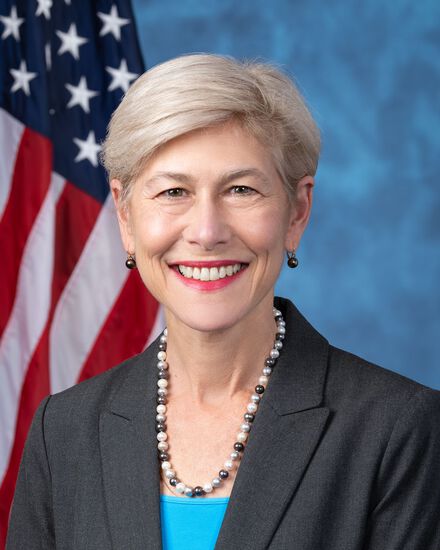
Photo of Deborah K. Ross
D United States House · District 2 · North Carolina On the 2026 ballot

Rep. Deborah K. Ross

Compare
Total votes
2,837
all sessions
Attendance
99%
22 missed
Higher than 96% of chamber peers
With party
98%
of cast votes
Higher than 94% of chamber peers
Bipartisan score
1%
crosses aisle rarely
Lower than 95% of chamber peers
Sponsored
1,961
bills & resolutions
Higher than 93% of chamber peers
Committees
7
assignments
1,961 bills and resolutions

Sponsored bills

Total
1,961
Primary
86
Co-sponsor
1,875
This page
1,961
matching current filters
Co-sponsor HR 5247
In committee · Indiana House · Co-sponsor
Reducing Obesity in Youth Act of 2021

Reducing Obesity in Youth Act of 2021 This bill requires the Centers for Disease Control and Prevention, in coordination with the Administration for Children and Families, to award grants to nonprofits, institutions of higher education, or consortia of these entities to promote healthy eating and physical activity and address food insecurity among children in early care and education settings.

In committee Sep 15, 2021 1 co-sponsor
Co-sponsor HR 5196
In committee · Indiana House · Co-sponsor
Expediting Assistance to Renters and Landlords Act of 2021

Expediting Assistance to Renters and Landlords Act of 2021 This bill modifies the Department of the Treasury's Emergency Rental Assistance program by extending time limits on payments, allowing landlords to seek rents and arrears from the program without renter consent, and allowing renters to prove eligibility through attestation. The program provides grants to state and local governments to assist eligible households in paying rent and utility costs and other expenses related to housing incurred due to the COVID-19 pandemic. The bill extends the availability of program assistance from 18 to 24 months for eligible households. The bill also relaxes requirements for proof of eligibility by requiring only that households attest that they meet eligibility requirements instead of requiring proof of eligibility. It also allows for direct payment of funds to eligible households where the landlord refuses direct payment. Additionally, the bill allows a landlord to apply for program funds without the consent of a renter if the landlord agrees to certain terms, including a 120-day bar on evicting the renter for nonpayment. This bill also expands the stable housing services available under the program to additional low-income households. Further, the bill requires Treasury and state and local governments to increase outreach to renters and landlords and allows for coordination with public entities to provide application assistance services.

In committee Sep 15, 2021 1 co-sponsor
Co-sponsor HR 4
Passed · Indiana House · Co-sponsor
John R. Lewis Voting Rights Advancement Act of 2021

John R. Lewis Voting Rights Advancement Act of 2021 This bill establishes new criteria for determining which states and political subdivisions must obtain preclearance before changes to voting practices may take effect. Preclearance is the process of receiving preapproval from the Department of Justice (DOJ) or the U.S. District Court for the District of Columbia before making legal changes that would affect voting rights. A state and all of its political subdivisions shall be subject to preclearance of voting practice changes for a 10-year period if 15 or more voting rights violations occurred in the state during the previous 25 years; 10 or more violations occurred during the previous 25 years, at least 1 of which was committed by the state itself; or 3 or more violations occurred during the previous 25 years and the state administers the elections. A political subdivision as a separate unit shall also be subject to preclearance for a 10-year period if three or more voting rights violations occurred there during the previous 25 years. States and political subdivisions that meet certain thresholds regarding minority groups must preclear covered practices before implementation, such as changes to methods of election and redistricting. Further, states and political subdivisions must notify the public of changes to voting practices. Next, the bill authorizes DOJ to require states or political subdivisions to provide certain documents or answers to questions for enforcing voting rights. The bill also outlines factors courts must consider when hearing challenges to voting practices, such as the extent of any history of official voting discrimination in the state or political subdivision.

Passed Sep 14, 2021 1 co-sponsor
Co-sponsor HR 5203
In committee · Indiana House · Co-sponsor
Ejiao Act

Ejiao Act This bill prohibits the knowing sale or transport of ejiao (or products containing ejiao) in interstate or foreign commerce. (Ejiao is a gelatin made with donkey skin and used in traditional Chinese medicine and beauty products.)

In committee Sep 13, 2021 1 co-sponsor
Co-sponsor HR 5218
In committee · Indiana House · Co-sponsor
Collaborate in an Orderly and Cohesive Manner Act

Collaborate in an Orderly and Cohesive Manner Act This bill requires the Department of Health and Human Services (HHS) to award grants for implementing and evaluating specified models of care that integrate the delivery of behavioral health and primary care services. Specifically, HHS must award grants to primary care providers for the initial costs (e.g., hiring staff) of implementing such models. In awarding the grants, HHS must prioritize recipients that provide care to medically underserved populations and in areas where the prevalence of behavioral health conditions exceeds the national average. HHS must also provide additional incentive payments to recipients that use appropriate billing codes and quality measures for behavioral health services. In addition, HHS must award grants to national and regional organizations for providing technical assistance to health care providers and systems to improve implementation of integrated behavioral health and primary care models. Furthermore, HHS may direct its agencies to expand efforts to evaluate current and emerging integrated behavioral health and primary care models.

In committee Sep 13, 2021 1 co-sponsor
Co-sponsor HR 5232
In committee · Indiana House · Co-sponsor
Working Dog Commemorative Coin Act

Working Dog Commemorative Coin Act This bill directs the Department of the Treasury to mint and issue 50,000 $5 gold coins, 500,000 $1 silver coins, and 750,000 half-dollar clad coins in commemoration of the service that working dogs provide to society. The designs of the coins minted under this bill shall be emblematic of the contributions of working dogs to society, including in detection, military service, therapy and assistance. Treasury may issue coins only during the one-year period beginning on January 1, 2023. All sales of coins shall include a surcharge, which shall be paid to America's VetDogs for general expenses associated with the fulfillment of its mission.

In committee Sep 10, 2021 1 co-sponsor
Co-sponsor HR 4880
In committee · Indiana House · Co-sponsor
Veterans’ Prostate Cancer Treatment and Research Act

Veterans' Prostate Cancer Treatment and Research Act This bill requires the Department of Veterans Affairs (VA) to establish in its National Surgery Office an interdisciplinary clinical pathway for all stages of prostate cancer. Clinical pathways are health care management tools designed around research and evidence-based practices that provide direction for the care and treatment of a specific condition. The clinical pathway must include specified elements, such as a diagnosis pathway and a treatment pathway. The VA must consult with and incorporate feedback from (1) veterans who have received prostate cancer care at its medical facilities, and (2) experts in multidisciplinary cancer care and clinical research. Additionally, the VA must publish the clinical pathway on a public VA website and annually update the pathway as needed based on medical literature and evidence-based guidelines. The bill also requires the VA to submit a plan to establish a prostate cancer program using the comprehensive prostate cancer clinical pathway.

In committee Sep 9, 2021 1 co-sponsor
Co-sponsor HR 4612
In committee · Indiana House · Co-sponsor
PALS Act

Protecting Access to Lifesaving Screenings Act of 2021 or the PALS Act This bill makes a series of changes relating to health insurance coverage of screening mammography. Specifically, the bill requires that any provision of law referring to current recommendations of the U.S. Preventive Services Task Force (USPSTF) with respect to breast cancer screening mammography be administered as if (1) the provision referred to USPSTF recommendations last issued before 2009; and (2) those recommendations applied to any screening mammography modality, including any digital modality of such a procedure. This requirement shall also apply to the Veterans Health Administration's policy on mammography screening for veterans. In addition, the bill preserves Medicare coverage for screening mammography, without a requirement for coinsurance, and expands the definition of screening mammography to include any digital modality of such a procedure. Further, the Centers for Medicare & Medicaid Services may not decrease the frequency with which screening mammography may be paid by Medicare for a woman over 39 years of age. In 2009, the USPSTF updated its guidelines to recommend against routine screening mammography for women between 40 to 49 years of age and to recommend biennial, instead of annual, screening mammography for most women between 50 to 74 years of age. In 2015, through the appropriations process, a three-year moratorium was placed on implementing the guidelines; the moratorium was subsequently renewed until January 1, 2023.

In committee Sep 7, 2021 1 co-sponsor
Co-sponsor HR 4450
In committee · Indiana House · Co-sponsor
Access to Infertility Treatment and Care Act

Access to Infertility Treatment and Care Act This bill requires private health insurance plans to cover (1) specified infertility treatments (e.g., in vitro fertilization), if the plan also covers obstetrical services; and (2) fertility preservation services for individuals who undergo medically necessary treatment that may cause impairment of fertility. Private health insurance plans must apply cost sharing for such services that does not exceed the amount for similar services covered by the plan. Further, plans are prohibited from (1) providing incentives for plan holders to forego infertility treatment, or (2) reducing the reimbursement rate to providers of such treatments. The bill also extends infertility treatment and fertility preservation coverage to Medicaid enrollees, federal employees, members of the military, and veterans.

In committee Sep 7, 2021 1 co-sponsor
Showing 1,621 to 1,630 of 1,961 bills