

Protecting Our Democracy Act This bill addresses issues involving (1) abuses of presidential power; (2) checks and balances, accountability, and transparency; and (3) election integrity and security. Specifically, regarding abuses of presidential power, the bill requires the Department of Justice (DOJ) and the President to submit to Congress specified materials relating to certain pardons, prohibits presidential self-pardons, suspends the statute of limitations for federal offenses committed by a sitting President or Vice President, prohibits the acceptance of foreign or domestic emoluments, and sets forth provisions regarding Office of Government Ethics and Office of Special Counsel jurisdiction and enforcement authority. To address checks and balances, accountability, and transparency, the bill authorizes specified actions to enforce congressional subpoenas, imposes limits on presidential declarations of emergencies, requires DOJ to maintain a log of specified communications between it and the White House, requires cause for removal of inspectors general, increases whistleblower protections, and requires a candidate for President or Vice President to provide copies of tax returns for the 10 most recent taxable years to the Federal Election Commission. To address election integrity and security, the bill requires federal campaign reporting of foreign contacts, makes various changes to requirements concerning foreign donations to political campaigns and candidates and foreign contributions to online electioneering communications, prohibits distribution of materially deceptive audio or visual media prior to an election (i.e., deepfakes), and establishes a program to support states and localities transition to ranked choice voting systems.
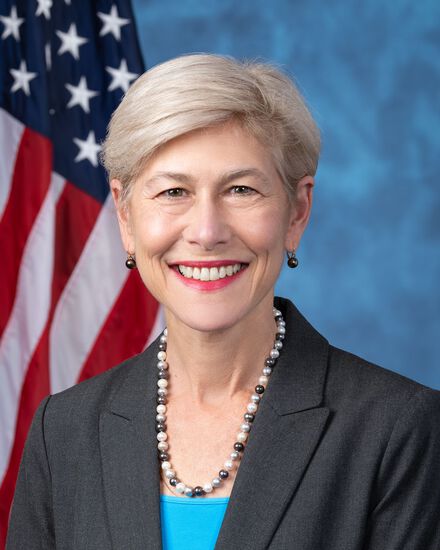
Rep. Deborah K. Ross
Sponsored bills
Humane Cosmetics Act of 2021 This bill generally prohibits animal testing in the evaluation of cosmetic products, and it prohibits the sale or transport of cosmetics developed using animal testing, subject to civil penalties. These prohibitions begin one year after enactment. The bill specifies exceptions to these prohibitions, including if such animal testing (1) is conducted outside the United States to comply with a foreign regulatory authority; (2) is pursuant to a specified finding that there are no nonanimal alternatives to test the safety of a potentially dangerous cosmetic product or ingredient; (3) is of a product or ingredient for a drug or device subject to regulation by the Food and Drug Administration (FDA); or (4) is required for a noncosmetic purpose pursuant to a state, federal, or foreign regulatory authority. Further, no animal-testing evidence may be used to establish the safety of a cosmetic product or ingredient that is regulated by the FDA after the effective date of this bill, subject to limited exceptions.
Military Dependents School Meal Eligibility Act of 2021 This bill allows certain dependent children in households of active duty members of the Armed Forces to qualify for free and reduced-price school meals through a direct certification process.
Chronic Wasting Disease Research and Management Act This bill directs the Department of Agriculture (USDA) to address chronic wasting disease afflicting deer, elk, and moose populations. Specifically, the bill directs USDA to establish a program to research and manage the disease. Under the program, USDA must offer to enter into agreements with state or tribal wildlife agencies and departments of agriculture, institutions of higher education, and research centers to support research on the transmission of, resistance to, and diagnosis of the disease. In addition, USDA must offer to enter into agreements with such agencies and departments to support state and tribal efforts to develop and implement management strategies that address the disease. USDA must also develop and maintain materials to inform the public on chronic wasting disease and techniques to help prevent the spread of the disease. In addition, USDA must solicit public feedback on potential updates and improvements to standards of the chronic wasting disease herd certification program.
Radiation Exposure Compensation Act Amendments of 2021 This bill expands two programs that compensate individuals who were exposed to radiation during certain nuclear testing or uranium mining and subsequently developed medical conditions, including cancers. First, the bill expands and extends a program that compensates individuals who were exposed to radiation from atmospheric nuclear testing or other sources and subsequently developed specified cancers. Under current law, this program compensates individuals who were present in a designated geographic area during a period of nuclear testing and certain individuals employed in uranium mining. The bill expands the designated areas to include Colorado, Idaho, Montana, New Mexico, and Guam and additional areas in Arizona, Nevada, and Utah; makes more individuals who worked in uranium mining eligible for the program; increases the amount of compensation awarded to and provides medical benefits for eligible claimants; and extends for 19 years following the bill's enactment the fund that supports this program and the statute of limitations for filing claims (currently, the program terminates on July 10, 2022). Second, the bill makes certain individuals employed in uranium mines or mills eligible for a program that compensates workers, including Department of Energy employees and contractors, for illnesses caused by occupational exposure to radiation and hazardous substances during development and testing of the nation's nuclear weapons stockpile. The bill also establishes a grant program in the National Institute of Environmental Health Sciences for institutions of higher education to study the epidemiological impacts of uranium mining and milling among individuals without occupational exposure.
Allied Health Workforce Diversity Act of 2021 This bill allows the Department of Health and Human Services to provide grants to accredited education programs to increase diversity in the physical therapy, occupational therapy, respiratory therapy, audiology, and speech-language pathology professions. Grants may be used to provide scholarships or to support recruitment and retention of students from underrepresented groups.
Employee Retention Tax Credit Reinstatement Act This bill provides for a reinstatement of the employee retention tax credit through 2021. The credit was established to compensate employers whose businesses were negatively impacted by the COVID-19 pandemic for wages paid to their employees.
This resolution supports the designation of a National Day of 3D Printing. The resolution also recognizes the economic impact of 3D printing and its positive implications for the U.S. advanced manufacturing sector. Finally, the resolution encourages the promotion and celebration of 3D printing technology.
Courthouse Ethics and Transparency Act This bill requires federal judicial officers to file periodic transaction reports disclosing certain securities transactions. The bill also requires online publication of judicial financial disclosure reports. Specifically, the bill requires federal judicial officers to file reports within 45 days after a purchase, sale, or exchange that exceeds $1,000 in stocks, bonds, commodities futures, and other forms of securities. Additionally, the bill directs the Administrative Office of the U.S. Courts to establish a searchable internet database of judicial financial disclosure reports. The office must, within 90 days of the date by which a report must be filed, make the report available on the database in a searchable, sortable, and downloadable format. The bill does not require the immediate and unconditional availability of reports filed by a judicial officer or employee if the Judicial Conference finds that revealing personal and sensitive formation could endanger that individual or a family member of that individual.
Expanding Access to Fertility Care for Servicemembers and Dependents Act This bill entitles members of the armed forces and their dependents (including the reserve components) who are performing active service and are entitled to medical care under TRICARE to assisted reproductive technology services (e.g., in vitro fertilization). Such services must be provided, regardless of (1) whether the assisted reproductive technology service is related to the treatment of a service-connected disability; (2) whether the member has a serious illness or injury resulting from a service-connected disability; (3) the ability of the member or dependent to conceive a pregnancy or carry a pregnancy to term; or (4) the sex, gender, sexual orientation, or marital status of the member or dependent.