

Maddy summaryThis resolution (HRES 1416) expresses congressional support for designating August 25-31, 2024, as "Black Breastfeeding Week." It directly addresses racial disparities in breastfeeding rates and infant health outcomes affecting Black mothers and infants, citing CDC data showing Black mothers’ breastfeeding initiation rate (74%) lags behind White mothers (85%) and linking low breastfeeding rates to higher infant mortality. The resolution highlights systemic barriers like workplace challenges (e.g., 60% of breastfeeding mothers lack adequate milk expression spaces) and connects breastfeeding to broader health equity issues. It is a symbolic gesture - not a law - urging Congress to support policies addressing racial inequities in maternal care, but does not create new requirements or funding.
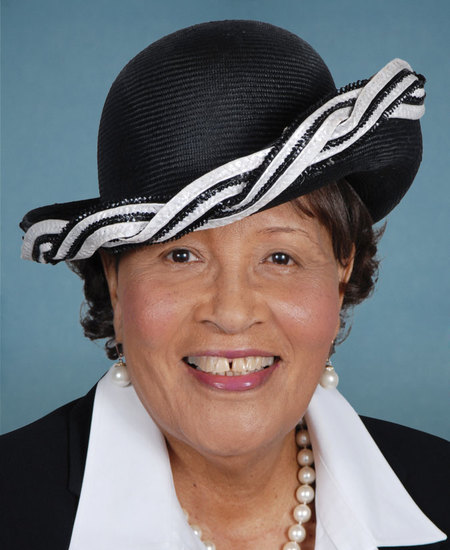
Rep. Alma S. Adams
Sponsored bills
Maddy summaryThis bill authorizes a single Congressional Gold Medal to honor Peter McGuire, a key figure in the 19th-century labor movement known as the "Father of Labor Day" and co-founder of the American Federation of Labor. The medal, designed by the Treasury and Labor Departments, will be presented by congressional leaders and permanently displayed at the Smithsonian’s National Museum of American History. Bronze duplicates may be sold to cover production costs, with proceeds going to the U.S. Mint. The bill is purely ceremonial, recognizing McGuire’s historical contributions to workers’ rights, the 8-hour workday, and labor union organization. It does not create new policy or affect current legislation.
Maddy summaryThe Equal Pay for Equal Work Act establishes a National Equal Pay Enforcement Task Force to strengthen enforcement of existing equal pay laws. The task force, made up of representatives from the Equal Employment Opportunity Commission, Department of Justice, Department of Labor, and Office of Personnel Management, will coordinate efforts to investigate pay disparities and develop solutions. It will create action plans to address enforcement gaps and improve public education about pay equity. This bill directly affects federal agencies and workers facing wage discrimination by enhancing how equal pay laws are enforced across government.
Maddy summaryThis bill amends federal law to prohibit government employees and contractors from giving, receiving, or demanding gratuities exceeding $1,000 related to official actions involving transactions of $5,000 or more. It directly affects federal contractors, state/local government employees, and tribal agency staff handling federal funds. Key changes include raising the maximum penalty to up to 2 years in prison (from 1 year) and clarifying that the $5,000 transaction threshold applies to all covered business dealings. The law targets bribery-like conduct in government contracting and services funded by federal dollars.
Maddy summaryHR 9253, the National Gun Violence Research Act, repeals longstanding restrictions that blocked federal funding for gun violence research, including the 1996 Dickey Amendment. It establishes a National Gun Violence Research Program to support scientific studies on gun-related injury and death, with $200 million authorized over six years (2025-2030). The program directs agencies like the CDC, NIH, and National Institute of Justice to fund research, train researchers, develop safety standards, and share gun trace data with researchers through new protocols. This bill directly affects federal research institutions and public health agencies by enabling evidence-based study of gun violence causes and prevention strategies.
Maddy summaryHRES 1397 is a non-binding congressional resolution expressing support for designating July as "Disability Pride Month" in the United States. It highlights that 61 million American adults and over 3 million children live with disabilities, notes the anniversary of the Americans with Disabilities Act (ADA) on July 26, 1990, and acknowledges ongoing discrimination risks faced by people with disabilities. The resolution calls on the public, organizations, and affected individuals to observe Disability Pride Month through celebrations and to actively prevent exclusion and discrimination against people with disabilities. It does not create new laws or funding but formally recognizes the contributions of the disability community and aligns with existing annual observances. This resolution directly supports the disability community and encourages nationwide participation in promoting inclusion.
Maddy summaryHR 9196, the Pregnancy Empowerment Act of 2024, prohibits states from delaying or denying divorce petitions solely because a person is pregnant. This directly affects pregnant individuals - particularly women of color and those experiencing intimate partner violence - who face barriers to finalizing divorces during pregnancy, trapping them in abusive relationships. The bill mandates that states cannot consider pregnancy status when processing divorce filings, addressing findings that such delays increase risks of violence and reproductive coercion. It aims to remove legal obstacles that prevent pregnant people from accessing divorce, a critical step for safety and autonomy.
Maddy summaryThis bill permanently removes a 2026 expiration date for a tax exclusion allowing employers to pay employees' student loans through educational assistance programs without those payments being counted as taxable income. It directly affects employees who receive employer-sponsored student loan repayment assistance and employers offering such programs. The key provision amends the Internal Revenue Code to make this tax exclusion permanent, applying to all future payments made after the bill's enactment. This change simplifies the tax treatment for both employers and employees participating in these student loan repayment programs.
Maddy summaryThe LET'S Protect Workers Act increases civil penalties for employers who violate labor and workplace safety laws. It significantly raises fines for child labor violations (up to $700,000 for serious injuries/deaths), wage and hour violations (up to $50,000 per violation for repeated/willful violations), and workplace safety violations (up to $800,000). The bill also increases penalties for farmworker protections (to $30,000), mine safety violations, and unfair labor practices (up to $100,000). New provisions require employers to pay penalties, with withdrawal orders for mines that fail to pay fines. These changes apply to violations occurring on or after January 1, 2025, with some provisions taking effect immediately.
Maddy summaryH.J. Res. 193 proposes a constitutional amendment to eliminate legal immunity for federal officials, including the President, from criminal prosecution for actions taken while performing official duties. It also prohibits the President from granting a pardon to themselves. The amendment would apply to all federal officers (such as the President, Vice President, and members of Congress) except for Congress members acting in their legislative role as defined in the Constitution. If ratified by 38 states, this change would become part of the U.S. Constitution, requiring no further congressional action.