

Maddy summaryThis concurrent resolution (HCONRES 28) expresses Congress's non-binding opinion that overseas military voters' absentee ballots must be counted under the existing Uniformed and Overseas Citizens Absentee Voting Act (UOCAVA). It states that states and election authorities must fully count legally submitted ballots from military personnel and overseas citizens without rejection due to administrative errors or delays. The resolution urges the Attorney General to monitor compliance with UOCAVA and take action against violations, reinforcing federal protections for military voters' right to participate in elections. It does not create new law but affirms existing legal obligations under UOCAVA.
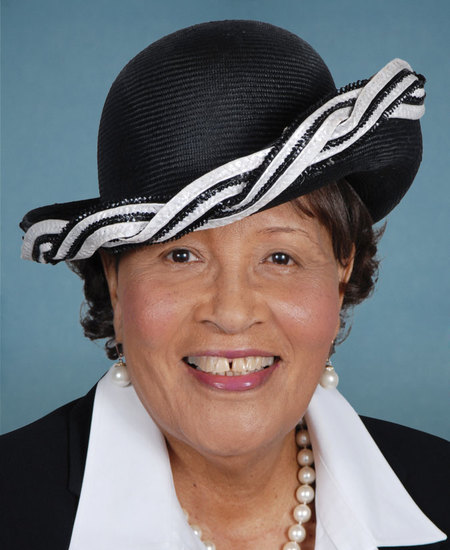
Rep. Alma S. Adams
Sponsored bills
Maddy summaryHRES 332 is a resolution designating April 11-17, 2025, as "Black Maternal Health Week" to raise awareness about maternal health disparities affecting Black women and birthing people in the U.S. It references CDC data showing Black women are 2-3 times more likely to die from pregnancy-related causes than White women and that the U.S. has the highest maternal mortality rate among developed nations. The resolution emphasizes the need to address systemic inequities contributing to these outcomes without creating new laws or funding. It serves as a symbolic recognition to amplify community-led efforts, such as those by the Black Mamas Matter Alliance, rather than implementing policy changes.
Maddy summaryThe PROTECT Students Act of 2025 establishes new financial transparency requirements for higher education programs, measuring debt-to-earnings ratios and earnings premiums to help students evaluate program value and financial outcomes. It strengthens borrower defense mechanisms allowing students to seek loan forgiveness for misleading practices by institutions and prohibits schools from restricting students' legal rights through arbitration agreements. The bill requires institutions to spend at least 30% of tuition revenue on instruction and student services, with annual reporting to the Department of Education. It creates an enforcement unit within the Office of Federal Student Aid to investigate misconduct and increases transparency by requiring public disclosure of complaint data, financial information, and oversight activities.
Supplemental Oxygen Access Reform Act of 2025 or the SOAR Act of 2025 This bill establishes certain requirements with respect to the payment and provision of supplemental oxygen and related services under Medicare. For example, the bill provides for separate payments, indexed to inflation, of oxygen and related equipment, supplies, and services under Medicare (rather than under the competitive acquisition program). It also specifically covers services that are provided by respiratory therapists under Medicare and provides for an additional payment adjustment for these services. Additionally, the bill (1) requires the Centers for Medicare & Medicaid Services to develop an electronic template for providers to use when prescribing oxygen and related equipment, supplies, and services; and (2) establishes certain rights for beneficiaries receiving these items and services, such as the right to choose their suppliers and to receive clear communications and be informed about the services provided.
Maddy summaryThe House Expansion Commission Act (HR 2797) creates a 13-member commission to study whether and how to increase the size of the U.S. House of Representatives. The commission will examine current district sizes (averaging 800,000 constituents per district), historical context for the 1929 cap, potential expansion methods, and logistical costs like office space and staffing. It must submit a report with recommendations to Congress within two years, but the bill itself does not change the House size or require immediate action. This study aims to inform future decisions about representation, without altering current congressional structure.
Maddy summaryThe American Family Act (HR 2763) establishes a new refundable child tax credit that provides monthly payments to eligible families with children. It would pay $300 per month for each child under age 6 and $360 per month (120% of $300) for each child age 6 or older, with income limits of $150,000 for joint filers and $112,500 for other filers. The bill creates a "period of presumptive eligibility" to determine eligibility for monthly payments, allowing families to receive advance payments based on information from previous tax returns. This would directly affect millions of families with children who meet the income requirements, providing more consistent financial support throughout the year rather than an annual tax credit.
Maddy summaryThe Raise the Wage Act of 2025 gradually increases the federal minimum wage from $9.50 to $17.00 per hour over six years, with annual adjustments based on median wage growth. It raises the base wage for tipped workers from $6.00 to $17.00 per hour, phasing out their separate minimum wage structure by 2029. The bill also eliminates special minimum wage certificates for disabled workers after 2029, requiring employers to pay the standard minimum wage. These changes apply to most covered workers, including tipped employees and those under 20, with specific transition timelines for each group.
Maddy summaryThis bill establishes federal minimum standards for collective bargaining rights for public employees and supervisors. The Federal Labor Relations Authority would determine if state laws provide these rights, and if not, would establish them for affected employees. The bill guarantees public employees the right to form unions, bargain collectively, and engage in concerted activities, while requiring public employers to recognize unions and put agreements in writing. It also prohibits strikes or lockouts that would disrupt emergency services. This would apply to public employees in states that don't meet the federal standards for collective bargaining rights.
Maddy summaryHR 2737, titled the "ELON MUSK Act," is a procedural bill with a satirical title referencing Elon Musk. The bill prohibits "special Government employees" (as defined under 18 U.S.C. § 202) from entering into or benefiting from federal government contracts, requiring termination of any existing such contracts upon enactment. It uses standard legal terminology without creating new policy mechanisms beyond this contractual restriction. The bill does not directly affect specific individuals or entities but applies to a defined category of federal employees under existing law. The title's reference to Elon Musk is purely nominal and unrelated to the bill's actual provisions.
Maddy summaryHR 2664 amends the Higher Education Act to allow historically Black colleges and universities (HBCUs) to use federal grant funds for specific arts, arts education, and cultural programs. The bill adds new provisions enabling HBCUs to provide financial aid to arts students, establish outreach programs for arts departments, offer comprehensive support services (like mentorship and career advising), maintain Black art collections, and create paid internships through partnerships with arts organizations. It also authorizes HBCUs to partner with the National Endowment for the Arts to carry out these activities. This amendment directly affects HBCUs by expanding allowable grant uses to address historical underfunding and strengthen arts education.