

Scientific Integrity Act This bill revises provisions regarding the release of scientific research results by federal agencies. Each agency that funds, conducts, or oversees scientific research must (1) adopt and enforce a scientific integrity policy that includes requirements such as that scientific conclusions are not based on political considerations, and (2) submit such policy to the Office of Science and Technology Policy (OSTP) for approval. Each agency must make such policy available to the public and submit such policy to Congress. Agencies and the OSTP must periodically review the policies. The Government Accountability Office shall review implementation of the policies. Each agency shall (1) appoint a Scientific Integrity Officer, (2) establish a process for dispute resolution consistent with the scientific integrity policy, and (3) establish a specified training program for current and new employees.
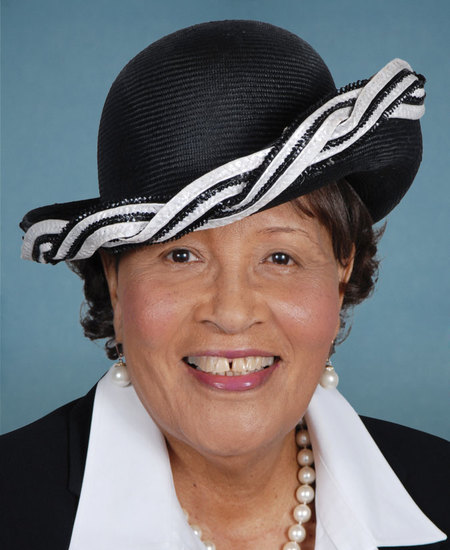
Rep. Alma S. Adams
Sponsored bills
This resolution identifies women's cardiovascular health as an important health care issue and supports gender-specific cardiovascular health research, prevention, and treatment.
This resolution recognizes the contribution of the Greensboro Four to the civil rights movement and the significant role they played as a catalyst for the mobilization of college students coalescing in the formation of the Student Non-Violent Coordinating Committee. The resolution (1) recognizes that ethnic and racial diversity of the United States enriches and strengthens the nation, and (2) encourages states to include the history and contributions of the Greensboro Four in their educational curricula.
Apprenticeship Access for All Act of 2021 This bill requires the Department of Labor to promote diversity and ensure equal opportunity to participate in programs for apprentices, youth apprentices, and pre-apprentices by taking steps to promote diversity in apprenticeable occupations under the national apprenticeship system, especially in high-skill, high-wage, or in-demand industry sectors and occupations in areas with high percentages of low-income individuals; ensuring programs under the national apprenticeship system adopt and implement policies for equal opportunity in such programs, do not engage in prohibited intimidation or retaliation, and are subject to enforcement action; and supporting the recruitment, employment, and retention of nontraditional apprenticeship populations in high-skill, high-wage, and in-demand industry sectors and occupations, including women, people of color, individuals with disabilities, individuals impacted by the criminal and juvenile justice system, and individuals with barriers to employment.
USPS Fairness Act This bill repeals the requirement that the U.S. Postal Service annually prepay future retirement health benefits.
Emergency Water is a Human Right Act This bill creates a grant program, administered by the Department of Health and Human Services, to provide funds to states and Indian tribes to assist low-income households that pay a high proportion of household income for drinking water and wastewater services. Further, any entity receiving financial assistance under this grant program must ensure that no home energy service or public water system service is or remains disconnected or interrupted during the COVID-19 (i.e., coronavirus disease 2019) public health emergency.
This concurrent resolution recognizes the difficult challenges Black veterans faced when returning home after serving in the Armed Forces, their heroic military sacrifices, and their patriotism in fighting for equal rights and for the dignity of a people and a nation. The concurrent resolution also recognizes the need for the Department of Veterans Affairs to continue to work to eliminate any health and benefit disparities for minority veterans.
This concurrent resolution calls for the Citizens' Stamp Advisory Committee to recommend that the Postmaster General issue a commemorative postage stamp honoring the Buffalo Soldiers.
This resolution recognizes Black History Month as an important time to reflect on the significant contributions of African Americans in the history of the United States, including in the Armed Forces.
This resolution mourns the death of U.S. Capitol Police Officer Brian D. Sicknick, and it honors his lifelong commitment to service and his selfless acts of heroism on January 6, 2021.