

Raise the Age Act This bill establishes new restrictions on the sale or transfer of certain semiautomatic firearms to individuals under 21 years of age. Specifically, this bill makes it unlawful for a licensed gun dealer, importer, manufacturer, or collector to sell or deliver a semiautomatic center-fire rifle that has (or has the capacity to accept) an ammunition feeding device with a capacity of more than five rounds to an individual who the licensee knows or has reasonable cause to believe is under age 21. The prohibition does not apply if the individual under age 21 is a full-time law enforcement officer or active-duty member of the Armed Forces. The bill also requires the Federal Bureau of Investigation to report on the operation of its public access line, including a description of information sharing protocols and recommendations for improving such protocols.
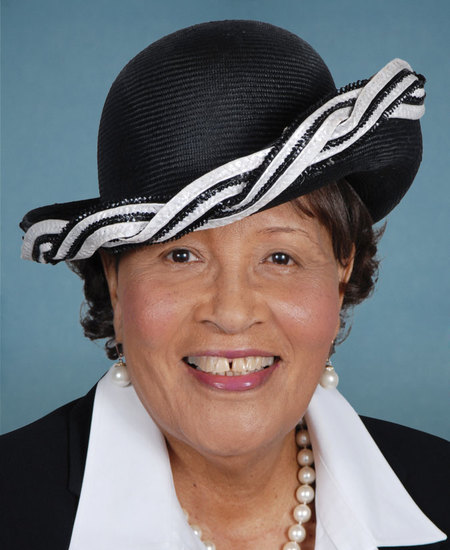
Rep. Alma S. Adams
Sponsored bills
Sgt. Isaac Woodard, Jr. and Sgt. Joseph H. Maddox GI Bill Restoration Act of 2021 This bill expands eligibility for Post-9/11 GI bill educational assistance benefits and the Department of Veterans Affairs (VA) home loan program. Specifically, the bill explicitly includes the following persons as eligible veterans: Black veterans who served on active duty during World War II who can certify they were denied a specific benefit on the basis of race; and the living surviving spouses, children, grandchildren, or other direct descendants of such veterans described above who can certify the veteran was denied a specific benefit on the basis of race. Such veterans described above must apply for educational or home loan benefits within the five-year period after the passage of this bill to be eligible for benefits. The Government Accountability Office must report on the number of individuals who received educational or housing loan benefits and the total value of such benefits administered by the VA due to the amendments made by the bill. Finally, the VA must appoint a panel of independent experts to develop recommendations regarding additional benefits and assistance for female and minority members of the Armed Forces.
This bill rescinds specified funds that were provided to the Department of Agriculture for assistance and support for socially disadvantaged farmers, ranchers, and forest land owners and operators. The bill makes the rescinded funds available for scholarships at 1890 Institutions (i.e., historically Black colleges and universities that belong to the U.S. land-grant university system).
Pets Belong With Families Act This bill prohibits public housing agencies from imposing breed restrictions on pets owned by residents of public housing units. The bill continues to allow public housing agencies to prohibit ownership of dangerous animals in public housing, but prohibits classification as dangerous by breed and requires that any such classification be based on specific behaviors or actions of the animal.
Help Ensure Lower Patient Copays Act or the HELP Copays Act This bill requires health insurance plans to apply certain payments made by, or on behalf of, a plan enrollee toward a plan's cost-sharing requirements. Specifically, plans must apply third-party payments, financial assistance, discounts, product vouchers, and other reductions in out-of-pocket expenses toward the requirements.
Catawba Indian Nation Lands Act This bill ratifies and confirms the actions of the Department of the Interior to take into trust approximately 17 acres of land in Cleveland County, North Carolina, for the benefit of the Catawba Indian Nation. The land is made part of the Catawba Reservation. The bill allows gaming on the land taken into trust for the tribe.
This resolution expresses that the House of Representatives applauds the Biden administration for reaffirming the U.S. commitment to the Paris Agreement on climate change and to our collective responsibility to globally combat climate change; encourages the Biden administration to implement measures to ensure global climate change remains a top priority for this and future administrations and to cement the United States as a global leader in the fight to mitigate its most severe consequences; voices strong commitment as legislators toward achieving the climate goals of the Paris Agreement, fulfilling the forthcoming pledges from the COP26 in Glasgow, Scotland, and advancing other international efforts to keep global warming to no more than 1.5 degrees Celsius and realize global net-zero carbon emissions by 2050 using a whole-of-government approach; and recognizes the critical responsibility of the United States and other developed nations to ensure all societies have the capabilities to transition to a clean energy economy, the resources to protect against climate-induced disasters, and the necessary assistance to endure climate-related challenges to food security, regional migration, and public health.
Sustainable International Financial Institutions Act of 2021 This bill directs specified international financial institutions to use the influence of the United States to advance the cause of reducing greenhouse gas emissions and transition the global economy to a clean energy economy. It also prohibits the United States from providing direct or indirect assistance to any country or entity to support any fossil fuel activity.
Cady Housh and Gemesha Thomas Student Suicide Prevention Act of 2021 This bill reauthorizes through FY2028, and otherwise revises, grants administered by the Substance Abuse and Mental Health Services Administration (SAMHSA) to support youth suicide early-intervention and prevention strategies. Specifically, the bill requires SAMHSA to award a portion of such grants for statewide training programs on emotional well-being, mental health, and suicide awareness and prevention for elementary and secondary school students and staff.
Social Security for Future Generations Act of 2021 This bill increases specified benefits and taxes related to, and otherwise modifies, the Social Security program. Changes to benefits include increasing the primary insurance amount for certain beneficiaries; revising the method for calculating cost-of-living adjustments by using a price index that tracks the spending patterns of older consumers; extending benefits through age 22 to full-time students who are eligible children of deceased, disabled, or retired workers; establishing a new minimum benefit for certain lifetime low-earners; and establishing an alternative benefit based on combined household benefits for widows or widowers in two-income households. Changes to taxes include subjecting earnings in excess of $250,000 to Social Security payroll taxes. No taxes shall be applied to earnings between the contribution base (the maximum amount subject to the Social Security payroll tax, set at $142,800 for 2021) and $250,000. The bill preserves eligibility for Supplemental Security Income payments and other means-tested programs, despite any changes to an individual's Social Security benefits under the bill.