

Maddy summaryHRES 1106 is a non-binding House resolution honoring the life and legacy of Rev. Jesse Louis Jackson, Sr., a prominent civil rights leader and activist. The resolution recognizes his lifelong work in advancing equality through organizations like Operation PUSH, his leadership in the anti-apartheid movement, and his historic presidential campaigns in 1984 and 1988. It expresses condolences to his family and calls on all Americans to continue his legacy of promoting civil rights and unity. As a commemorative resolution, it does not create new laws or affect any policies.
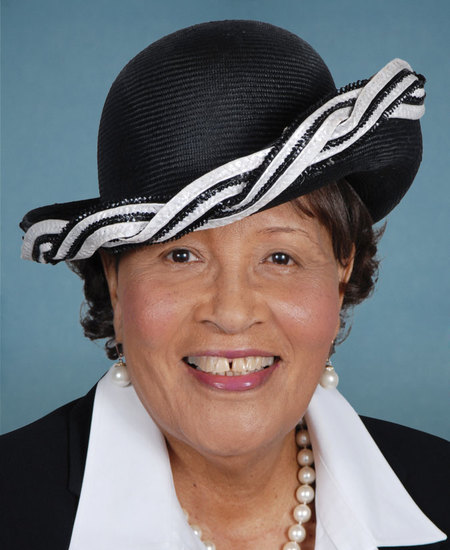
Rep. Alma S. Adams
Sponsored bills
Maddy summaryThis bill, known as the Direct File Act of 2026, would establish a government-run online system allowing taxpayers to prepare and file their individual income tax returns for free. The legislation prohibits the Treasury Department from entering into agreements that restrict its ability to provide tax preparation or filing services, and it voids any existing contracts with such restrictions. The program would use IRS data to simplify filing, include customer support, be available in multiple languages, and allow users to file even if they are not required to. It also enables taxpayers in participating states to file state and local returns alongside their federal returns, with funding provided to states that meet certain standards.
Maddy summaryThis bill requires the Bureau of Prisons to employ at least one full-time, board-certified OB-GYN at every federal prison housing female inmates. It mandates specific services including menstrual care, contraception, prenatal care, cancer screenings, and postpartum support, along with patient protections like informed consent and the right to refuse non-emergency care. The bill also requires initial OB-GYN visits within 14 days of incarceration and establishes a process for referrals to other specialists without delays. Annual reports to Congress will track facility compliance, staffing vacancies, and health outcomes like prenatal visits, childbirths, and pregnancy-related deaths.
Maddy summaryHRES 1080 is a symbolic resolution recognizing and celebrating Black History Month 2026, focusing on its theme "A Century of Black History Commemorations." It highlights historical figures and events central to Black history, including Carter G. Woodson’s founding of Negro History Week (the precursor to Black History Month), Juneteenth, and key moments like the 1865 Charleston commemoration. The resolution emphasizes how Black history commemorations counter historical erasure and affirm Black contributions to U.S. history, referencing figures like Mary McLeod Bethune and W.E.B. Du Bois. As a ceremonial resolution, it has no binding effect but aims to raise awareness of Black achievements through official recognition.
Maddy summaryThis bill, known as the Tariff Free Farming Act, prevents the U.S. government from adding new tariffs on specific farm supplies coming from countries with which the U.S. maintains normal trade relations. It directly affects American farmers and agricultural businesses by capping tariff rates on essential items like seeds, fertilizers, crop protection chemicals, livestock feed, fuel, farm machinery, and building materials at the levels in effect as of January 19, 2025. The legislation applies to all countries that have received normal trade relations status from the United States, ensuring these agricultural inputs are not subject to additional duties beyond the established rates.
Maddy summaryThe Head Start for America's Children Act amends the Head Start Act to enhance early childhood education services for low-income children, with specific provisions to improve culturally responsive programming for Native American and Native Hawaiian communities. It increases funding for Head Start programs, including $91.575 million for transportation, $37.5 million for workforce development, and $863 million for extended operations to provide full calendar year services. The bill updates definitions throughout the law to use more inclusive language, replacing "limited English proficient" with "children who are developing English proficiency," and establishes new requirements for staff compensation and benefits to improve recruitment and retention. Native American Head Start programs and migrant/seasonal programs are exempt from certain requirements, such as the full calendar year service requirement.
Maddy summaryThis bill requires most employers to provide workers with earned paid sick leave. Employees would earn 1 hour of paid sick time for every 30 hours worked, up to 56 hours per year, which can be used for their own illness, medical care, caring for family members (including children, parents, spouses, domestic partners, or other family-like relationships), or addressing domestic violence, sexual assault, or stalking situations. The bill prohibits employers from retaliating against workers who use this leave and requires employers to inform employees about their rights. It ensures that workers who leave and return to the same employer within a year can reinstate their unused sick leave. This law would not override more generous state or local paid leave policies.
Maddy summaryHRES 1059 is a resolution requesting the President to provide the House of Representatives with documents about the Department of Government Efficiency's (DOGE) access to Social Security Administration data. It specifically asks for information on DOGE's efforts to share Social Security data with organizations related to voter rolls or election results, sharing data with the Department of Homeland Security, using third-party servers like Cloudflare, and any actions potentially violating court orders. The President must submit these documents within 14 days of the resolution's adoption. This resolution is a congressional oversight measure to examine compliance with data privacy laws and court orders, not a policy change.
Department of Homeland Security Appropriations Act, 2026 This bill provides FY2026 appropriations for various agencies and offices within the Department of Homeland Security (DHS), except for U.S. Immigration and Customs Enforcement (ICE), U.S. Customs and Border Protection (CBP), and management and oversight activities of the Office of the Secretary. Specifically, the bill provides appropriations to DHS for the Federal Protective Service, the Office of Inspector General, the Transportation Security Administration, the U.S. Coast Guard, the U.S. Secret Service, the Cybersecurity and Infrastructure Security Agency, the Federal Emergency Management Agency (FEMA), U.S. Citizenship and Immigration Services, the Federal Law Enforcement Training Centers, and the Science and Technology Directorate. The bill does not provide appropriations for some agencies and activities that have been funded in prior DHS appropriations acts, including ICE, CBP, and management and oversight activities of the Office of the Secretary.
Maddy summaryHR 7480, the FAIR Act, sets pay adjustments for federal employees in 2027. It increases base pay by 3.1% for most federal workers under standard pay systems and for employees paid according to local civilian wages in high-cost areas. Additionally, it raises locality pay adjustments by 1% for 2027. The bill directly affects all federal employees covered by these pay systems through concrete, formula-based adjustments.