Miracle on Ice Congressional Gold Medal Act This act provides for the award of Congressional Gold Medals to the members of the 1980 U.S. Olympic men's ice hockey team in recognition of the team's achievement at the 1980 Winter Olympic Games.
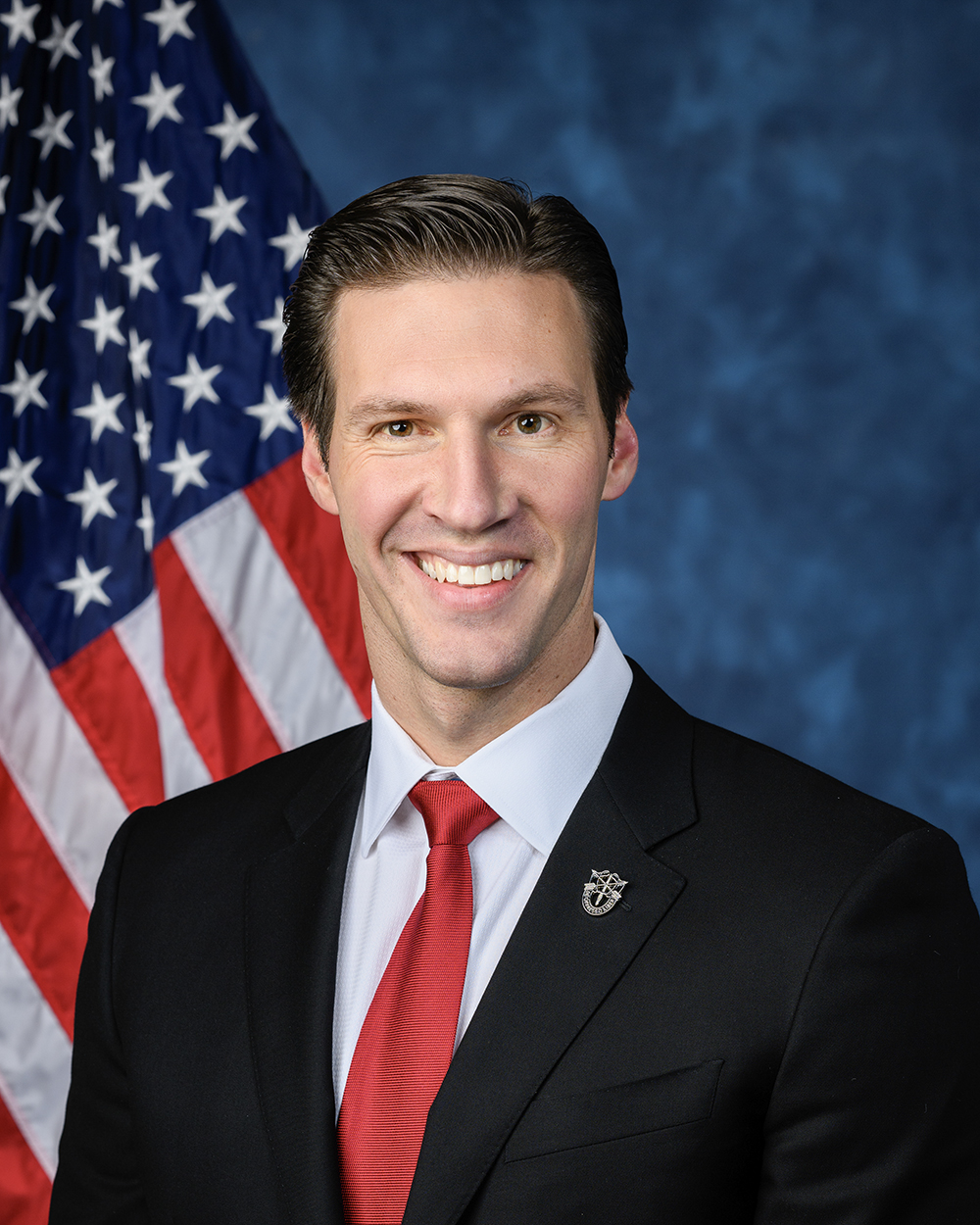
Rep. Pat Harrigan
Sponsored bills
Maddy summaryHR 6648, the FAIR Vets Act, increases the dollar thresholds for sole-source federal contracts awarded to service-disabled veteran-owned small businesses. It raises the limit from $7 million to $10 million for certain contracts and from $3 million to $8 million for others under the Small Business Act. This change directly affects service-disabled veteran-owned small businesses by allowing them to secure more contracts without competitive bidding. The bill requires federal agencies to update their regulations within 180 days of enactment, with the changes applying to solicitations issued 180 days after that.
Maddy summaryHR 1623 (the SCREEN Act) requires online platforms that profit from hosting pornographic content to implement age verification technology, preventing minors from accessing such material. Covered platforms must publicly disclose their verification process and securely handle age data collected through these systems. The law applies specifically to platforms where pornographic content is a regular business activity, not all websites. It mandates that only adults can access pornographic content on these platforms, without banning the content itself.
Maddy summaryHR 6487, the SECURE STEM Act, prohibits U.S. visa issuance and admission for nationals of China, Russia, Iran, North Korea, and Cuba seeking certain STEM-related visas (including H-1B, J-1, and student visas). It also bans these individuals from working at federal national research laboratories. The law allows limited national interest waivers for specific cases, requiring joint approval from the State and Homeland Security Secretaries. It mandates biannual reports to Congress detailing waiver approvals, justifications, and recipient information. The bill directly affects foreign nationals from the specified countries pursuing STEM education or research roles in the U.S. federal labs.
Maddy summaryHR 6466, the Forced Abortion Prevention and Accountability Act, prohibits non-consensual administration of abortion drugs (like mifepristone or misoprostol) to pregnant women without their informed consent. It criminalizes this act with penalties up to 25 years in prison and allows victims to sue for triple damages, psychological/physical injury compensation, and attorney fees. The bill directly affects pregnant women who might face coerced procedures and medical providers or others who administer such drugs without consent. Key provisions include criminal penalties for the act itself, enhanced penalties for serious injury or death, and a civil remedy framework for victims seeking compensation.
Maddy summaryThis bill expands tax credit eligibility for renewable energy projects by broadening the definition of "energy communities" under two existing tax provisions. It specifically adds non-metropolitan (rural) areas to the list of eligible locations for the increased renewable electricity production credit (Section 45) and removes a restriction affecting the clean electricity investment credit (Section 48E). As a result, renewable energy developers in rural communities will now qualify for higher tax credits previously limited to urban areas. The changes align with permanent provisions from the Inflation Reduction Act, making these expanded credits available for projects in non-urban locations.
Maddy summaryHR 6372, the D.C. Shield Law Repeal Act, repeals the Human Rights Sanctuary Amendment Act of 2022 (D.C. Law 24-257), which had modified District of Columbia protections for certain immigrant residents. The bill restores the previous legal framework that existed before the 2022 amendment took effect. This directly affects D.C. law and its implementation regarding immigrant rights within the District.
Give Kids a Chance Act of 2025 This bill expands the Food and Drug Administration’s (FDA’s) authority with respect to research on rare pediatric diseases, including by permitting the FDA to take enforcement action against drug sponsors that fail to satisfy pediatric study requirements and by reauthorizing programs that support pediatric research. Specifically, the bill modifies requirements relating to molecularly targeted pediatric cancer investigations to permit research on new drugs in combination with active ingredients that have already been approved, provided certain conditions are met; permits the FDA to take enforcement action against drug sponsors that fail to comply with pediatric study requirements, if such sponsors demonstrated a lack of due diligence in satisfying the requirement; renews the FDA’s authority to award priority review vouchers to sponsors of new products intended to treat rare pediatric diseases through September 30, 2029; and reauthorizes through FY2027 certain funding for the National Institutes of Health to support priority pediatric research. The bill also provides statutory authority for the FDA’s interpretation of the orphan drug exclusivity period. The bill specifies, consistent with FDA regulations, that the seven-year market exclusivity period for drugs for rare diseases or conditions (i.e., orphan drugs) prohibits the approval of the same drug for the same approved use or indication with respect to the disease or condition. (In Catalyst Pharmaceuticals, Inc. v. Becerra , a court rejected the FDA’s interpretation and held that orphan drug exclusivity extends to all uses or indications for the disease or condition.)

Maddy summaryHR 5800, the SAFE Drivers Act, requires commercial driver's license (CDL) applicants and renewers to pass a standardized English proficiency test approved by the Federal Motor Carrier Safety Administration (FMCSA). The test assesses reading road signs, understanding emergency communications, and writing required documentation - critical for safety in commercial driving. States must administer the test through their DMVs, report pass rates annually to the FMCSA, and face potential federal funding cuts if they fail to comply. The law applies to all new CDL issuances or renewals starting 12 months after enactment, directly affecting commercial drivers seeking or maintaining their licenses.
Maddy summaryHR 5563, the DRIVE-SAFE Act, creates a structured apprenticeship program for commercial drivers under age 21. It requires employers to provide a two-phase training program: a 120-hour probationary period focused on basic driving skills (like traffic navigation and safety awareness), followed by a 280-hour period covering advanced tasks (such as pre-trip inspections and load management). During both phases, apprentices must operate vehicles equipped with automatic transmissions, collision mitigation systems, and video capture, and must be accompanied by an experienced driver (26+ years old with no recent accidents or violations). The bill does not change existing commercial driver’s license requirements and mandates employers to maintain records and provide remediation for preventable accidents or violations during training.