

Maddy summaryHR 1640, the Save Our Gas Stoves Act, prevents the Department of Energy from implementing energy efficiency standards for gas stoves that would make them unavailable in the U.S. market. It amends federal law to require that any new standard for gas stoves must not result in the unavailability of gas stove types, directly affecting gas stove manufacturers and consumers who rely on these appliances. The bill specifically blocks the implementation of the 2023 proposed rule (Energy Conservation Program: Energy Conservation Standards for Consumer Conventional Cooking Products) and any similar rule. This is a policy change focused on maintaining the availability of gas stoves by altering the criteria for energy standard approval.
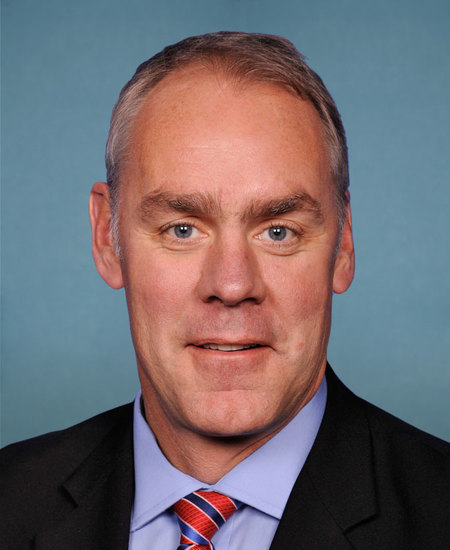
Rep. Ryan K. Zinke
Sponsored bills
Maddy summaryThis proposed constitutional amendment would give Congress the authority to ban physical acts that desecrate the U.S. flag, such as burning or trampling. If ratified by 38 states (three-fourths of all states), it would allow federal laws prohibiting such acts. The amendment does not currently prohibit flag desecration but seeks to change the Constitution to permit it. It would directly affect individuals engaging in physical flag desecration. The bill is pending in the House Judiciary Committee and requires state ratification to become part of the Constitution.
Maddy summaryThe Protecting Veteran Community Care Act expands access to mental health and substance-use services through the Veterans Community Care Program for veterans who cannot get timely care in VA residential treatment facilities. It requires community providers to meet state licensing and accreditation standards and prohibits the VA from denying community care solely because community providers cannot meet the same wait time standards as VA facilities. The bill also mandates the VA to track and report on requests for mental health care, including approvals, denials, and appeals. This applies directly to veterans facing delays in accessing VA residential mental health programs.
Maddy summaryThis bill approves a 2000 treaty between the San Juan Southern Paiute Tribe and the Navajo Nation, establishing a 5,400-acre reservation within the existing Navajo Indian Reservation boundaries in northern Arizona and southern Utah. The San Juan Southern Paiute Tribe (federally recognized since 1989) will gain exclusive jurisdiction over this land, including water rights, resolving long-standing disputes that previously prevented the Tribe from providing essential services like housing and healthcare on their ancestral lands. Key provisions include transferring all land and water rights within the designated Northern and Southern Areas to the Tribe, with the U.S. holding them in trust, and ending Navajo Nation jurisdiction over these areas once boundaries are finalized. The bill also resolves pending litigation and requires the Secretary of the Interior to survey and fence the reservation boundaries within 18 months.
Maddy summaryHJRES 46 is a congressional resolution rejecting a specific rule issued by the National Marine Fisheries Service (NMFS) under federal environmental regulations. The resolution seeks to block the NMFS rule (published June 2022) that updated procedures for listing endangered/threatened species and designating critical habitats. If passed, this resolution would make the NMFS rule legally ineffective under federal law. The bill directly affects how the NMFS manages species protection programs but does not change the underlying environmental laws. This is a procedural disapproval resolution, not a new policy.
Maddy summaryHJRES 49 is a congressional disapproval resolution targeting a specific rule by the U.S. Fish and Wildlife Service that would have listed the northern long-eared bat as an endangered species under the Endangered Species Act. The rule, published in the Federal Register in November 2022 (87 Fed. Reg. 73488), would have imposed federal protections and restrictions on activities affecting the bat's habitat. This resolution, if passed, would nullify that rule, preventing the bat from receiving federal endangered species status and associated legal safeguards. It directly affects the regulatory status of the northern long-eared bat and activities regulated under the Endangered Species Act.
Maddy summaryThis bill prohibits the use of Department of Defense funds for adult cabaret performances. It bans the Defense Department from hosting, advertising, or supporting such events, which are defined as performances featuring topless dancers, strippers, exotic dances, or male/female impersonators appealing to prurient interest. The restriction applies to all Defense Department funds and facilities, preventing their use for these specific types of entertainment.
Maddy summaryHR 3036, the Increased TSP Access Act of 2023, amends conservation program rules to expand access to third-party providers (TSPs) who offer technical assistance to farmers on conservation practices. It creates new pathways for non-Federal entities like agricultural cooperatives or professional associations to certify TSPs, streamlines certification processes (requiring Secretary review within 10 business days), and sets payment rates for TSPs equivalent to government-provided technical assistance. The bill mandates public reporting on certification numbers, payment details, and a target utilization rate for TSPs to improve conservation program delivery. It directly affects farmers participating in USDA conservation programs by increasing options for technical support and requiring transparency in how TSPs are certified and compensated.
Maddy summaryHR 3684, the Douglas Mike Day Psychedelic Therapy to Save Lives Act of 2023, authorizes the Department of Defense to fund research on using psychedelic substances for treating specific conditions in active-duty military personnel. The bill creates a grant program to support phase II clinical trials (using substances like MDMA, psilocybin, or ibogaine) or training for treating PTSD, traumatic brain injury, or chronic traumatic encephalopathy, with participants including active-duty service members. It removes barriers for military personnel to join these trials, regardless of federal scheduling of the substances or military justice rules. The bill appropriates $15 million annually from 2024 to 2028 for this research and requires regular reports to Congress on grant recipients and trial findings.
Tribal Gaming Regulatory Compliance Act This bill allows the Ysleta del Sur Pueblo and Alabama-Coushatta tribes to conduct gaming activities on their land in Texas if certain conditions are met. Currently, the Ysleta del Sur Pueblo and Alabama-Coushatta Indian Tribes of Texas Restoration Act prohibits the tribes from conducting gaming activities on their land if those activities are prohibited by Texas law. The bill repeals those provisions and instead applies the Indian Gaming Regulatory Act (IGRA) to gaming activities on Indian lands of the tribes.